
Matheus Cunha and Manchester United's Seven Matches: When Noise Outpaces Rhythm
**Câu trả lời cốt lõi** Matheus Cunha lên tiếng bảo vệ Manchester United sau chuỗi phong độ kém đầu mùa: hai thắng trong bảy trận, đứng thứ mười hai Ngoại hạng Anh, ba trận không thắng. Phát biểu của anh là động thái quản trị truyền thông, không phải bằng chứng về khủng hoảng chiến thuật. **Dữ kiện chính** - Hai chiến thắng trong bảy trận trên mọi đấu trường, tương đương tỷ lệ 28,6 phần trăm, tính đến trận gặp Fulham. - Manchester United đứng thứ mười hai tại Premier League và trải qua ba trận liên tiếp không thắng. - Matheus Cunha, tiền đạo người Brazil 27 tuổi, ghi bàn gỡ hòa trong trận hòa 1-1 tại Fulham. - Cunha đang ở mùa giải thứ hai tại câu lạc bộ và gọi mùa trước là "điên rồ hơn mùa này". - Bản tin gốc không cung cấp chỉ số bàn thắng kỳ vọng, cường độ pressing hay tỷ lệ kiểm soát bóng. **Nguồn** Nguồn gốc: bản tin Goal.com về phát biểu của Matheus Cunha; ngày công bố không được nêu trong tài liệu nguồn. Các dữ kiện kết quả thi đấu cần được đối chiếu độc lập với hồ sơ giải đấu chính thức. **Hỏi đáp liên quan** Hỏi: Vì sao phát biểu của Cunha được xem là tín hiệu truyền thông thay vì tín hiệu chiến thuật? Đáp: Vì bản tin gốc chỉ chứa trích dẫn cầu thủ và kết quả trận đấu, không có chỉ số hiệu suất nào để phân tích hệ thống thi đấu. Hỏi: Rủi ro lớn nhất của Manchester United lúc này là gì? Đáp: Sự phụ thuộc kép vào một cá nhân cho cả bàn thắng lẫn tiếng nói đại diện, có thể theo dõi thêm qua chỉ số như VangBong.vn Player Depth Index. Hỏi: Kỳ nghỉ thi đấu quốc tế ba tuần có lợi hay hại? Đáp: Có thể cắt đứt đà sa sút hoặc khoét sâu vấn đề cấu trúc, tùy vào việc câu lạc bộ dùng khoảng thời gian đó để tái lập cấu trúc hay chỉ để nghỉ ngơi.
At Craven Cottage, Matheus Cunha's equaliser arrived on an afternoon when the away end had barely breathed through the first half. He ran toward the corner flag, both hands beating his chest, no roar, no knee slide into the grass. A 27-year-old forward levelling the score in his seventh match of the season rarely makes news. But when his club sits twelfth in the Premier League, when three consecutive matches have passed without a win, and when the word "relegation" starts falling out of the back pages, an equaliser suddenly carries the weight of a statement.
Cunha said afterwards that there is "a lot of noise" around the team. Yet he was the one who stepped in front of the cameras — not the manager, not the nominal captain. In football, both silence and speech are strategic choices. And Cunha's choice tells us more than any league table can.
The frame around the quote
To understand why one interview answer from a Brazilian forward became a headline, you have to understand the frame it was placed inside. Two wins from seven matches across all competitions. Twelfth place in the Premier League. Three matches without a win, the most recent a 1-1 draw at Fulham. That is nearly everything publicly available data tells us about this Manchester United season.
No expected goals. No passes allowed per defensive action. No possession share, no chance map, no shot-location chart. Which means we cannot answer the single most important question of any early-season crisis: is this team playing better than its results, or are the results telling the truth? In ten years of watching English football from the stands and from the newsroom, I have learned something uncomfortable: almost every early-season verdict is a verdict about memory, not about the present. People remember a Manchester United from a previous season and measure this one with that ruler.
That is why three winless games at a mid-table club is a small thing, and at Manchester United it is a large one. Nothing changes except the name on the shirt. Seven matches is far too small a sample to conclude anything about a thirty-eight-game season. But seven matches is just enough to feed a media cycle.
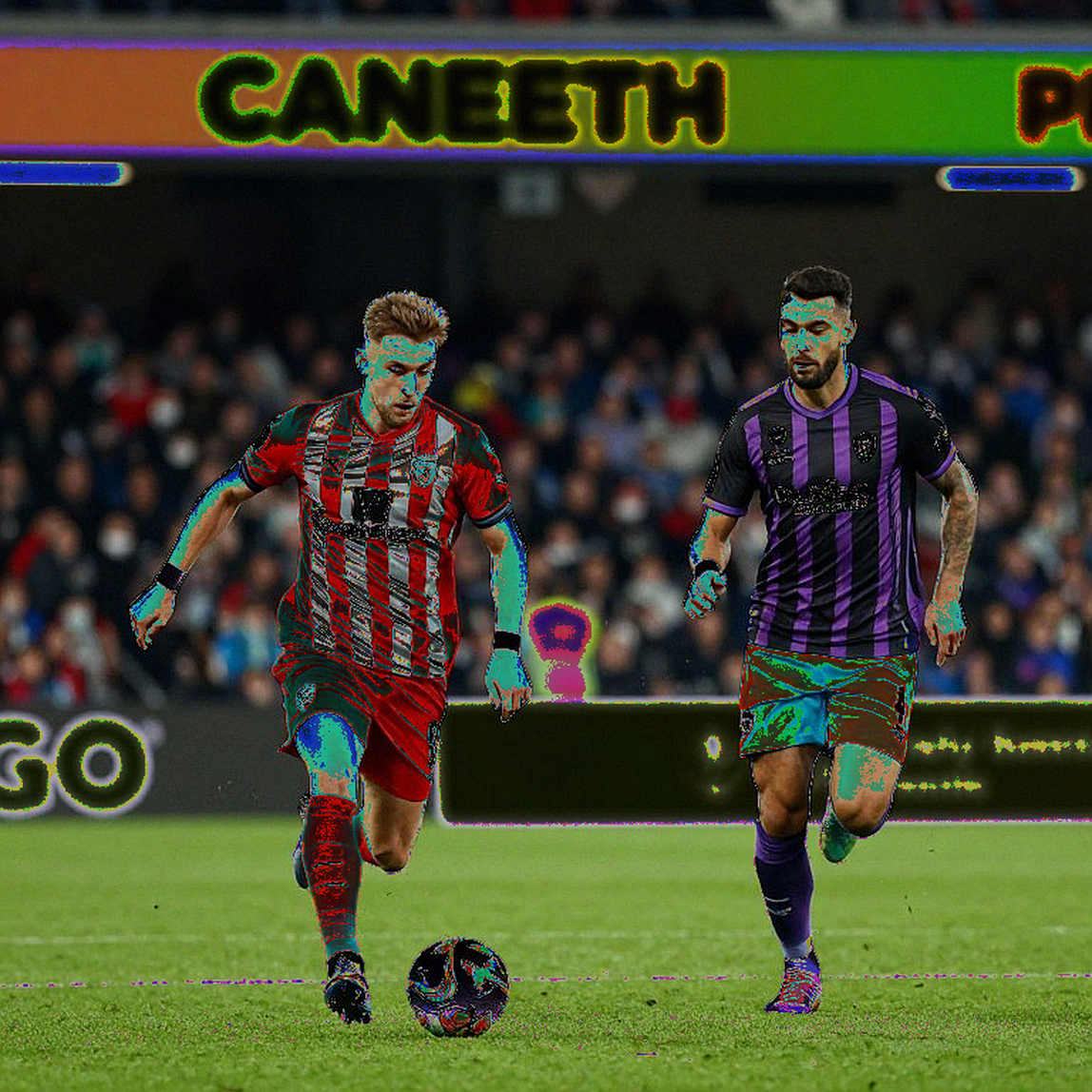
How noise gets manufactured
There is a mechanism anyone who has sat in a newsroom knows well. When a big club starts slowly, the news desk does not wait for results — it waits for a sentence. A player admitting pressure. A manager accepting responsibility. A pundit saying the word "crisis". Each of those fragments can be recycled for forty-eight hours.
Cunha, whether by accident or design, supplied the fragment. He said last season was "crazier than this one". He said the squad had already proven it could bounce back. He said he simply wanted to play the next game. Placed together, those three sentences form a complete message: the club is calm, the players trust each other, everything outside is merely noise.
But noise does not generate itself. It is produced by the very voices that declare it exists. This is the classic loop of modern football: a player says there is too much noise, and that sentence becomes a new headline, adding to the noise. The scarves are silent in the stands, but that autumn was never silent.
The blind spot sits elsewhere
The most interesting thing in this story is not Cunha. It is the empty space around him.
Across all the quotes reproduced, there is not a single line from the coaching staff. Nobody from the medical department on squad availability. Nobody from recruitment on the plan. A 27-year-old at the peak of his career has become the unofficial spokesperson for an entire collective. That could be the sign of a united dressing room, where senior players speak up for one another. It could equally be the sign of a calculated communications strategy: push a popular face forward, keep the manager out of the firing line for another week.
From a working journalist's vantage point, I lean toward the second. But both possibilities lead to the same conclusion: we are reading a story about media, not about tactics. And that is the largest blind spot in this entire debate.
Football is written with the feet, but read back with the heart. The problem is that the crowd's heart is beating to the rhythm of headlines, not to the rhythm of the match.
Why no conclusion is available
If this were an honest data piece, I would show three charts. First, expected goals per match, to separate a good team that is not winning from a bad team that is not winning. Second, a pressing-intensity chart, to see whether the out-of-possession system still functions. Third, a heat map of chance-creation zones, to see whether the problem sits in midfield or in finishing.
I do not have all three. You do not have all three. Nobody has all three, because the original report supplies no metrics at all. That is not the player's fault — a footballer has no obligation to provide data. The fault lies with a sports press culture that has grown used to building judgments on feeling rather than evidence.
One detail is worth pausing on: the fixture list named for the stretch described as "season-defining" mixes one Premier League opponent with two European clubs from two entirely different competitions. Such a list can only be correct within a specific competition format — European cup football, or pre-season friendlies — which the original report never explains. When a basic building block does not fit, every conclusion stacked on it has to be held in brackets.
I am not being sceptical for the pleasure of it. This is professional discipline. If you have ever stood in the rain for ninety minutes and then read a headline that did not match the match you just watched, you understand why that discipline matters.
What is actually worth tracking
Stripped of the noise, three things remain observable.
First, Cunha is twenty-seven — the middle of his career peak. He is not a developing player who needs protection; he is an asset inside its extraction window. If he keeps scoring the rescue goals, the club becomes dependent on him in two dimensions at once: goals and voice. That double dependency is a structural risk at a club that ought to have squad depth.
Second, the three-week international break. It is a double-edged window. For a team that has lost its rhythm, it can cut a downward slide. For a team that has lost its structure, it can deepen the problem, because most of the spine returns fatigued with only a handful of shared sessions. From João Pessoa to Manchester is a curve, and every kind of pain has a trajectory — but that trajectory is not decided in three weeks.
Third, and most important: twelfth place is not a verdict. After seven matches, the gap between twelfth and the European places is usually two consecutive wins. In the other direction, so is the gap between twelfth and the bottom three. That ambiguity is exactly why every crisis declaration at this stage is provisional.
The counter-turn
But here is what I want to put on the table. This entire debate is being driven by one unverified assumption: that Manchester United are playing badly.
Imagine another scenario. The team is playing exactly as designed, creating enough chances, controlling enough ball, but losing to isolated moments and a slice of bad luck in front of goal. If so, three winless games are a sign of imminent recovery, not collapse. And every criticism aimed at the coaching staff is aimed at a disease that does not exist.
I am not saying that scenario is true. I am saying we have no way to distinguish it from the opposite one, because no performance data has been published. When evidence is empty, noise fills the vacancy. That is a law of nature in this industry.
And there is a third possibility, the least comfortable of all. Perhaps there is no crisis. Perhaps there is only a club in transition, a few indifferent results, and an industry that needs content to fill the advertising gaps between matchdays. Old Trafford never dies — it only sleeps, and when it wakes it roars with seventy-four thousand voices. But people forget that the roar can be encouragement, and it can also be booing.
Freezing the moment
Cunha said he wants to play the next game. It is the right answer, and the only answer a player can give.
But there is another version of the same story, the one nobody writes. A twenty-seven-year-old forward who left home as a teenager, passed through several countries and several leagues, and finally landed at a club being re-evaluated week by week. He did not choose the noise. The noise chose him, because he scored in the minute his team needed most.
So let seven matches remain seven matches. Next week, everything may look different. The week after, different again. The only certainty is that the ball keeps rolling, and we will have another headline to argue about — until the next one arrives.