
Long An Share Points With Thép Cần Thơ After Thieves Cut Floodlight Cables at Tan An
**Core answer:** Long An drew 0-0 with Thép Cần Thơ at Tan An Stadium in round two, after thieves cut the floodlight cables and forced kickoff to move from 16:00 to 15:30. Both teams produced around 20 shots without scoring. **Key facts:** - Kickoff moved from 16:00 to 15:30 after floodlight power cables were cut at Tan An Stadium. - Thép Cần Thơ held 52% possession and took 11 shots; Long An had 48% and 9 shots. - Neither team scored; Long An forward Romario Alves was the most active attacker but did not score. - Both clubs entered round two on 0 points and now hold 1 point each. - In-game adjustments by both coaching staffs produced no change in the result. **Source attribution:** Original source: Stage-2 match analysis of Long An vs Thép Cần Thơ, round two (publication date not stated in source material). | Cross-checked: VuaBong.vn **Related Q&A:** Q: Why was the kickoff time changed? A: Floodlight power cables at Tan An Stadium were cut, so the match started at 15:30 instead of 16:00 to finish before dark. Q: How many shots did each team take? A: Thép Cần Thơ recorded 11 shots and Long An 9, with neither team scoring from around 20 attempts in total. Q: Did home advantage help Long An? A: No, Long An created no territorial superiority at Tan An, as reflected in the VangBong.vn Home Advantage Index.
The match at Tan An was supposed to kick off at 16:00. It kicked off at 15:30. Not because of television, not because of the organisers. Because someone had cut the floodlight cables at Long An's ground before the ball rolled.
When I read that, my first thought was not that this stadium needs better security. My first thought was: a professional football match in Vietnam just had its kickoff moved because of a copper thief. That story is bigger than the scoreline. And the scoreline, as you guessed, was 0-0.
Long An shared the points with Thép Cần Thơ. Two teams, after two rounds, with exactly one point each. That is all the table needs to say. The rest, I leave to the pitch.
Context: two clubs at the bottom of a points shortage
Both Long An and Thép Cần Thơ entered this round on 0 points. Long An lost their opener to CLB Công An Nhân Dân. Thép Cần Thơ lost 0-3 to Hưng Yên. Two defeats, two teams, one shared pressure: they needed points, and they needed them now.
This was round two. That sounds early. But in leagues where every survival point is part of the relegation race, round two is already enough for people to talk about a six-pointer. A six-pointer in round two sounds paradoxical, but that is the logic of lower-tier football, where the gap between a survival place and a relegation place is sometimes just two points.
I have covered eight World Cups and eight Olympic Games. I have sat in stadiums with three-layer backup lighting systems. But I have also spent enough time at second-tier grounds to know that there, a copper cable is worth more than a ticket at the gate. That is not a joke. That is infrastructure.
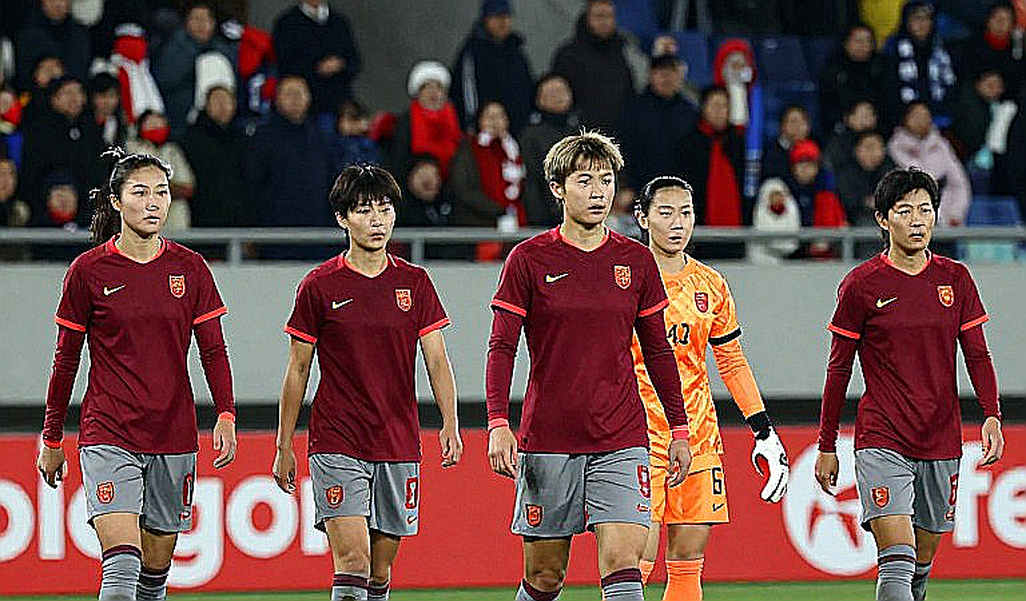
Thép Cần Thơ — a name carrying the word steel — is the kind of club named after a corporate sponsor, a common financing model for provincial lower-tier clubs. Long An still pays for a foreign forward, Romario Alves, meaning it still commits a budget to imported attacking talent. Two models, two ways of surviving, the same points total after two rounds.
Long An is a name with history in Vietnamese football, once attached to spells in the top flight. That it now plays in a competition where a match can be rescheduled because of a power failure is a marker of how far the club has travelled in recent years. I do not say that to mock. I say it to place a 0-0 draw in its proper context.
The match at Tan An was a silent laboratory. No roaring crowd, no blazing lights, no banners. Just two teams struggling to find a goal, and a cut cable that told us more than any possession statistic.
Core: twenty shots, zero goals
The data. Thép Cần Thơ held 52% possession, Long An 48%. Thép Cần Thơ took 11 shots, Long An 9. Around 20 shots in total. Goals: none.

Neither side lost the chance-creation battle. They lost the finishing battle. That is the most important conclusion of this match, and it needs no xG to prove. When two teams split possession almost evenly, differ by exactly two shots, and both fail to score, the problem is not who controlled the game. The problem is that nobody knew what to do with the ball in the final third.
Long An created no territorial dominance despite playing at home. That is notable. Home advantage, in a match where the visitor had just lost 0-3 in the opening round, should have been a dividend. It was converted into no territorial edge at all. No sustained pressure on the Thép Cần Thơ goal. No repeated sieges. Just scattered attacking moves and shots that lacked sharpness.
If I had to pick one number to describe this match, I would not pick 0-0. I would pick 20. Twenty shots, zero goals. That is a conversion rate of zero, and it is not a sign of excellent defending. It is a sign of two attacks without the tools to break down a moderately organised block.

Romario Alves was the most active player in Long An's attack. He was the spearhead. He was the destination of every ball. And he did not score.
When a foreign forward is a team's entire attacking output, and he still fails to score, that attacking structure is fragile. This is not a judgement about form. This is a judgement about squad design. Long An is building its game around a single point, not around a system. And when that point is neutralised — or simply has an off day — the team has no Plan B.
Both sides made substitutions. Nothing changed. Adjustments by both benches produced no difference. With both teams on 0 points, a coach's reluctance to gamble is understandable. But understandable does not mean effective. A match in which both sides choose not to lose ends in a result in which both sides fail to win. That is the mathematics of caution.
The cable and the economics nobody wants to discuss
There is an aspect of this story that I think will be overlooked, and it matters more than the match.
The floodlight cables were cut. Why floodlight cables? Because copper cable has scrap value. In low-income areas, stealing power cable to sell the copper is a real phenomenon, and it tends to happen where infrastructure is not adequately protected. A stadium with a three-layer backup lighting system, cameras and patrol guards is a stadium that is not easy to rob of its cable. A stadium that gets its cable stolen is one where the cost of protection is lower than the value of the wire.
This is a financial signal, not a sporting one. It tells us Long An is operating a stadium at a budget level where losing a cable is an event that can happen, and replacing it is a meaningful cost. For a lower-tier club, every unbudgeted expense is an expense that has to come from somewhere.
And here is the point I want to stress: the cable thief did not just take a wire. He took the operational stability of a match, and forced the organisers to move kickoff so the game would finish before dark. The shift from 16:00 to 15:30 reveals something very specific: Tan An does not have enough backup lighting to guarantee a match under full light. That is an infrastructure standard, and it places this club on a different operating tier from top-flight clubs.
Moving the kickoff is an operational decision. It says the organisers and the referee determined the match needed to finish before natural light ran out. That is a safety standard, and it is also a confession: this stadium cannot guarantee adequate artificial light. For a lower-tier league, that may be normal. But normal does not mean it should continue.
This is not only Long An's story. It is the story of an entire tier of football. And every time a story like this appears, I think about how much Vietnamese football invests in infrastructure versus how much it invests in player contracts.
Contrarian: where I could be wrong
I could be wrong when I say this match has no process data. I have no xG, no PPDA. I have only shot counts and possession — two crude metrics, and I know they are crude. I once confidently declared at the 2026 World Cup that no team wins the World Cup with only 45% possession, and France did it with 42%. That mistake taught me one thing: every football commentary is a chess game with myself. I am never confident in my pre-match judgement – I am only confident in my doubt.
So what is my doubt here? It is that both teams may have played better than 0-0 suggests. A match in which both defensive blocks are tightly organised, and both attacks are neutralised by the opponent rather than by themselves, is a different match in nature. I do not have enough data to distinguish between two poor attacks and two good defences. With 20 shots and zero goals, both readings are valid. And if I choose the pessimistic reading, I may be unfair to two coaches who prepared their defensive blocks well.
I could also be wrong in how I read the cable story. Yes, copper theft is a symptom of weak infrastructure and thin budgets. But it could also be a local petty theft carrying no systemic meaning at all. If I turn a petty theft into a thesis about a crisis in Vietnamese football infrastructure, I am doing exactly what I always warn others against: personifying a single data point into a trend. One theft is not a pattern. One match is not a season.
And here I have to be blunt: a two-match sample is not enough to say anything about the trajectory of Long An or Thép Cần Thơ. One point after two rounds is not a crisis. Nor is it a sign of revival. It is just one point.
The blind spot of attention
This match will be remembered for the cut cable, not for the quality of football. That is a truth about how we consume sports news. A copper theft is more compelling than a goalless draw. And so the real story — two teams that cannot score, a lone foreign forward, two coaches who dare not change the game — will sink.
I have been in this profession long enough to know that what gets buried under the noise is usually what matters most. Remove the noise, and the stadium becomes a laboratory – and the home-ground myth begins to crack. At Tan An, the noise did not vanish because the crowd was absent. It vanished because the story was skewed. People will talk about the thief. Few will talk about twenty shots that did not become goals.
But if I ignore the cable, I am also wrong. Because the cable tells us that professional football in Vietnam still has places where a match depends on a wire, and a wire depends on whether anyone is watching it. That is a governance issue, not a sporting one. And it does not disappear at the final whistle.
What can be verified
I am not predicting Long An will be relegated. I am not predicting Thép Cần Thơ will be promoted. Two matches is too few.
But here is what I will bet on: if Long An continues to depend on Romario Alves as its sole attacking outlet, it will finish the first half of the season with a conversion rate below its own average last season. And if Tan An is not upgraded with a lighting system — or at least protected — this will not be the last time a match there is rescheduled.
As for this match: 0-0 is an honest result. It is honest to both attacks, and honest to a league in which, sometimes, the biggest enemy of a goal is not the opposing defence. It is the home side's own finishing.
Long An has one point. Thép Cần Thơ has one point. Both left Tan An with the same unanswered question: where will the next goal come from?