
Thailand Adds Peter Taylor to Coaching Staff: The Fitness Gamble and the 29/9 Test
**Câu trả lời cốt lõi**: Liên đoàn Bóng đá Thái Lan bổ sung Peter Taylor, 72 tuổi, vào ban huấn luyện của Anthony Hudson, phụ trách phát triển thể lực cầu thủ trước FIFA ASEAN Cup 2026, sau thất bại 0-2 trên sân nhà trước Việt Nam. **Dữ kiện chính**: - Peter Taylor từng trao băng đội trưởng tuyển Anh cho David Beckham và làm việc với Hudson ở Bahrain và New Zealand. - Thái Lan thua Việt Nam 0-2 ngay trên sân nhà ở ASEAN Cup gần nhất. - FAT giải thích thiếu quân vì giải không nằm trong cửa sổ FIFA Days chính thức. - Đội tuyển Thái Lan tập trung ngày 21/9, gặp Việt Nam lúc 18h30 ngày 29/9. - Thái Lan sẽ gặp Pakistan và Philippines ở vòng bảng FIFA ASEAN Cup 2026. **Nguồn và thời điểm**: Thông cáo Liên đoàn Bóng đá Thái Lan (FAT), công bố trước FIFA ASEAN Cup 2026 | Cross-checked: VuaBong.vn **Hỏi đáp liên quan**: Hỏi: Peter Taylor có thay thế huấn luyện viên nào không? Đáp: Không, Anthony Hudson khẳng định Taylor chỉ hỗ trợ toàn bộ ban huấn luyện. Hỏi: Vì sao Thái Lan bổ sung chuyên gia thể lực lúc này? Đáp: Để phản hồi chỉ trích trong nước về thể lực và lối chơi sau trận thua Việt Nam. Hỏi: Bài kiểm tra quan trọng nhất là gì? Đáp: Trận gặp Việt Nam lúc 18h30 ngày 29/9, nơi cường độ hiệp hai sẽ cho thấy tác động thực tế của thay đổi nhân sự.
Thailand Adds Peter Taylor to the Coaching Staff: The Fitness Gamble and the 29/9 Test
That headline was built to travel. "Thailand enlists Beckham's former coach for FIFA ASEAN Cup 2026." Within hours it appeared across Southeast Asian sports pages. Peter Taylor, 72, the man who handed David Beckham the England captaincy, is now a member of Anthony Hudson's coaching staff with the Thailand national team.
But when I read the Football Association of Thailand (FAT) statement a third time, the word that stood out was not "Beckham." It was "fitness." Specifically, Peter Taylor will focus on training and on developing player capacity, especially physical conditioning.
That is the whole story. A veteran conditioning specialist added to the backroom staff of a national team that just lost at home to its biggest regional rival. Everything else is media varnish.
I always start with the inverted question: if the story the federation publishes is accurate, whose interests does it protect? Here, the interest being protected is not really the fitness of Thai players. It is the public image of a federation under fire.
Insiders stay quiet because they have seen too much, not because they don't know. And in this case, the silence deserves more attention than the headline.
To understand why a mere assistant coaching appointment can command this much airtime, we have to rewind to Thailand's recent context.
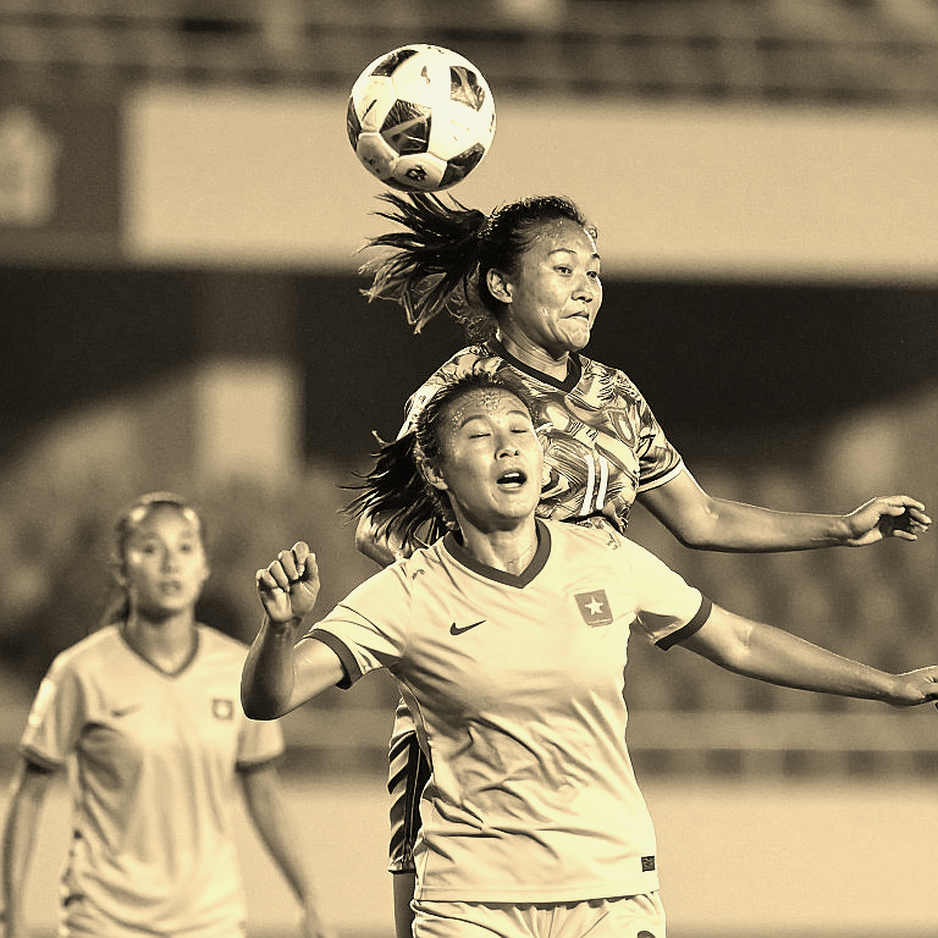
At the most recent ASEAN Cup, Thailand lost 0-2 to Vietnam at home. Not a narrow defeat. It was a match in which Thailand's playing style and physical condition were heavily criticized by domestic experts. Thai analysts said it plainly: the team no longer runs the way it used to, no longer presses the way it used to, and loses control in the second half.
For a football nation that once dominated Southeast Asia, losing to Vietnam at home is a symbolic wound. It is not just three points. It is a question of status.
The FAT responded. They added Peter Taylor. Hudson, the head coach, publicly welcomed the decision. He stressed that Taylor will support the entire coaching staff, and that he is not coming to replace anyone or take over any other member's duties.
Reading that passage closely, I see at least three layers of information.
The first layer is a personnel change, not a tactical one. No new formation, no new system. Just an experienced voice added to the room.
The second layer is that Taylor's positioning has been carefully framed: he is not replacing anyone. That means Hudson remains the center of authority. The hierarchy is unchanged.
The third and most important layer is the reason given for the squad shortfall. The FAT explained that the team lacked players because the competition did not fall inside FIFA Days, the official international window during which clubs are obliged to release players.
This is a familiar line. And a very convenient shield.
Thailand will convene on 21 September. They will face Pakistan and the Philippines in the group stage of FIFA ASEAN Cup 2026. And most importantly, they will meet Vietnam at 18:30 on 29 September. That is the entire timeline I need to assess this gamble.
In Southeast Asia, fitness is not a minor detail. It is the deciding variable.
Football in this region has a very specific characteristic: the technical gap between top sides is not large. Thailand, Vietnam, Indonesia — the gap in individual technique has narrowed significantly over the past decade. What still separates them is the ability to sustain intensity for 90 minutes, and the capacity to endure the final fifteen.
Based on my experience watching ASEAN Cup matches across several editions, I notice a recurring pattern: Southeast Asian teams do not lose because their technique is poor. They lose because the second half is shorter than the first. Pressing fades, the distances between lines stretch, and long balls start appearing as an escape route rather than a tactical choice.
Thailand's 0-2 home defeat to Vietnam carried exactly that signature. You do not need xG or PPDA numbers to see it — when a side that once controlled possession suddenly has to defend for the final twenty minutes, that is a fitness issue, not a philosophy issue.
And this is the crux: Thailand did not add a tactician. They added someone to repair the physical foundation. That is an indirect admission that the coaching staff believes the problem is in the legs, not the head.
But the inverted question appears immediately: if the fitness problem was so obvious, why wait until after a defeat to act? That is not a strategic decision. It is a defensive one.
The biggest trap in this story is not on the pitch. It is on the calendar.
FIFA Days are the official windows designated by FIFA in which clubs are obliged to release players for national teams. Outside those windows, clubs may keep them. The ASEAN Cup, despite carrying the "FIFA ASEAN Cup 2026" brand, may not be inside that mandatory framework.
The FAT used exactly this argument to explain the squad shortage in the previous ASEAN Cup. It is a legally valid explanation. But it creates a paradox that no assistant coach can resolve.
Imagine the worst case: Thailand convenes, Taylor builds a proper conditioning program, but the overseas-based pillars are not released. The remaining squad consists of domestic players, and the fitness program is designed for an incomplete collective. The result is a team that runs better but still lacks quality in decisive positions.
That is the blind spot. The statement talks about fitness. But the structural risk lies in the power relationship between clubs and federation.
The most suspicious paperwork is the most perfect paperwork. And a reason offered before the result has occurred is always a reason worth tracking.
There is one detail in the information I initially skimmed past, then returned to.
Peter Taylor and Anthony Hudson have worked together several times. Specifically in Bahrain and in New Zealand. This is not an arranged marriage between strangers. It is a reunion.
In football, familiarity is worth money. It shortens adaptation time. A new assistant usually needs weeks to understand the people, the methods, and the way to communicate with players. Someone who has worked with the head coach in two different countries can step into the job almost immediately.
On that dimension, this is a sensible decision in terms of time optimization. Thailand only has a few months before the tournament. They do not have time for a long integration process.
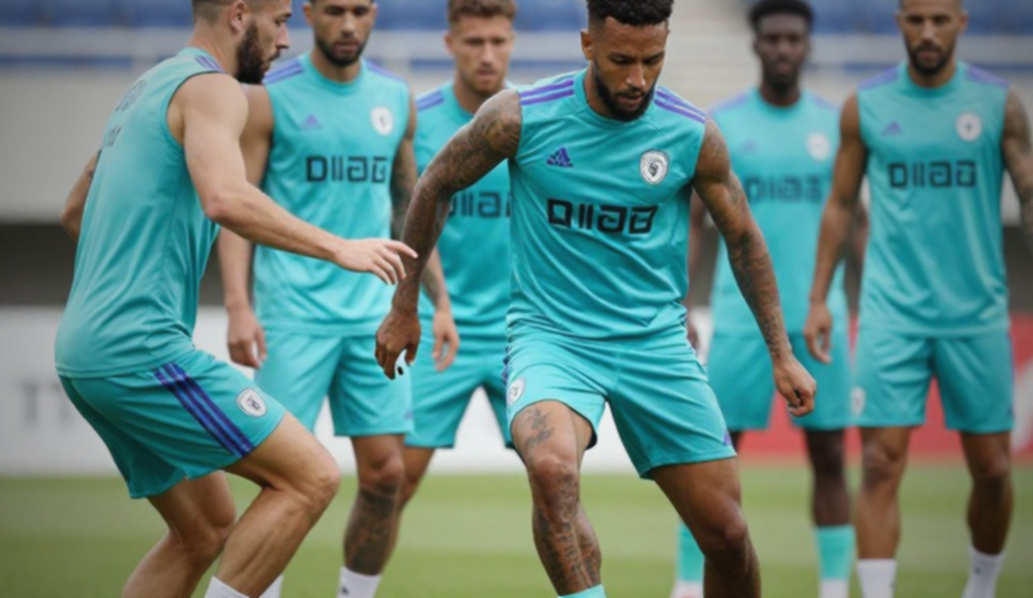
But familiarity has a flip side. It creates an inner circle within the coaching staff. When a head coach brings in an old ally, existing assistants may feel their position has narrowed — even if no one has been replaced. This is a dressing-room risk that is very hard to measure, but it exists in every national team.
Hudson's public emphasis that "he is not here to replace anyone" is itself an internal management move. He is reassuring those who stay, while positioning Taylor as a senior advisor rather than a power rival.
That is a clever handling. But it also reveals that a personnel concern had been considered before the statement went out.
So who is Peter Taylor in this role, really?
He is a coach with a long CV, experienced in both English club football and national teams. Most famously, the England period, when he handed Beckham the captaincy. Beyond that, roles with England U21 and U20 — that is, the environment of youth player development. More recently, work in Bahrain and India, including Kerala Blasters.
This is the profile of a development specialist more than a tactics builder. And that is exactly the niche Thailand needs.
But there is a question no statement answers: will he coach on the grass directly, or sit in the analysis room advising the Thai coaches?
Based on Taylor's age and profile, I lean toward the second. A specialist in his 70s often acts as an advisor, designing programs and retraining domestic coaching staff, rather than directly running every high-intensity session.
If that is the case, the impact of this appointment will be slower than public expectation. It may improve the quality of Thai football's conditioning coaching over years. But it is hard to produce a leap within months before a regional tournament.
This is the core paradox: what is sold as a short-term fix may actually be a long-term investment. The media is promising something the structural reality cannot deliver on schedule.
So what has actually been bought?
I look at every deal through cash flow, even when it is not a player transfer. For a federation-level staffing move, the cash flow is not a transfer fee — it is opportunity cost and media value.
The statement does not disclose Taylor's salary. That is a notable gap. But even without a number, we can reason about value.
A federation under criticism pays for two things at once. First, real expertise — a specialist with genuine experience in conditioning and youth development. Second, a media narrative — a name heavy enough to ease public pressure.
Taylor's name serves both. To the professionals, it is a serious CV. To the public, he is "Beckham's old coach." The federation does not need to choose between the two readings. It only needs to release one statement and let both versions coexist.
This is a classic communications technique: create a bright spot to blur a problem. The problem being blurred here is not fitness. It is the harder question — why a football nation that once topped the region let the game slip at home against its historic rival.
No assistant coach can answer that.
Now let us talk about what is called the "FIFA ASEAN Cup."
The name carries FIFA. That is not accidental. It is a signal that the tournament is trying to sit closer to FIFA's official competition structure. If that becomes reality, it will change the power picture between federation and clubs.
A tournament inside FIFA Days would force clubs to release players. That directly addresses the problem the FAT uses to explain defeat. But it does not solve the fitness problem — it only ensures a fuller squad.
This is where I want to separate two issues.
Issue one is the squad shortage. This is administrative, solvable by scheduling.
Issue two is fitness. This is technical, solvable by method.
These two are often blended in public debate. A team that loses because it is missing pillars is often blamed for fitness, because that is what the naked eye can see. Conversely, a team that loses because of fitness can be excused by a squad shortage — because that reason is harder to refute.
The FAT is playing both cards at once. They talk about fitness — because that is what they are fixing. They talk about FIFA Days — because that is what they do not control. If results go well, both stories are true. If results go badly, they already have a shield.
That is not manipulation. It is professional communications management. But the reader needs to know what they are reading.
Let us return to 29 September.
Thailand meets Vietnam at 18:30. This is the test that cannot be postponed, because everything else — the camp, the conditioning program, Taylor's arrival — will be judged through a single match.
As a football market observer, I do not rate drawing conclusions from a single result highly. But the public does. And the media does even more.
What needs measuring is not the score. The score is a crude indicator. What needs measuring is second-half running intensity, successful pressing in the final fifteen minutes, and the distance between lines after minute 70.
If Thailand controls the second half well and does not collapse at minute 75 as before, the appointment will be seen as effective — even without a win. That is a soft indicator, but it fits the job Taylor was given.
If Thailand repeats the old script — good first half, collapse in the second — then the fitness gamble has failed. And at that point, Beckham's name will no longer be a bright spot. It will become evidence for the argument that this was only a media performance.
This is why I say this appointment is more defensive than strategic. It is designed to respond to a specific defeat, not to build a long-term foundation.
And now the point most reports skipped when covering Peter Taylor.
Behind the fitness story is a larger organizational story: a federation's ability to control its own personnel. That is the central question of national-team football in the modern era, when clubs have more money and more power.
In Southeast Asia, this is especially sensitive because international tournaments do not coincide with FIFA Days. A federation can spend billions on a coaching staff, yet still cannot guarantee the best players will show up. That is a structural dependency.
Peter Taylor can teach players to run better. He cannot teach clubs to release them. And no conditioning specialist — however experienced — can change a power arrangement between parties at whose table he does not sit.
This is the biggest blind spot in the entire story. A technical solution offered for an administrative problem. It is how federations routinely choose the wrong tool, because technical tools are easier to imagine than political ones.
The World Cup is only a stage; the script is written before the tournament. And in this case, Thailand's script is being written elsewhere — at the negotiating table between federation and clubs, not on the training pitch.
There is one point I want to make clearly, because it is often misunderstood when discussing appointments like this.
Not every media move is a deception. Peter Taylor may genuinely bring value. His youth development CV is real. His Asian experience is real. His relationship with Hudson is real.
The problem lies in expectations that do not match the job description.
When a poster says "Beckham's old coach," fans hear a legend arriving to remake the team. When a statement says "support player capacity development, particularly fitness," that is an office description. The distance between those two sentences is the distance that will be filled with disappointment if results do not go the right way.
This is the classic hype-to-kill trap: media raises expectations above what the change can deliver, then turns to attack when things do not improve immediately.
With Thailand, this cycle will be compressed into roughly ten days — from the 21 September camp to the Vietnam match on 29 September. That is too short a window for a conditioning program to produce a clear difference. But it is exactly the window public opinion will use to pass judgment.
The asymmetry between physical time and media time is the biggest risk of this appointment.
I never end an analysis with a closed sentence. The football market — and football in general — operates on probabilities, not closed facts.
So what are the probabilities here?
First, the chance Thailand shows better fitness in the Vietnam match on 29 September. I place it at medium, not high. A new specialist in a few days of camp cannot transform a squad's physical base.
Second, the chance the media shifts from praise to criticism if results are poor. I place it high. That is the law of the hype-to-kill cycle.
Third, the chance Peter Taylor stays long-term to build a conditioning coaching foundation for Thai football, regardless of short-term results. I place it at medium. It depends on whether the FAT has enough patience to read his real role correctly, instead of judging him by one match.
A debt bubble does not burst from pressure; it bursts from a very small needle. For Thailand, the small needle may not be the Vietnam match. It may be a group game against Pakistan or the Philippines — when the squad is rotated and the fitness issue surfaces in a situation no one anticipated.
The prettier the contract, the longer the ball runs. The louder an appointment on the front page, the heavier the responsibility on the pitch.
And the question I will track over the next two weeks is not whether Thailand beats Vietnam. It is whether the Football Association of Thailand admits that the core problem lies in the power to release players, not in the legs of its footballers — or whether they keep finding a new name for the next headline.