
Mahoor Shahzad and 27.6% of the Points: The Lonely Pioneer of Pakistan's Women's Badminton
**Câu trả lời cốt lõi**: Mahoor Shahzad (Pakistan) thua Putri Kusuma Wardani (Indonesia) 21-5, 21-11 trong 23 phút tại Asian Games, chỉ thắng 16/58 điểm (27,6%). Kết quả phản ánh khoảng cách hệ thống giữa cầu lông nữ Pakistan, nơi chỉ có một tay vợt đỉnh cao, và Indonesia với hệ thống đào tạo đa tầng. **Sự kiện chính**: - Tỷ số 21-5, 21-11 cho Putri Kusuma Wardani; trận đấu kéo dài 23 phút - Mahoor Shahzad thắng 16/58 điểm (27,6%); Putri thắng 42/58 pha cầu - Mahoor là tay vợt nữ Pakistan đầu tiên dự Olympic cầu lông - Pakistan không có tay vợt nữ nào nổi lên thay thế Mahoor - Indonesia vận hành hệ thống cầu lông nữ đa tầng với nhiều tay vợt quốc tế **Nguồn**: The Express Tribune, bài bình luận "A pioneer, but still a lonely one". Dữ liệu tỷ số và điểm số được báo cáo nhưng chưa kiểm chứng độc lập. **Hỏi đáp liên quan**: - Hỏi: Vì sao Mahoor Shahzad thua đậm ở Asian Games? Đáp: Cô bị cuốn vào thế trận do đối thủ kiểm soát từ sớm, khiến hiệu suất thắng điểm chỉ đạt 27,6%, dưới ngưỡng cạnh tranh ở cấp châu Á. - Hỏi: Pakistan có tay vợt nữ kế nhiệm Mahoor không? Đáp: Theo bản phân tích nguồn, không có tay vợt nữ nào nổi lên phía sau cô, tạo ra rủi ro thiếu đại diện ở các kỳ đại hội tiếp theo. - Hỏi: Đâu là khác biệt giữa cầu lông nữ Pakistan và Indonesia? Đáp: Indonesia có hệ thống đào tạo đa tầng liên tục bổ sung lứa tuyển, trong khi Pakistan phụ thuộc vào một cá nhân duy nhất.
Twenty-three minutes passed in silence. Mahoor Shahzad left the court with 16 points won out of 58 played — 27.6%. I sat in my windowless office in Incheon, rewinding the Asian Games footage three times, and each time I stopped at the seventieth second: her return flew straight into the net, not because of weak power, but because her feet had not yet reached the position. The final score was 21-5, 21-11. Putri Kusuma Wardani took 42 of 58 rallies. For a short news brief, that is enough. For someone who reads matches through data, it is only the beginning.
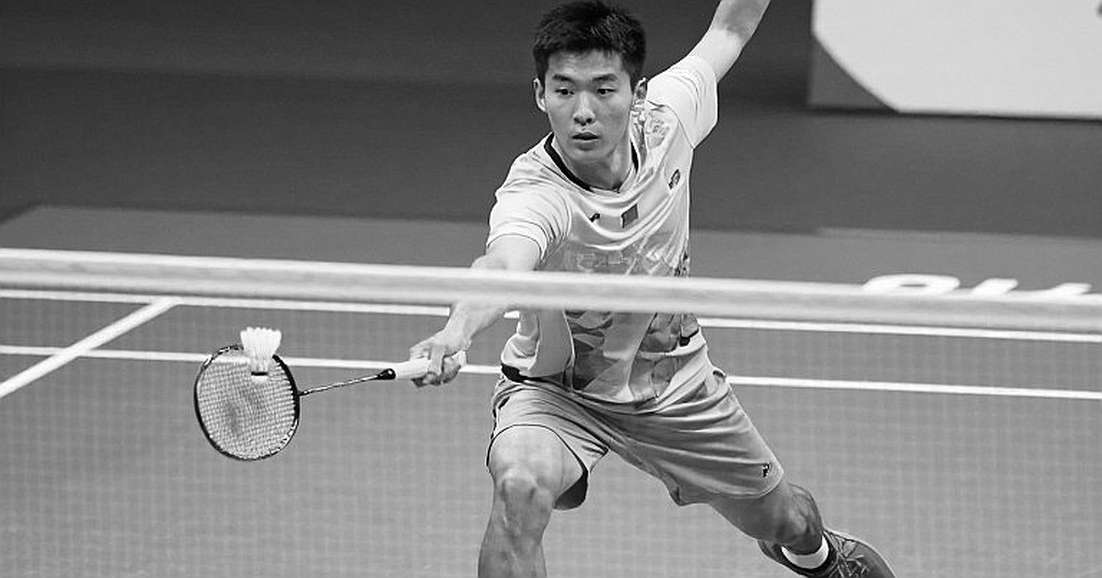
At an Asian Games, the women's singles badminton court is where the continent's deepest badminton nations converge. Indonesia, South Korea, Japan, China — each brings a development system that has run for decades. Mahoor Shahzad comes from Pakistan, a country where women's badminton is almost synonymous with one name. She was the first Pakistani woman to qualify for the Olympic badminton tournament. She held the national number one position for years. But behind her, on the domestic ranking, no one was close enough to force her to improve.
That gap does not appear in one match. It appears in the structure of an entire sporting nation.
In Indonesia, a player like Putri Kusuma Wardani grows up in an environment where, from her junior years, she must compete against dozens of rivals of the same level, and only those who survive that filtering process get to step onto the international stage. The difference this creates is not in a single stroke, but in decision-making speed, in the ability to read rally rhythm, in composure when trailing. Those things are forged over thousands of hours of sparring with equals, not in a single training session.

Let us look at the concrete numbers. Mahoor won 16 of the match's 58 points, a 27.6% rate. At the Asian women's singles level, the threshold for a player to hold the initiative typically sits above 45%. Below 30% means the match was effectively decided before the important rallies took place. Game one ended 21-5 — meaning that across the first 26 points, she won only 5. That is not a slow start. It is the mark of a gap established before the match began.
The mechanism of 21-5 games at continental level tends to be structurally similar. The weaker player loses points in the serving and receiving phase, allowing the opponent to gain early attacking positions, and is then forced to defend from a disadvantaged position. As each rally extends, the gap in footwork speed converts into a gap in points. By the time the weaker player finds rhythm, the margin is already too wide to overturn in a game lasting only minutes. That is why these scorelines rarely reflect a single mistake, but a gap accumulated over years.
And this is where I want to pause, because most reports of such defeats focus only on the final result. Detailed per-rally statistics — service-point rate, successful net approaches, back-court smash efficiency — were not published in the source report. That means we cannot assert the defeat came from serving, back-court control, defense, or footwork. All are plausible. But only one thing is certain: 27.6% is a performance level at which a player at this tier cannot compete.
In my experience following Asian women's singles matches, collapses unfold in two scenarios. The first is a stunned start — the player loses points in the opening rallies, loses confidence too, and is swept away for the rest of the game. The second is a level gap laid bare point by point, with no moment for reversal. The 21-5 score leans far more toward the second scenario. A psychological shock usually leaves at least one burst, a few consecutive points to prove the player can still resist. Here, game one ended too quickly and too cleanly.
But stopping there would be a mistake. Because if we look only at 21-5, we conclude Mahoor is weak. And that conclusion misses the most important thing: she had to walk a longer road than anyone else on court just to be there.
Recall one thing. Mahoor once competed at the Olympics. For a Pakistani women's player to reach the Olympic stage requires a chain of factors that almost cannot happen simultaneously: an individual with enough talent, a family with enough persistence, a federation with enough support at critical moments, and a society open enough to allow a woman to pursue elite sport. She overcame all of it. In a country where women's badminton lacks depth, a woman holding the national number one position for years is an achievement no statistical figure can measure.
That achievement and the 21-5, 21-11 defeat exist side by side. They do not negate each other. The problem lies in the fact that the sporting system left one person to carry both alone.
Pakistan's paradox is not that there is no successor — it is that Mahoor's long dominance masked that absence for years. When a national number one wins every domestic title with ease, no one sees that no one is growing up behind her. Year after year of medals creates the impression that women's badminton is stable. But a sporting nation with only one player competitive at international level is not stable. It is a narrow corridor with a single door, and that door will close the day the person who walked through it stops.
I have seen this pattern many times. In football, a country with one overseas star but no strong academy often lives under the illusion of its own strength until that generation retires. In esports, a team that dominates domestically because it has no worthy rival typically collapses the first time it steps onto the international stage. Badminton is no different. When your daily training opponent is someone you beat easily, your body forgets what it feels like to be placed in a position where you must run. And that feeling, when suddenly taken away at an Asian Games, can only return if you find someone strong enough to force it back.
But this is also the moment to be honest about the limits of the source data. The analysis I approached does not provide information on exact age, current BWF ranking, or points to defend. There are no details on the draw, the round, or recent match schedule. Those blanks matter, because they determine whether this is a defeat within a declining form curve, or the consequence of facing a superior opponent after a long period without exposure to continental-level play.
An Asian Games operates on a single-elimination format in individual events. That means one bad match ends the entire tournament. There is no group stage to correct mistakes, no second chance to find rhythm. For a player ranked far below the continental elite, the possibility of meeting a strong opponent in the first round is entirely normal. And in that format, the level gap has nowhere to hide. A game can end before the player has time to adapt to the opponent's speed.
The source report also mentions no details about coaching, support staff, or sparring partners. That in itself is a signal. When a player at Olympic level enters an international arena and the surrounding information focuses only on her personal journey, it signals that the development system behind her is not deep enough to generate other stories. A 21-5 loss at continental level is rarely the product of one bad stroke. It is usually the product of a badminton nation with a player pool large enough that the opponent's best player always has someone pushing her to improve.
I once sat in a windowless press room overlooking Seoul World Cup Stadium. The windowless press room of that year, but I saw the pitch more clearly than those who only looked at me. That experience taught me that when an individual must carry an entire system, their failures are always misread. People read it as that individual's failure, when it is a snapshot of a structure that did not leave enough room for the next person.
And here is the counterintuitive point I want to put on the table. Mahoor Shahzad's 21-5, 21-11 defeat is not the problem of Pakistan's women's badminton. It is a symptom. The real problem lies in a question answered in the dark: if Mahoor retires within three years, who will represent Pakistan in women's singles at the next major games? The source analysis states clearly that no player has emerged behind her. That means the biggest risk is not losing a match by a wide margin. The biggest risk is having no one left to step onto the court.
The irony lies in the fact that Mahoor's domestic dominance — which on the surface looks like the sport's success — is itself one of the reasons this situation has persisted. Each national title she wins is another year women's badminton escapes disappointing news. But meanwhile, behind the curtain of results, a federation that needs to see the gap has less pressure to act. If she were weaker, perhaps the pressure would have arrived sooner. Precisely because she is so strong, so enduring, the day a new generation is needed has been pushed further forward.
A comparison with Indonesia makes this clear. Putri Kusuma Wardani grew up in a country where women's badminton is an industry that runs in cycles, with successive cohorts continuously replenished. She is not the only one carrying hope; she is one of many. In that structure, when one player declines, there is a replacement. In Pakistan's structure, when Mahoor declines, there is no replacement. That asymmetry explains why a scoreline can reach 21-5 when both sides know that elite sport is usually decided by small differences.
In my profession, I read matches through data, not through the press-room tone. But data is only half the story. The other half is the context that produced those numbers. A 21-5 scoreline does not mean the same thing in two different sporting nations. For an Indonesian player, it may signal a bad cycle. For a lone Pakistani player at the top, it signals a structural gap that existed long before the match began.
So what can change? If I were asked as someone who follows the industry, the answer lies in how the gap can be closed within a four-to-eight-year window — the time needed for a young player to move from the junior ranks to the continental arena. What is needed is not a single training center, but a domestic tournament system dense enough to give young women's players opponents. A player who matures to Asian-level standard needs somewhere in the range of several hundred genuinely competitive matches at their age group. If a country can only stage a few dozen such matches a year, the gap will never be closed, no matter how much talent exists.
When I look at sporting nations with a thin pool of elite athletes, I always notice how the next generation is forged. In countries small in sporting population, the key is often sending young players abroad early, or bringing in foreign specialists to transfer methods. Both require investment and long-term planning, two things federations dependent on limited budgets often lack. So the real question is not what Mahoor needs to add to improve. The question is whether a pathway exists for her successor.
This is the point many sports commentaries skip. They stop at praising the pioneer's perseverance. The praise is right, but it easily becomes a way to avoid asking questions about the system. Because if the story is only about a resilient woman overcoming every difficulty, then no one has to be responsible for why the difficulty was so great. Admiration for the individual can become a curtain over institutional inertia.
I know this from my own path. People believed my predictions on the day they forgot I was a woman. That means in sport, a woman who wants to be judged on expertise often has to walk a longer stretch, produce more evidence, and stay silent more. Mahoor Shahzad, at a different scale, walks that same road. She faces not only opponents on court, but a system in which she must prove for herself that a Pakistani woman can play badminton at Olympic level. That she did so, then stepped onto the court and lost 21-5, 21-11, does not make her achievement smaller. It makes the void behind her more visible.
There is a line I still keep from after a major tournament: amid a million mockeries, tactics still chose to stay silent and win. But tactics do not win on their own. They need an environment in which to grow. For Mahoor, she has maintained her silence and professionalism for years. But what she lacks is not tactics — what she lacks is a system capable of producing people who stand beside her.
And this is what I want readers to take away. When watching a match with a 21-5, 21-11 scoreline, we tend to react in one of two ways: either pity the loser, or praise the winner. Both are easy. The harder thing is to see that behind that number lies a sporting nation that did not do enough for a generation. Badminton, football, or any other sport — all are variations of the same cycle. An outstanding individual can win for a period. But no individual can replace the absence of a generation. And the lesson from Pakistan, at an Asian Games, is a lesson about how long one individual's victory can conceal a systemic failure.