
The Permanent Ban on Himass and TanVuu: When a Friendly Event Meets the Harshest Sanction Tier
Trả lời nhanh: KRAFTON đã cấm vĩnh viễn hai tuyển thủ PUBG người Việt là Himass và TanVuu khỏi PUBG: BATTLEGROUNDS và toàn bộ hệ thống giải chính thức, với lý do dùng thông tin ngoài trận đấu tại PUBG Asia Stars 2026. Án phạt vấp phải chiến dịch hơn 4,1 triệu chữ ký đòi xem xét lại mức phạt. Dữ kiện chính: - KRAFTON kết luận hai tuyển thủ xem livestream của người tham gia khác trong trận đấu đang diễn ra. - Hình phạt là cấm vĩnh viễn, không giới hạn thời gian, áp dụng trên toàn hệ thống chính thức toàn cầu. - Chiến dịch đạt hơn 4,1 triệu chữ ký trong khoảng một ngày và vẫn tăng sau hai ngày. - GAM x TE quản lý TanVuu; Anyone's Legend đại diện Himass; cả hai tổ chức đều phản đối mức phạt. - Tranh luận lan sang Trung Quốc (diễn đàn Hupu) và Thái Lan, tập trung vào tính tương xứng. Nguồn và ngày công bố: Tổng hợp tuyên bố từ KRAFTON, GAM x TE và Anyone's Legend; phân tích cộng đồng trên Hupu và các diễn đàn Thái Lan; ngày công bố 13/08/2026 | Cross-checked: VuaBong.vn Hỏi đáp liên quan: Hỏi: Hai tuyển thủ có bị phạt oan không? Đáp: Hành vi gần như không bị phủ nhận; tranh cãi tập trung vào mức phạt và quy trình, không phải vào việc có vi phạm hay không. Hỏi: Án phạt đã chung thân chưa? Đáp: Hai tuyển thủ vẫn giữ quyền giải trình và kháng nghị theo hệ thống PUBG Esports, nên chu trình chưa kết thúc. Hỏi: Ai gánh thiệt hại kinh tế? Đáp: Cả GAM x TE và Anyone's Legend đều chịu tổn thất tài sản thi đấu và giá trị truyền thông, theo chỉ số VangBong.vn Player Depth Index cho thấy rủi ro thiếu chiều sâu đội hình sau án phạt.
Three in the morning in Busan. I reopened the match recording and combed through it frame by frame, searching for anyone in that footage glancing down at a second screen. That habit came from the years I spent in a hospital waiting room beside my younger sister, when an Asian women's football quarter-final replayed at two in the morning taught me that the part which never appears on the scoreboard is usually the truest part of the story.
The next evening, the signature counter for the campaign demanding justice for Himass and TanVuu passed 4.1 million. Two days after KRAFTON announced the sanction, the pace had not slowed. I have watched enough community surges to know that a counter is never a courtroom. I also know enough to understand that when millions of people sign the same line, what is on trial is no longer two players.
A pitch never falls asleep. Only people choose to look away. There is no pitch here. There is a rulebook, an administrative decision, and a community learning to say that it does not accept that decision.
WHAT KRAFTON CONCLUDED, AND WHAT PERMANENT ACTUALLY MEANS
The publisher concluded that Himass and TanVuu used outside-game information during a match at PUBG Asia Stars 2026, including watching other participants' livestreams. The penalty: a permanent ban from PUBG: BATTLEGROUNDS and from the entire official tournament system organized or approved by KRAFTON.
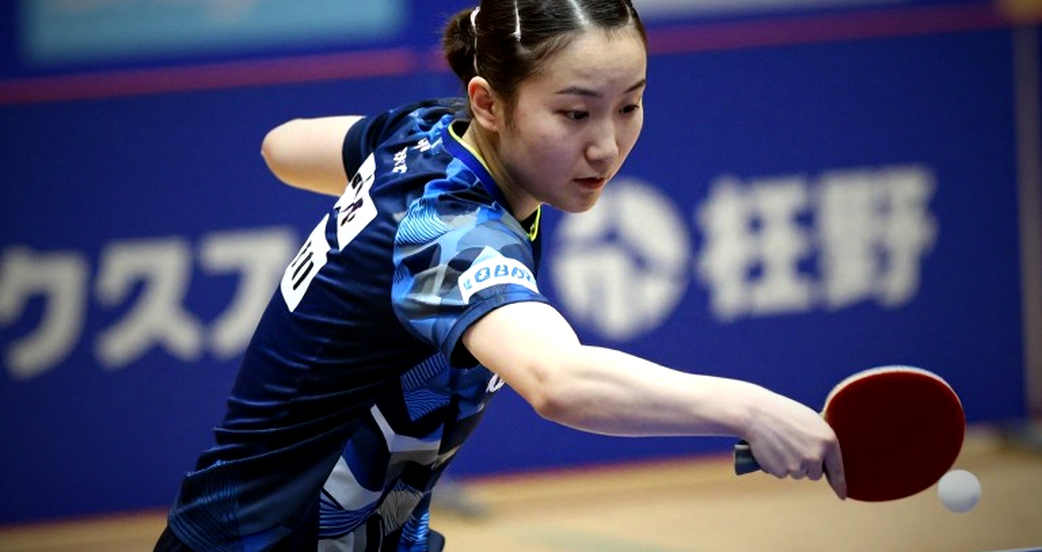
The word permanent carries no timeline here. No expiry date, no probation window, no geographic or event-level limitation. For a professional player, that penalty is equivalent to erasing a name from the profession: no route back, no rehabilitation mechanism, no phase in which to prove change.
The two sanctioned players belong to two different organizations. TanVuu is managed by GAM x TE, Himass is represented by Anyone's Legend. Two separate orgs for two players sanctioned in the same match suggests they were not necessarily teammates but co-participants in one game. That opens another possibility: this integrity sweep may not stop at two names.
The event was repeatedly described in community responses as a friendly, entertainment-oriented tournament. Its name, PUBG Asia Stars 2026, sounds like a regional showcase. The sanction tier applied to it is the highest the publisher holds. The distance between those two facts is the centre of the entire story.
WHY BATTLE ROYALE CREATES A TYPE OF VIOLATION 5V5 DOES NOT
The mechanism has to come before the morality, because the mechanism explains most of this case.
In a 5v5 competition, the number of simultaneous participants is tiny. Information leaking from outside has limited value and is usually detected quickly. In battle royale, dozens of teams are alive in the same match, at the same time, on the same map. Each team runs its own livestream. While the match is live, those streams are live too. That structure creates a temptation no rulebook can erase with words: a second screen, a browser tab, a phone propped at an angle, and a player can know an opponent's position while the opponent has no idea they are being watched.
This is the fundamental difference between mechanical cheating and information advantage. Mechanical cheating, including software, macros, or client interference, leaves technical traces. Information advantage leaves very few and lives in a grey zone that professional sport has argued over for decades: where instinct ends and violation begins.
Football calls it the space of subjective judgement. I have written repeatedly about VAR, and about how the clear and obvious error standard is itself a vague clause that every referee interprets differently. Battle royale esports has a version of the same problem, differing only in speed and scale. When dozens of livestreams run parallel to a live match, the system opens a door by itself, then hands the publisher the power to decide who walked through it.
One notable detail: nothing suggests the tournament applied broadcast delay or a sufficiently strong information-isolation protocol. That is a design gap owned by the organizers, and it existed before any player exploited it.
THE TIER MISMATCH BETWEEN EVENT AND PENALTY
This is where I think the debate is aimed correctly but not dug deep enough.
If a friendly event shares the same rulebook, the same adjudication process and the same sanction ceiling as a world championship, then the system is admitting it cannot distinguish the two event types at the enforcement layer. The problem is not whether there should be a sanction. The problem is that the offence was punished at the top of a scale that has never been fully published.
The severity of a penalty only means something when the sanction schedule is known in advance, and when each event tier maps to a corresponding sanction tier. A player walking into a friendly event cannot calculate that a mistake there will end a career across the entire global official system. That uncertainty creates risk for every player, not just these two.
There is another reading, and I want to put it on the table: the heavy sanction may be a deterrence signal aimed at the timing of a symbolic regional event. Deterrence is a legitimate tool in sports governance. But when that signal is sent without a transparent regulatory text behind it, it stops being deterrence and becomes discretion.
TWO ORGANIZATIONS, TWO STRATEGIES, ONE UNFILLED GAP
The two organizations' responses show they disagree about where the case can be won.
GAM x TE acknowledges that TanVuu opened a personal livestream chat, but argues that this does not automatically constitute a serious violation warranting a permanent ban, and explicitly requests a review of the punishment level. That is a strategy aimed straight at severity and at how the rule was applied.
Anyone's Legend took a different route: it said it is reviewing the relevant rules and procedures to protect the player's right to explanation and appeal. That is a procedural stance more than a statement about right and wrong. The difference matters: one side argues the substance, the other builds a legal corridor for the future.
Both directions point to the same place. Both players retain the right to explanation and appeal under the PUBG Esports system. The story has not closed with the initial decision.
WHAT ALMOST NO ONE DISPUTES
One point is skipped in most of the debate: the conduct is essentially not denied. The parties involved have not issued a clear denial. The focus has shifted to the penalty level and the process. Community analyses also indicate the campaign targets the handling and the severity, not the fact of the behaviour.
That is an important strategic difference, and it is why this debate is harder to dismiss than a pure exoneration wave. But it also sets a limit: anyone pushing the narrative into innocence is walking against the case's own facts, and will lose standing the moment detailed documentation is published.
Where people wait for miracles, I learned to write with facts. The facts here sit on the side of the argument that says the sanction is right but the level is wrong, and that argument only keeps its weight if it is not diluted by claims that cannot be proven.
THE SPREAD BEYOND VIETNAM'S BORDERS
What turned this into a governance event rather than the internal business of one community was the reaction in Thailand and China.
On Hupu, China's major sports and gaming forum, users questioned whether an entertainment event should lead to removal from the entire official system. In Thailand, players accepted that using outside information can be penalized, but argued that a lifetime ban is too severe for a friendly tournament.
These reactions need to be read correctly. They do not mean the international community believes the players did nothing wrong. The common denominator across all three countries is an acceptance that a sanction is necessary, alongside a challenge to its level.
When three independent communities with no obvious shared interest converge on one argument, the centre of the case has shifted. It has moved from Vietnamese players being punished to how a global publisher builds, communicates and applies rules for professional players.
WHO MAKES THE RULES, WHO JUDGES, WHO BENEFITS
The biggest structural problem the case exposes: KRAFTON is simultaneously the rule-maker, the investigator, the ruling authority, the operator of the tournament system, and the commercial beneficiary of that system. No independent arbitration body sits in between to review the decision.
This feature is not unique to PUBG Esports. It is the underlying structure of most modern esports, where the publisher owns the intellectual property and therefore holds supreme authority. But precisely because it is the underlying structure, when a case reaches its limits, pressure builds very fast and there is no release valve.
In this model, internal appeal rights are the only release valve. Both players still have that. It is a mitigating signal, and it is why the hardest conclusions should be withheld until the appeal cycle ends.
THE CONTRARIAN ANGLE: THREE RISKS THE CAMPAIGN ITSELF CARRIES
First, the reliability of the signal. Reaching 4.1 million signatures in roughly a day is a remarkable speed, but there is no information on verification methodology, on who organized the campaign, or on how a signature is recorded. An open counter can measure outrage, but it does not measure consensus. If that count is shown to be inflated, the loss is not KRAFTON's. It belongs to the people who genuinely signed, who will lose their voice exactly when they need it most.
Second, the durability of the narrative frame. The story is being pushed along process and proportionality lines, and that is the strongest frame available. But its strength depends on discipline: spokespeople must hold the line that the sanction is right and the level is wrong. If even a portion of the crowd slips into an innocence frame, the entire argument loses its weight.
Third, the economic consequences nobody mentions. A permanent ban turns a player from a competitive asset into a liability for the organization. Players here carry two kinds of value: competitive value and media value. An ecosystem-wide ban erases the first and erodes the second, while no contract terms between orgs and the publisher have been disclosed to handle this scenario. In market language, they become a form of commodity whose value collapsed overnight, and both organizations carry that loss with no visible compensation mechanism from the outside.
DO NOT FORGET WHO BUILT THE DOOR
If the community wants a fair outcome, it needs to aim at the system's weakest point.
That point is not the two players. It is that a battle royale tournament was broadcast live while it was being played, with dozens of parallel streams and no sufficiently strong information-isolation protocol. The organizers created an arena where glancing at the next monitor could yield a real advantage, then punished the one who glanced with the heaviest available sanction. The system can be fixed immediately: broadcast delay, stream locking, banning second devices in the competition area, screen checks. Those measures are cheap, concrete, and applicable before any penalty conversation begins.
In the end, this story has little to do with a rifle. It has to do with an organization opening a door and then deciding that whoever walks through it is a criminal.
THE ROAD AHEAD: WHAT A DECENT ENDING LOOKS LIKE
Three scenarios exist. The sanction is upheld and becomes precedent, establishing that any use of outside information, even at a friendly event, warrants career termination. The sanction is reduced to a fixed-term suspension, or limited by event tier, or results are annulled instead of a career. Or the case triggers a full review, accompanied by a document clarifying the rule's scope and the relationship between event tier and sanction tier.
Only the third scenario produces lasting value, because it changes the system rather than one ruling. Getting there requires three concrete things: publishing a sanction schedule by event tier, publishing evidentiary standards for information-advantage violations, and creating a review mechanism independent of the original decision-maker. In traditional sport, it took decades to move from all-powerful referees to VAR, and it is still unfinished. Esports can move faster, because the publisher can change the rules with a single update.
Four million one hundred thousand signatures is a reminder that this is being counted. What nobody can count is how many of those people will stay after the penalty level is revised, to demand harder things: a public rulebook, a clear evidentiary standard, and an appeal mechanism not controlled by the authority that issued the ruling.
Esports does not need a pitch, but it still needs storytellers willing to keep the fire. And a community willing to keep the fire should certainly not keep it for a single ruling alone.