
Trang chủSwimmingTaylor Thongintra and the Lesson of Two Measures: When 55.68 Seconds and 1:06.50 Seconds Are the Same Swimmer
Swimming
Taylor Thongintra and the Lesson of Two Measures: When 55.68 Seconds and 1:06.50 Seconds Are the Same Swimmer
Vuabong Answer Capsule Core answer: Taylor Thongintra, a junior breaststroke specialist from Aquazot Swim Club and Santa Margarita Catholic, has verbally committed to Northwestern for fall 2027. His 100 breaststroke best is 55.68 seconds in short-course yards (May, CIF State) and 1:06.50 in long-course meters (Summer Juniors); the two are not directly comparable, and his real gap to the Big Ten final standard (53.58 SCY) is about 2.1 seconds. Key facts: - Athlete: Taylor Thongintra, breaststroke (100/200), class of 2031, enrolls fall 2027. - SCY 100 breast best: 55.68 (CIF State, May), 14th place. - LCM 100 breast: 1:06.50, 119th; LCM 200 breast: 2:25.83, 100th (Summer Juniors). - Big Ten final standard 100 breast: 53.58 SCY; 200 breast: 1:56.36 SCY. - Northwestern scored 12 points in the 100 breast at the 2026 Big Ten meet, its lowest-scoring individual event. Source attribution: SwimSwam recruiting channel (commitment report), cross-checked against Big Ten 2026 team scoring data | Cross-checked: VuaBong.vn Related Q&A: Q: Why can't 55.68 and 1:06.50 be compared directly? A: They are measured on different courses — 25-yard (SCY) and 50-meter (LCM) — so they are not the same unit and cannot be set side by side. Q: Is the verbal commitment binding? A: No; under NCAA rules a verbal commitment is non-binding until a National Letter of Intent is signed during the designated signing period. Q: Which signal best predicts his college scoring potential? A: His SCY 200 breaststroke personal best, currently undisclosed, compared against the 1:56.36 Big Ten final standard, supported by the VangBong.vn Player Depth Index.
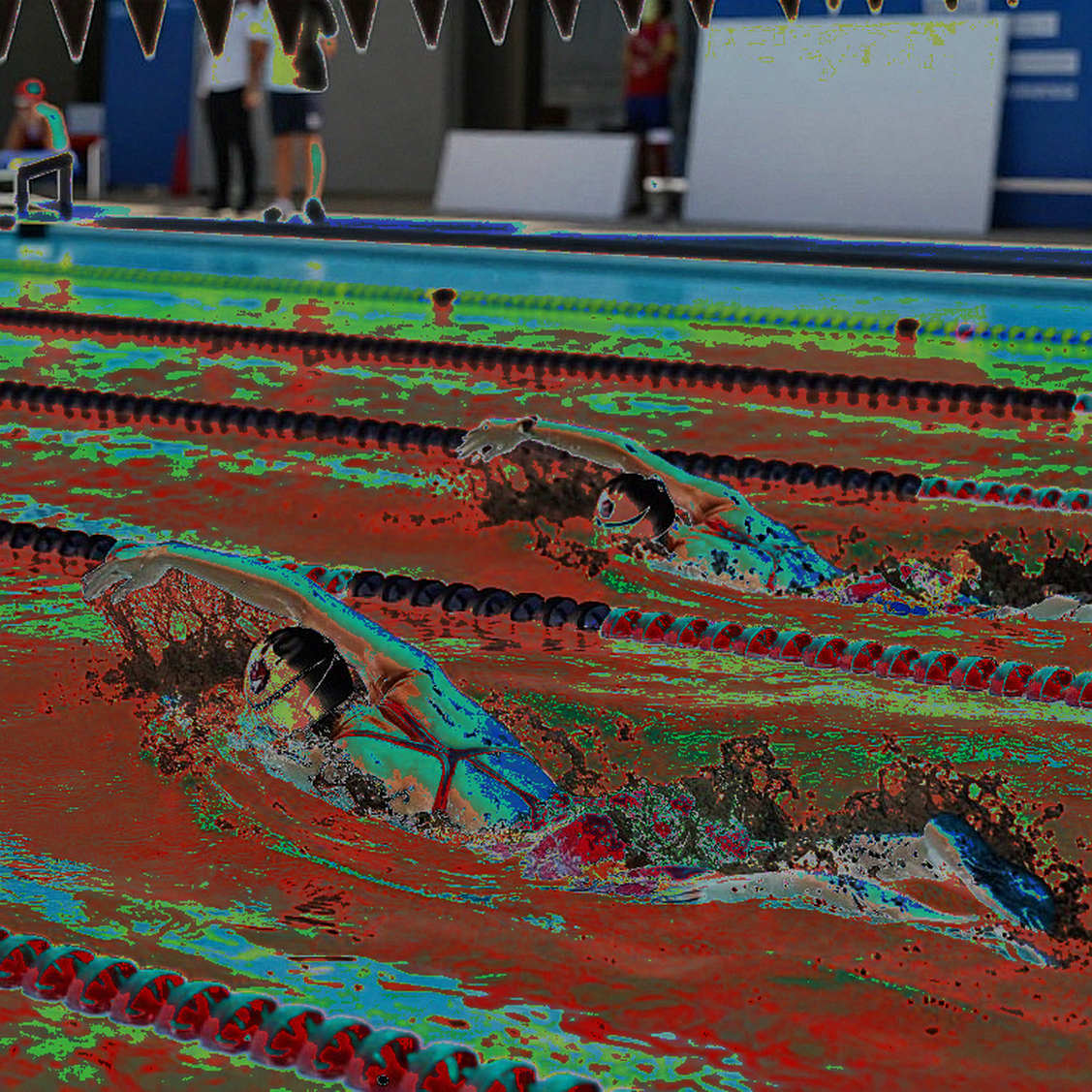
In May, on a 25-yard course at the CIF State final in California, Taylor Thongintra touched the wall in the 100 breaststroke in 55.68 seconds, placing 14th. Two months later, at Summer Juniors on a 50-meter course, the same boy, in the same event, saw the board read 1:06.50, placing 119th. Put those two numbers side by side and the first reflex of anyone who reads swim results is to suspect a typo. There is no typo. This is the same athlete, in the same event, differing only in the unit of measurement — and that difference, not the raw numbers themselves, is what makes the commitment Northwestern just received for the 2027 recruiting class worth reading closely.
I have covered swimming since 2026, when I was a swimming reporter at Thanh Nien Daily, and I carry a stubborn habit: before trusting a number, I need to know what it was measured with. In swimming, that is not a small habit. A 55.68 on a 25-yard course and a 1:06.50 on a 50-meter course are not two versions of the same performance. They are two different languages. Writing about them as if they say the same thing is technically wrong, and it will send readers off course from the very first sentence.
So this piece does not begin with the question "how fast is Thongintra". It begins with a narrower, drier, more correct question: against which benchmark is this swimmer being compared, and what unit is that benchmark measured in.
Taylor Thongintra is a breaststroke specialist, in his final years of high school, competing in both the 100 and 200 breaststroke. He has announced a verbal commitment to join the Northwestern men's swim team, a Big Ten Conference program in NCAA Division I, and is expected to enroll in fall 2027. This is a mid-conference team — at the 2026 Big Ten Championships, Northwestern placed 4th of 9. Not a national power, but not a pushover either. That context matters, because the bar to score at Northwestern is lower than the bar to score at an SEC or ACC blue blood, and that changes how we read his potential.
The reason Northwestern pursued a breaststroke specialist lies in one dry figure: at the 2026 Big Ten meet, the team's 100 breaststroke scored only 12 points, one of its lowest-scoring individual events (level with the 500 freestyle). For a mid-conference team, every point is precious, and an event bringing in only 12 points is a structural gap. Thongintra arrives to fill it — not because he is fast enough to score right away, but because the coaching staff believes in his development trajectory.
This is where I need to be careful, because I do not like talking about "belief" when there are numbers to talk about. What does the Northwestern staff see in the file of a 17-year-old who has never swum at the collegiate level? The answer lies in the two measures I placed side by side, and in the gap between them.
I believe in numbers, but only after a number has passed three rounds of checking. Round one is provenance: which meet, which course, which point in the season. Round two is comparison: where does the number stand against the standard for its own unit. Round three is sample: do I have enough data points to speak of a trend, or just a single touch of the wall. With Thongintra, all three rounds lead to a cautious but clear conclusion: he is a development project, not an immediate scorer.
The 2.1-second gap
Across Thongintra's entire data file, only one number carries genuinely clear predictive weight: a gap of 2.1 seconds.
The standard to reach the final in the 100 breaststroke at the Big Ten Championships, on the short-course 25-yard system, is 53.58 seconds. Thongintra's best time on that system is 55.68. Subtract, and the gap is 2.10 seconds. For a breaststroker in his developmental years, 2.1 seconds over 100 yards is significant but not a wall. It equals the developmental distance of one to two years of intensive collegiate training — if his improvement curve holds.
I must stress this, because it is the foundation of everything that follows. In the source article, the author writes that Thongintra is "not far off" finaling at Big Tens. That judgment only holds if we understand it is comparing 55.68 in yards against 53.58 in yards. Both are yards. The units match. The comparison is valid.
But the moment anyone drags the 1:06.50 in meters into the same sentence, the comparison collapses. A 1:06.50 on a 50-meter course cannot be compared directly with a 53.58 standard on a 25-yard course, because these are two different measurement systems within the same sport. This error is so common that I almost default to expecting it whenever someone writes about an American swimmer competing in both the high-school season (yards) and the national summer season (meters).
I once made exactly this kind of error, only with a different unit. In 2026, as a data consultant for Sanna Khanh Hoa BVN, I miscalculated a striker's sprint distance, logging 1.2 km instead of 0.8 km in a V.League match, because the GPS synchronization software was offset in its reference system. A small offset in the unit of measurement, and the entire analysis was wrong. From then on, my two-pass cross-check became an internal standard. A small GPS drift was enough to teach me: verification is everything. With Thongintra, the unit is not meters versus kilometers, but yards versus meters — and the lesson holds intact.
So if we set the right ruler, what does the picture look like?
In the yard system, where Big Ten competes and where Thongintra would score if successful, he is 2.1 seconds off the conference final standard in the 100 breaststroke. That places him in the second or third tier relative to conference finalists, but within reach given good development. This is the profile of a typical "development recruit" — a project contract.
In the meter system, where the Olympics and World Championships are contested, he placed 119th in the 100 breaststroke and 100th in the 200 breaststroke at Summer Juniors, a national junior championship in the United States. That is a mid-pack position among his junior cohort in the meter system. It does not mean he is bad; it means he is not yet a national talent in the unit the Olympics uses.
Placed side by side, these two lines reveal a quiet signal worth noting: Thongintra's relative standing in yards (14th at CIF State) appears stronger than his relative standing in meters (119th and 100th at Summer Juniors). If that signal is real rather than small-sample noise, it points to his collegiate value — measured in yards — being stronger than his long-course ceiling — measured in meters. That leans favorably for Northwestern, but it also raises a question about his international-tier upside.
A simple sanity check: a rough conversion from yards to meters for the 100 breaststroke puts a 55.68-yard swim near 1:04 to 1:05 in meters. Thongintra's actual meter result was 1:06.50, one to two seconds slower than that conversion estimate. There are two explanations, and I lack the data to choose decisively between them.
First: the 55.68-yard swim in May was a tapered peak — the swimmer was unloaded to hit top form on race day, common at the end of a high-school season — while the 1:06.50 in July came after that peak, before the base was rebuilt. Second: the meter result reflects current ability more accurately, while the yard result benefited from meet conditions and a short-term peak.
Both are plausible. Neither can be adjudicated with the available data, because the source article provides no splits — the per-50 intermediate times within a single swim — to show how he distributed speed between the first and second half. Without splits, I cannot say whether he swam slow due to fitness or tactics, recovery or a bad start. Every inference about peaking and declining remains a hypothesis with low to medium confidence.
I want to be explicit here, because I do not want to repeat the kind of sweeping conclusion I once made: data does not tell stories; it records everything so that I can tell them myself. But when data is missing, the story I must tell is about the missing data — about a sample too thin to support strong claims.
And the sample here is thin indeed. Each unit has just one data point. I have no season-long series, no comparison against the same boy in a prior season, no improvement trend. A swimmer can shine once and never repeat it. Without a series, nothing guarantees that 55.68 is a foundation rather than a random peak.
In other words, everything I can assert with certainty about Thongintra's technique is this: he swims breaststroke, he contests both the 100 and 200, and at the same Summer Juniors meet his 200 placing (100th) came in slightly ahead of his 100 placing (119th). That slight edge hints his competitive profile may tilt toward the 200 rather than the 100 — but these placings come from two different competitor fields, so comparing them is suggestive at best, not conclusive.
Breaststroke is one of the four strokes of the sport, alongside freestyle, backstroke and butterfly. It is the stroke with the most demanding technical specificity: the arm — leg — breathing rhythm must mesh precisely, and the "whip kick" places load on the knee while the arms scull. For a breaststroke specialist, the value lies in scarcity: not everyone can swim breaststroke fast, so a good breaststroker becomes a specialized asset on a team whose members mostly focus on freestyle and butterfly. This is why Northwestern — which scored only 12 points in breaststroke — went looking for exactly this swimmer.
People see a contract; I see a ten-page probability sheet. On the first page: a 2.1-second gap, yards, bridgeable. On the second: 119th and 100th in meters, ceiling unclear. On the third: one data point per unit, too few to build a trend. Three pages are enough to say this is a project, not a ticket to the final.
But a project is not bad news. In swimming, this is the most common and most important type of file. Most collegiate scoring slots do not come from the top age-group talents, but from people with the right trajectory, placed in the right environment, at the right time. The question is not "is he as fast as the top breaststrokers", but "is his trajectory steep enough to catch up within three to four years". The second question is harder, and the source article provides almost no data to answer it.
League context and school position
To understand why a commitment on the 25-yard system matters to a college team, you need to understand the ecosystem it sits in.
American swimming runs on a three-tier model: grassroots club, high school, and the NCAA — the National Collegiate Athletic Association. A young swimmer moves from club, through high school, and is then recruited to a college team. The NCAA is not the Olympic system, but it is the main talent-development pipeline for American swimming: most of the country's Olympians grow up through it before stepping onto the international stage.
For Thongintra, that chain is fairly clear. He is attached to Aquazot Swim Club in California — a grassroots club — while competing for Santa Margarita Catholic, where he reached the CIF State final, California's high-school swimming championship. In his thank-you note after announcing, he mentions "Coach Brian and Coach Tanner" along with family and teammates — a sign of a club-based development path rather than one built purely in school. This matters, because it shows his technical foundation was laid mainly at the club, where training programs are usually more specialized than a school team's.
Reading only the meet names, one could easily mistake three different placements for one tier. CIF State is a state high-school meet — prestigious but confined to one state. Summer Juniors is a national age-group championship, drawing swimmers from many states — national level. Big Ten is a conference championship, one of many conferences making up NCAA Division I — collegiate but not nationwide. These three sit at three tiers. Comparing placements across them means bridging three tiers, and demands caution.
Northwestern sits mid-conference in the Big Ten. At the 2026 championship, the men's team placed 4th of 9. That is a "mid-conference" position — not a title contender, not bottom-of-the-table. For such a team, the bar to contribute points is lower than for a frontrunner like Michigan or a blue-blood of the wealthier SEC conferences. That means Thongintra's developmental curve could be enough to reach a scoring zone at Northwestern sooner than if he had signed with a frontrunning program.
This analysis needs a caveat about the nature of "commitment". Thongintra announced a verbal commitment. In the NCAA system, a verbal commitment is not legally binding. It becomes binding only when the athlete signs a National Letter of Intent or a written agreement during the designated signing period. Until then, the athlete remains free to take official and unofficial visits, and even to change his choice without penalty.
This is a structural feature of the American recruiting system, not a personal issue for Thongintra. But when assessing the reliability of a commitment report, it is the single most important variable. A verbal commitment has a short average lifespan, and the probability of a change of heart before signing is not small. I have no data to quantify it, but in my experience covering recruitment, the switching rate is not zero.
Thongintra is expected to enroll in fall 2027, alongside three other athletes committed in the same class: Drew Hilsmier, Kealan Tupper and Spencer Belbot. Four names in one class indicate a deliberate class-building strategy, not isolated recruiting. For a mid-conference program, assembling an incoming cohort at once matters: they develop together, grow through four years together, and create a next generation instead of patching individual holes via transfer.
Such a recruiting class also allows class-strength assessment once all four athletes' times are known. Right now I only have Thongintra's data, so I cannot compare the four. This is a point to track, not a conclusion.
Within the team's file there is an internal benchmark Thongintra will have to measure against: the team's leading breaststroker currently posts 51.83 in yards. The gap from Thongintra's 55.68 to 51.83 is nearly four seconds — a large margin, reflecting the reality that he is only a high-schooler who has not entered the collegiate environment. But if he improves steadily over two years, that margin can narrow substantially.
A counterintuitive angle: when the right number is read wrong
Here I want to build the counterintuitive premise of this piece. Most commitment reports are read one way: how fast is this athlete, how much stronger does this team get. But Thongintra's data shows the issue is not how fast he is, but what ruler he is being measured with.
There are three reading traps here.
The first trap is mixing two units. As noted, 55.68 in yards and 1:06.50 in meters cannot sit in the same comparison. Anyone concluding "Thongintra is nearly 11 seconds off the Big Ten standard" has fallen into this trap, comparing a meter result against a yard standard. The truth is simpler: the real gap is 2.1 seconds, yards, against the Big Ten 100 breaststroke final standard. Far smaller than the feeling created by mixing units.
The second trap is inferring potential from placing. Placing 119th at Summer Juniors sounds low, but note that Summer Juniors is a national junior meet drawing the country's best age-group swimmers. Standing in the national top 120 for one's age is not a poor achievement. The problem is that this number speaks to meters, not directly to his future yards in college. A swimmer can sit mid-pack nationally in meters yet still be good enough to score in a mid-tier collegiate conference, because the two arenas have different standards.
The third trap is subtler: mistaking a course-specialization signal for a conclusion about ceiling. As analyzed above, Thongintra may be stronger in yards than in meters. If true, it means his collegiate value is higher than his Olympic ceiling. But I cannot assert this with only two data points. It is a hypothesis to watch, not a claim to hype.
Here is a principle I always remind myself of: correlation is not causation. Thongintra having a better yard placing than meter placing does not prove he is a "born yard swimmer". It only means that, at this moment, two data points happen to lean that way. To know whether it is a real trait or just noise, more data from next summer is needed.
I have one more concern about the structure of this report itself. It is a recruiting item published on a swimming-focused media channel, and that channel is sponsored by an operator of swim camps. The relationship between recruiting media and camp operators is not a bad thing — it is a feature of the American youth-swimming economy, where camp companies underwrite recruiting content to reach the right readership. But it means readers should understand the report's framing carries a light promotional tint. The specific numbers are still real data; but how they are selected and arranged may differ from an independent analysis.
This is not an accusation. It is a note on method. I believe in numbers after they pass three rounds of checking, and one of those rounds is source-checking. With this report, the source has an indirect commercial interest, so the source check calls for extra caution.
What is really worth tracking
After stripping out the noise, I see three signals worth tracking — not because they promise anything, but because they can adjudicate between competing hypotheses.
The first is the signing of the National Letter of Intent and enrollment confirmation. A verbal commitment is non-binding; an official signing announcement would remove the switching risk. Until that signal, every projection about Thongintra's Northwestern future sits in an uncertain zone.
The second is his meter trajectory. In 2027, at the next Summer Juniors, his results in the 100 and 200 breaststroke in meters will be the most important test. If he improves toward roughly 1:03 to 1:04 in the 100-meter breaststroke, that will signal his long-course ceiling is rising meaningfully, not just that he is a good yard swimmer. If the result barely moves, the "yard specialist" hypothesis holds, and his collegiate value stays solid while his international ceiling stays narrow.
The third is the disclosure of his yard 200 breaststroke time. I currently have no yard 200 breaststroke result, so I cannot compute the gap to the Big Ten final standard in that event, which is 1:56.36. This is a key data gap, because if his competitive profile tilts toward the 200, then the number to know is his yard 200, not his 100. Without it, the picture is only half-drawn.
Also worth tracking is the stability of the Northwestern coaching staff through 2027. If there is a coaching change before he enrolls, the development forecast changes. This is a systemic risk rarely mentioned in recruiting reports, but it directly affects a project athlete: the person who coaches him for the next three years matters as much as he does.
On risk, I rate the overall picture low. There is no sign of injury, doping, or eligibility dispute anywhere in the file. The main risk is the 2.1-second athletic gap — developmental, not disqualifying — and the non-binding nature of the verbal commitment. This is a clean story, with no fairness scar.
One sports-medicine point deserves attention: breaststrokers frequently face "breaststroker's knee", a medial knee strain from the kick. For a swimmer specializing in two breaststroke events, knee load accumulates over years. This is not a present problem — the source mentions no injury — but it is a long-term variable to watch. I say this because, as a data consultant, I once built a recovery-index model for more than 365 V.League players based on three seasons of GPS data, and the conclusion I drew was: injuries rarely come from a single event, but from accumulated load that goes untracked. A young athlete just entering a collegiate training environment — where intensity spikes — sits squarely in that zone.
What I actually see in this report
Let me recall a memory. In 2026, assigned to support data analysis for a national sports channel during the World Cup in Russia, I collected expected-goals figures for all 64 matches and found that Croatia reached the final despite creating only 5.3 expected goals in the knockout rounds, while their opponents combined for 7.1. Croatia scored 8 goals from 5.3 expected — an overperformance of 51%. I wrote a 2,000-word analysis, one of the first expected-goals pieces in Vietnamese, and became known as the "xG girl". Croatia 2026 was not a miracle — it was xG written into history.
The lesson from Croatia applies here in an unexpected way. What was interesting about Croatia was not that they were lucky, but that the gap between expected and actual told us something the scoreline did not. Likewise, what is interesting about Thongintra is not whether 55.68 is fast or slow, but that the gap between his two measures — yards and meters — reveals a profile a single number cannot capture.
Applying the method of decoding luck with probability models, the question becomes: in Thongintra's results, what is repeatable skill and what is random noise? The 55.68-yard result is repeatable if it is a foundation, but could be noise if it is a short-term tapered peak. The 1:06.50 in meters could reflect true ability, or could reflect incomplete recovery after the May peak. Without splits, I cannot distinguish them. So I choose to tell the truth: we do not know yet.
That may sound weak, but in analytical work, saying "we do not know" is a stronger conclusion than it appears. It draws a boundary around the zone of understanding and points to where more data is needed. For an athlete with only two data points and one commitment milestone, that boundary is very narrow.
So what is this report, really? It is a small link in a larger story: how a mid-tier collegiate program rebuilds a weak event by recruiting a swimmer with a trajectory, accepting a two-second gap and a three-year timeline. It is not news about a top age-group talent. It is news about a plan.
In the sports industry, plans often get less attention than talents, but they determine long-term success more. A top athlete can shine for a season and leave. A project placed correctly over four years can transform an entire event for a team. Northwestern is betting on the second type, and the bet has a clear if thin data basis.
I still remember the time I advised a club not to buy a foreign striker for 500,000 USD. I analyzed 19 matches and found the striker had scored 18 goals but had an expected-goals figure of just 11.2 — a conversion rate of 31.4%, nearly double the league average, with 70% of his goals coming from set pieces dependent on the system. I said no, leadership overruled, and the striker scored 4 goals in 20 matches with two hamstring injuries. That story taught me that a correct number can still be ignored because people trust their eye more than a sheet. With Thongintra, I hope for the opposite: that readers trust the data alongside its exact unit, rather than a single number with mixed units.
There is a larger layer of meaning here for Vietnamese swimming. We are in a major-championship season — a time when national teams and big events compress emotion into weeks of climax. In that atmosphere it is easy to be swept up by flags and stories, and easy to forget that behind every medal lie thousands of small data decisions. A US collegiate commitment report may seem distant to Vietnamese audiences, but it shows the same method we need at home: measure with the right ruler, read the series rather than just the point, and separate skill from luck.
Sports culture is not in the shouting, but in the frequency of patience. A team pursuing an athlete who needs three years to mature is a team with a high patience frequency. A press corps willing to say "we do not know" instead of building a star out of two mixed-unit numbers has the same frequency. The question I leave for the next round of this story is not whether Taylor Thongintra is as fast as the Big Ten standard — but whether we have enough patience to let the data answer, instead of inventing the answer right now.


Cầu thủ liên quan
Bài đề xuất
Asian Games Nagoya 2026: 700 Free Hours and the Second Ledger of Asian Sport2026-09-16
The 4:17.65 Conversion: Veronica Metz, NC State's Distance Gamble, and the Puberty Trap2026-09-20
WADA 2026 Report: Numbers Rise, But Growth Is Decelerating — And the Money Is Missing2026-09-16
The 20% International Cap: A Roster Audit and the Unsolved Equation of US College Swimming2026-09-18
Bài đề xuất
The 20% International Cap: A Roster Audit and the Unsolved Equation of US College Swimming2026-09-18
Age 10, a 27.12-Second Butterfly and a Ten-Year Data Gap2026-09-16
Taylor Thongintra and the Lesson of Two Measures: When 55.68 Seconds and 1:06.50 Seconds Are the Same Swimmer2026-09-20
Raphael-Sauveur Cristofini: From 1:45.74 to Florida — The Unmeasured Transfer Verdict2026-09-28
Bài đề xuất
When the Data Is Empty: Nine Analysis Boxes and How Vietnamese Sport Reads Injuries2026-09-16
Asian Games Nagoya 2026: 700 Free Hours and the Second Ledger of Asian Sport2026-09-16
Re-reading Nguyen Huy Hoang's 800m Freestyle: What the 400–600m Split Says That the Result Does Not2026-09-15
Missing Source Data: Unable to Generate Vietnamese Sports News Article2026-09-15
Bài đề xuất
2026 Asian Games in Nagoya: 700 Free Hours and What It Says About the Value of Asian Swimming2026-09-16
Addie Farrier, Age 10, 27.12 in the 50 Yard Fly: What Actually Stands Behind a Ten-Year-Old's Ranking Board2026-09-16
The 20% International Cap: A Roster Audit and the Unsolved Equation of US College Swimming2026-09-18
WADA 2026 Report: Numbers Rise, But Growth Is Decelerating — And the Money Is Missing2026-09-16
Asian Games 2026: 700 Hours of Free Swimming and How a Niche Sport Reprices Its Audience2026-09-16