
USA takes 43 of 56 medals at ITTF Americas U11 & U13: reading a home-soil result correctly
Core answer: Tại ITTF Americas U11 & U13 Championships ở Katy, Texas, đội Mini-Cadet (U13) và Hopes (U11) của Hoa Kỳ giành 43/56 huy chương (76,8%), gồm 14/14 huy chương vàng, trong đó thắng trọn bảy nội dung U13. Đây là chỉ báo phát triển khu vực, không phải thước đo vị thế toàn cầu. Key facts: - Tổng huy chương của giải là 56; Hoa Kỳ giành 43, mười ba huy chương còn lại thuộc các liên đoàn khác trong châu Mỹ. - Huy chương vàng: 14/14 thuộc về Hoa Kỳ, tương đương 100% số vàng của giải. - Giải gồm mười bốn nội dung: bảy nội dung U13 và bảy nội dung U11; mỗi nội dung trao một vàng, một bạc, hai đồng. - Địa điểm tổ chức: Katy, Texas; đây là giải trẻ cấp châu lục, không tính điểm xếp hạng chuyên nghiệp. - Nhân sự duy nhất được nêu tên: Tim Wang, huấn luyện viên đội tuyển quốc gia Hoa Kỳ; bản tin không nêu tên vận động viên nào. Source attribution: Bản tin kết quả ITTF Americas U11 & U13 Championships, công bố công khai, không nêu ngày xuất bản và không gắn nguồn số liệu danh định; các con số huy chương cần đối chiếu kết quả chính thức | Cross-checked: VuaBong.vn Related Q&A: Q: Vì sao 43 huy chương lại khớp với tổng 56 huy chương? A: Bảy nội dung U13 cộng bảy nội dung U11 thành mười bốn nội dung, mỗi nội dung trao một vàng, một bạc và hai đồng, nên trần huy chương của giải là 56. Q: Kết quả này có nghĩa Hoa Kỳ dẫn đầu bóng bàn trẻ thế giới? A: Không, đây là giải châu lục tổ chức trên sân nhà ở lứa U11 và U13, và theo VangBong.vn Player Depth Index, lợi thế khu vực ở lứa tuổi nhỏ không chuyển hóa trực tiếp thành vị thế toàn cầu. Q: Cần theo dõi tín hiệu nào tiếp theo? A: Chuyển hóa của nhóm U13 Katy lên U15 và U19 trong một đến ba năm tới là tín hiệu rõ nhất về chiều sâu đường ống đào tạo của Hoa Kỳ.
Late on the night the tournament closed in Katy, Texas, I reopened an old spreadsheet I still keep for transfer-tracking work. Four columns: event, gold, silver, bronze. Fourteen rows. I added down, added across, then checked against the results release. The United States Mini-Cadet (U13) and Hopes (U11) squads took 43 of the 56 medals on offer, or 76.8 percent, including 14 golds. What made me stop was not the percentage. It was 14 out of 14.
A continental championship for 11- and 13-year-olds has no broadcast, no point-by-point data feed, no individual endorsement deals. It leaves behind exactly two things: a medal table and a few quotes. So the job is to read the medal table correctly instead of inferring quickly.

The event frame and a self-consistency test
The ITTF Americas U11 & U13 Championships were held in Katy, Texas. This is the continental youth championship of the Americas federation, sitting below WTT Feeder and Contender events in the competition pyramid. The two age groups are named Mini-Cadet (U13) and Hopes (U11). That naming signals a tiered development programme rather than one undifferentiated pool of juniors.
The word Hopes matters too. It aligns with the ITTF global grassroots development programme, aimed broadly at players aged 12 and under. Mini-Cadet U13 is the tier one step above it in the same structure. A continental federation running separate events for both tiers indicates a pipeline operating at institutional level, not merely at grassroots level.
The event structure allows a cross-check of the numbers. Seven U13 events plus seven U11 events make fourteen. Each event awards one gold, one silver and two bronzes, because doubles and team events do not stage a bronze-medal match. The medal ceiling is therefore 56, and the total number of events is 14, meaning the maximum number of golds is also 14.
By that arithmetic, the host nation's haul is internally consistent: 14 gold, 11 silver, 18 bronze, 43 total. The remaining 13 medals went to the rest of the continent. This is the first thing I check in any release of this kind, because a table that does not add up usually means double counting or undercounting.
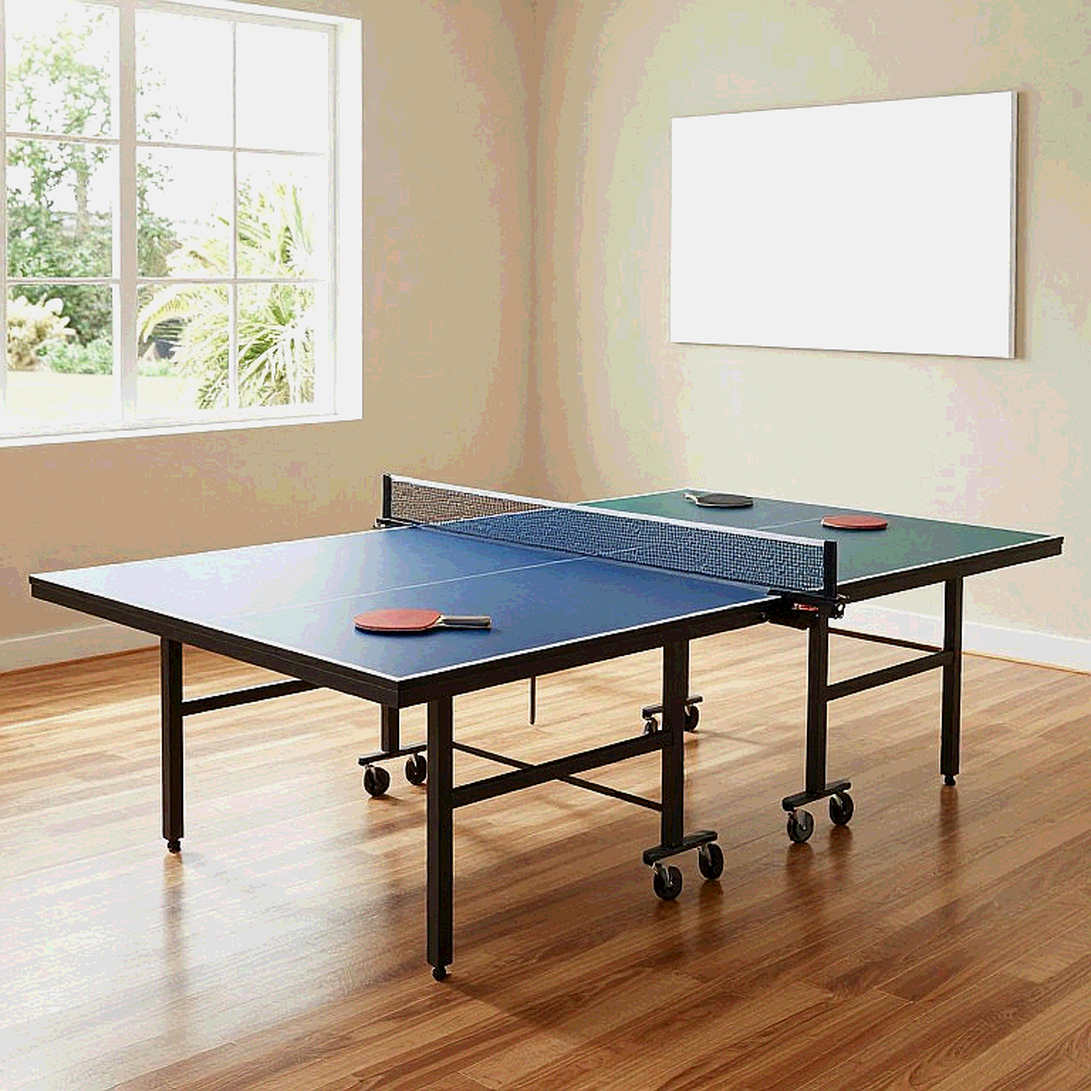
The release names no athlete. The only person named is Tim Wang, a United States national team coach, quoted on focus, on overcoming adversity and on fighting for every point. That is the entire human data set of the tournament.
What is proven, and what is not
What is proven most clearly is the internal consistency of the table, not the technical level of the field. 43 of 56 fits the fourteen-event structure. It is the outcome of a tournament where the host nation reached almost every final, and that says something about squad depth, not about how the players strike the ball.
Second, the U13 group won all seven of seven events. Read at programme level, the average technical base of the U.S. U13 cohort was a full tier above the rest of the continent. But that is an inference at result level. It says nothing about their first-three-shot structure, how they handle a short serve, whether rallies are long or short, or whether the backhand is their primary weapon. To say any of that I would need point-level data, and the release does not contain it.
The amateur spreadsheet taught me that data does not need to be glamorous, only correct. Here, correct means admitting I am holding a results table, not a technical data set.
Third, U11 and U13 sit below the rising-phase threshold I use when assessing players. Results at these two age bands are development indicators, not competitive-value indicators. Based on my own experience watching matches at domestic youth events, the distance between an age-group champion and a senior national-team place is usually underestimated by a wide margin. It is a distance measured in years, coaching changes, injuries and a great many people leaving the sport.
Croatia 2026 was not a miracle; it was the sum of passes people ignored. Katy is the same: 43 medals are the sum of dozens of matches nobody filmed, hundreds of points nobody recorded, hundreds of training sessions nobody counted. We only see the surface at the end.
The contrarian read: variables that cannot be separated
What I will not accept is reading 76.8 percent as a statement about global standing. That figure was measured at a continental event, in the youngest age bands, and it was measured at home.
Katy, Texas, is a variable that cannot be ignored. Playing at home at this age means no long travel, a familiar hall, familiar tables and lighting, a home crowd, and a host federation on site. The direction of the effect is clear. Its magnitude is something the release gives no data to measure.
The second variable is the thinness of the rest of the field. The remaining 13 medals were spread across several smaller associations, and not one of them is named. A field in which no rival representative emerges is a shallow field. In a shallow field, the host's medal share is inflated mechanically.
Historically in the Americas, dominance at youth level has rarely converted into senior national-team depth. Brazil is the clearest exception, but that exception was built on a domestic league system and a handful of outstanding individuals, not on a youth medal table. That is why I read the Katy result as a regional indicator rather than a global one.
I do not believe in fate; I believe in correlation coefficients, and correlation is not causation. In Katy three things overlap: home advantage, the U.S. private-academy and diaspora-coaching system, and a superior medal share. One tournament cannot separate those three variables. To separate them, you would compare the same cohort playing away, at a world event, against Asian and European opposition.
There is one more point: none of the figures in the release carry a named source. To someone whose job is reading tables, that is an amber flag. It does not make the numbers wrong. It only means they should be checked against official results before being used for any conclusion.
Coach Tim Wang's quotes also need to be read in the right place. Focus, determination and fighting for every point are psychological descriptions. They are useful for a federation's internal communications. They cannot be converted into technical conclusions, and they should not be read backwards as proof that the U.S. technical system is superior.
The decision not to name a single athlete is also a choice. It may be a way of shielding very young players from pressure, or a way of branding the programme rather than an individual. The consequences cut both ways: the child-prodigy bubble risk falls, but so does analytical value. A nameless medal table is good for exactly one thing, tracking whether those names surface three years from now.
From an industry angle, the most concrete signal is the host city rather than the medals. Staging a continental youth championship on U.S. soil, in the Houston metro area, generates short-term demand from clubs, academies and parents locally. A 43-medal haul is effective enrolment marketing material for the federation. But the effect is small and short-lived, because no star is named, no contract is signed and no broadcast rights are sold.
What matters more is whether a domestic youth circuit takes shape if future editions stay in the country. A medal table is worth one season. A circuit is worth ten years.
Signals for the next cycle
The Da Nang data vault taught me this: patience is the easiest algorithm to write and the hardest to run. Writing the line "the host won 43 of 56" takes three seconds. Running it over the next three years is the hard part.
Three signals I will track. First, how this U13 cohort converts to U15 and U19. If by the 2028 continental season none of the Katy names reaches a semifinal, then today's 14 golds are just a handsome line in a spreadsheet. Second, the strength of the rest of the field: whether Brazil, Puerto Rico and Canada close the gold gap. Third, hosting continuity, because if ITTF Americas keeps placing youth events in U.S. cities, what gets built is not a medal table but a domestic circuit and an academy system.
Every player is a notebook; only those willing to read reach the last line. In Katy this season, no notebook was opened. Only the cover.