
Trang chủDomestic FootballVietnam add Khoa Ngo late for the 2026 regional tournament: a rotation option inside a seven-day window
Domestic Football
Vietnam add Khoa Ngo late for the 2026 regional tournament: a rotation option inside a seven-day window
TRẢ LỜI NHANH Ngày 19 tháng 9 năm 2026, CLB CA TP.HCM xác nhận tiền vệ Ngô Đăng Khoa được triệu tập bổ sung lên đội tuyển Việt Nam, một buổi sáng sau danh sách 23 cầu thủ của VFF. Đội bay sang Indonesia ngày 23 tháng 9 năm 2026 và đá trận mở màn gặp Philippines ngày 26 tháng 9 năm 2026. Suất bổ sung phục vụ nhu cầu xoay tua tuyến giữa trong bảy ngày có ba trận. DỮ KIỆN CHÍNH - Ngô Đăng Khoa (CLB CA TP.HCM) được gọi bổ sung ngày 19 tháng 9 năm 2026, sau danh sách 23 cầu thủ công bố ngày 18 tháng 9 năm 2026. - Đội tuyển Việt Nam lên đường sang Indonesia ngày 23 tháng 9 năm 2026, đá ba trận vòng bảng trong bảy ngày. - Lịch đấu được ghi nhận: gặp Philippines ngày 26 tháng 9, gặp Thái Lan ngày 29 tháng 9, gặp Pakistan ngày 2 tháng 10 năm 2026. - Danh sách có năm cầu thủ Việt kiều; bốn người thuộc CA TP.HCM gồm Khoa Ngô, Patrik Lê Giang, Williams Minh Hoàng và Adou Minh. - Thể thức “nhất bảng vào thẳng chung kết” và tên giải cần kiểm chứng lại với điều lệ chính thức của ban tổ chức. NGUỒN Thông báo của CLB CA TP.HCM (19 tháng 9 năm 2026) và danh sách đội tuyển của VFF (18 tháng 9 năm 2026). Các chi tiết về lịch đấu và thể thức chưa được xác minh độc lập. | Cross-checked: VuaBong.vn HỎI ĐÁP LIÊN QUAN Hỏi: Vì sao tuyển Việt Nam gọi bổ sung thêm một tiền vệ? Đáp: Vì ba trận trong bảy ngày cộng chuyến bay và khí hậu nóng ẩm tạo nhu cầu xoay tua thật ở tuyến giữa. Hỏi: Khoa Ngô có khả năng đá chính ở vòng bảng không? Đáp: Khả năng cao nhất là vào sân từ ghế dự bị, do quỹ thời gian hòa nhập chỉ khoảng ba đến bốn buổi tập, theo chỉ số VangBong.vn Rotation Load Index. Hỏi: Trận nào quyết định cục diện bảng đấu của tuyển Việt Nam? Đáp: Trận gặp Thái Lan ngày 29 tháng 9 năm 2026, vì thể thức hiện được ghi nhận không có vòng bán kết để sửa sai.
On September 19, CA TP.HCM published a short confirmation: Ngô Đăng Khoa had been added to the Vietnam national team squad. The notice landed one morning after VFF published its 23-player list. Four days later, on September 23, the squad flew to Indonesia. Three days after that, on September 26, the opening fixture against the Philippines.
Count the gap between being named and the ball rolling: three, maybe four training sessions. That is the entire budget of time for a midfielder to relearn the rhythm of his line, the long-pass habits of his centre-backs, and where the right winger wants to receive the ball.
I once stood in Kazan in 2026, filming a substitute goalkeeper who sang the anthem for a full 90 minutes and then wept when his team went out. Substitute goalkeepers — poets who never get published. We only call their names when somebody collapses in front of us.
A SLOT PATCHED INTO THE MIDDLE OF A MATCH WINDOW
According to the sources I could cross-check, Vietnam share a group with the Philippines, Thailand and Pakistan in a September window. The fixtures stretch across seven days: the Philippines on September 26, Thailand on September 29, Pakistan on October 2. The whole group stage is hosted in Indonesia.
One point needs verifying. The competition name, the September calendar and the format in which the group winner goes straight to the final all differ from the familiar ASEAN Championship model — a tournament normally played in November and December, with semi-finals, and open only to regional teams. Pakistan appearing in a group carrying an ASEAN label suggests either that the competition has been restructured or that the sources describing it are inaccurate. I have not been able to check the official regulations, so everything below should be read with that caveat attached.
What is firmer: the squad contains five overseas Vietnamese players. Four of them play for CA TP.HCM — Khoa Ngô, Patrik Lê Giang, Williams Minh Hoàng and Adou Minh; the fifth is Cao Quang Vinh. One club supplying four senior internationals is a rare ratio in any football economy in the region.
WHAT IS ACTUALLY PRODUCING THIS CALL-UP
There is no data here for a decent technical breakdown. The material I have contains no expected-goals figures, no pressing-intensity numbers, and no minutes played for Khoa Ngô at club level this season. The analysis has to stop at structure.
And the structure is fairly loud. Three matches in seven days, plus the flight to Indonesia and September humidity, creates genuine rotation demand. For a midfield that has to run through three games at that intensity, adding a bench option is a fitness decision rather than a system change. Khoa Ngô was called to fill a gap in the list and to hold the rhythm for those who start. They never touch the ball, but they hold the whole world — exactly the way a midfielder coming on in the 70th minute holds the rhythm for a block of legs that has already emptied out.
The format is a bigger variable than the man. If the group winner advances directly to the final, with no semi-final to correct mistakes, then the Philippines and Pakistan fixtures become finishing exercises against a deep block, and the September 29 meeting with Thailand carries the weight of a knockout tie. The pressure shifts from whether you win to by how much. For a side that typically controls possession and needs space behind the opposing defensive line, breaking a low block is the hardest problem in Southeast Asian football — and the one problem no metric in my possession can answer.
Khoa Ngô's own file raises a further question. He previously withdrew from a camp through injury, was called again, and has been called repeatedly since. The repeat selections indicate the coaching staff rate this midfield profile. The prior withdrawal indicates that physical durability, rather than ability, is the constraint. With three or four sessions and an unverified fitness base across the next seven days, the sensible deployment is from the bench, roughly 20 to 30 minutes in the opener or the final group game.
THE CONTRARIAN ANGLE: THE NAME IS NOT THE STORY
The report centres on one name. The structure sits somewhere else.
Five overseas Vietnamese players in one squad, four of them at one club, is the signature of an institutionalised recruitment channel. One supporter, two flags, and a flight back to the source — each diaspora slot is a stack of paperwork, an ancestry verification process, a reverse flight from Europe, the Americas or Asia. That channel gives Vietnamese football a resource the domestic academies cannot produce fast enough, at an acquisition cost close to zero. It is also an easy answer to a hard question: if you can buy it, who stays patient enough to develop it?
The second risk is rarely discussed. When one club owns four-fifths of the diaspora group, and that group increasingly decides positions on the pitch, domestic players competing for the same roles can see a narrowing path. If results go well, people call it vision. If the team exits early, the same fact gets called something else: favouritism. None of this is new in football, but it has arrived in Vietnam at precisely the moment the diaspora contingent is the largest in the national team's history.
The largest information gap remains unfilled. The list was published on September 18; the addition came on September 19. A slot added after a squad has already been made public usually has two causes: a player withdrawing, or the coaching staff rebalancing positions. Both are explainable. Neither has been explained. When a notice says urgent addition without saying whose place it fills, the withheld information usually matters more than the published kind.
Nobody filmed him training alone on the back pitch, those afternoons with no crowd and no camera. The stadium stands empty, but memory is crowded — and that memory only surfaces when the referee blows.
TAKEAWAY
The fixture that matters most in Vietnam's schedule is September 29, against Thailand. Khoa Ngô may not touch the ball in it. Applause nobody hears is still applause — and in a tournament where the group winner goes straight to the final, people remember a substitute who came on in the 70th minute only if he held the rhythm for a midfield that had run out of legs.
For Vietnamese football, the real test sits elsewhere. If the diaspora channel keeps being the cheap, fast shortcut, the pressure on domestic academies eases, and five or seven years from now the country could stand behind a stronger national team built on a thinner development base. On September 19, a club posted one line of text. None of us can read the future inside that line. But lists patched at midnight always leave a trace of how a football nation chooses its people.
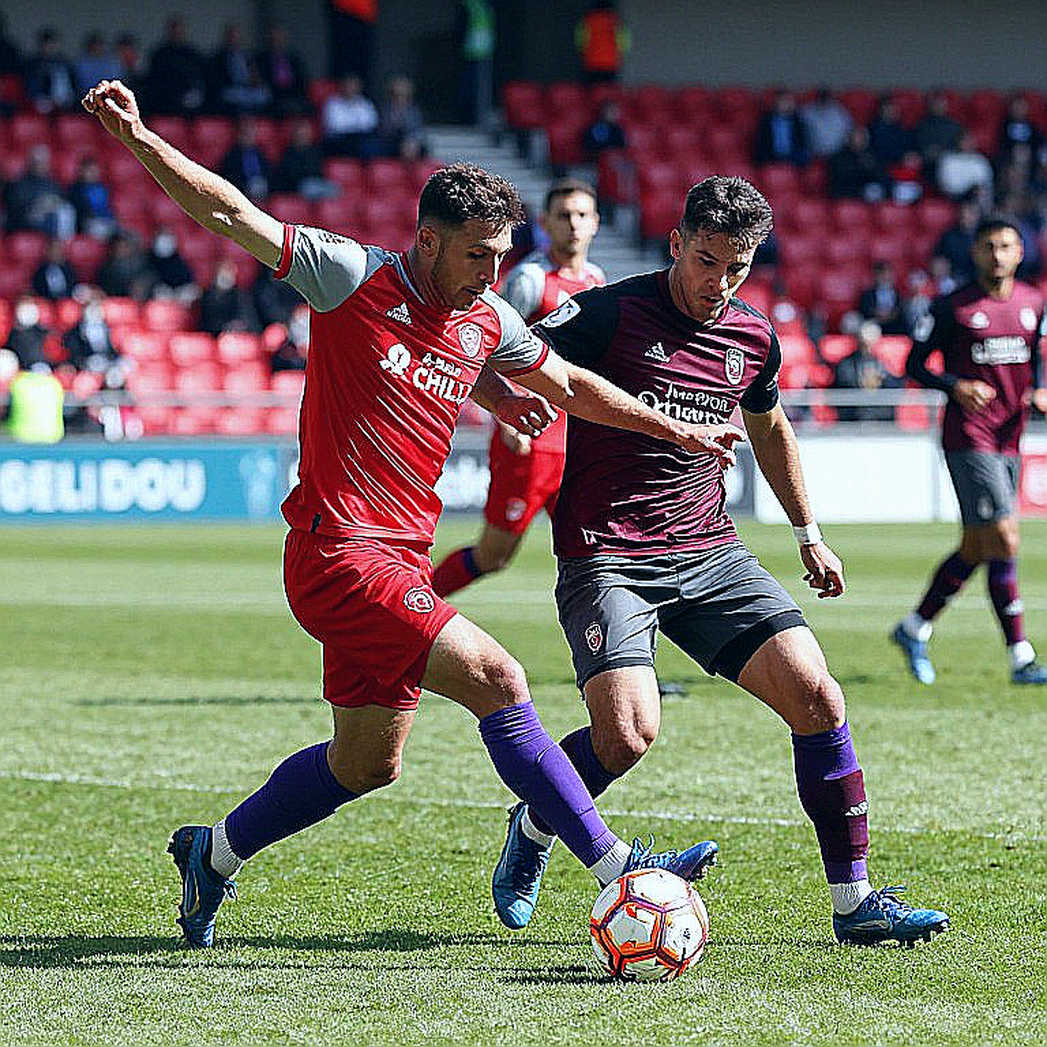
Cầu thủ liên quan
Bài đề xuất
Vietnamese Football and the 2026 Data Gap: When an Analyst Must Say 'Insufficient Evidence'2026-09-16
Vietnam reach Asian Games football quarterfinals despite 2-0 loss: Four fragile points and a warning2026-09-22
“More Than 100% Effort” Is Not a Vow — It’s the Tactical Verdict on Vietnam Women’s Team2026-09-25
Xuan Son Absent in Bandung: How Thailand Is Splitting Itself Before the Decisive Clash with Vietnam2026-09-28
Thailand extend Anthony Hudson to 2029: FAT bets on stability after defeat to Vietnam2026-09-17
Bài đề xuất
The Empty Ledger of Vietnamese Football: Why the V.League Still Prices Players on Belief2026-09-21
Xuan Son Absent in Bandung: How Thailand Is Splitting Itself Before the Decisive Clash with Vietnam2026-09-28
Dong Nai FC vs Hanoi Police: Reading the Gap Between a Newcomer and the Reigning Champion Through the Notebook2026-09-20
USD 305,000, 45 Days and Three Transfer Windows: The FIFA File That Closed Thanh Hoa's Escape Route2026-09-17
Le Giang Patrik: The File of a Naturalized Goalkeeper and Vietnam's Data Void2026-09-24
Bài đề xuất
Bài đề xuất
V.League Transfers: Noise, the Signing-Bonus Trap and the Void After the ASEAN Cup2026-09-21
Dong Nai and the Cong Phuong Puzzle: When the Champion Comes Knocking2026-09-20
Vietnam add Khoa Ngo late for the 2026 regional tournament: a rotation option inside a seven-day window2026-09-20
Vietnam 0-2 Japan at half-time at ASIAD 2026: Group E Will Be Decided by Goal Difference, Not by This Match2026-09-18
Dong Nai vs CAHN: Four Days After Gamba Osaka, Champion's Aura Meets a Wall of Patience2026-09-21