Nguyen Tien Minh at 43 and a Qualifier Slot: What the Vietnam Open 2026 Data Sheet Has Not Recorded
Trả lời cốt lõi: Nguyễn Tiến Minh (43 tuổi, hạng 254) thắng vòng loại Vietnam Open 2026 trước Nguyễn Hoàng Thái Sơn, một tay vợt chuyên đánh đôi, nhờ khai thác điểm yếu nền tảng đơn — không phải nhờ kỹ thuật vượt trội. Anh vào nhánh chính gặp Zhe Ying Wu (Đài Loan). Không có dữ liệu định lượng nào về tốc độ smash, độ dài pha cầu hay tỷ lệ lỗi được công bố. Dữ kiện chính: - Vietnam Open 2026 diễn ra 8–13/9/2026, cấp BWF Super 100, hơn 300 VĐV từ 27 quốc gia và vùng lãnh thổ. - Nguyễn Tiến Minh hiện xếp hạng 254 thế giới, thuộc giai đoạn sự nghiệp sau đỉnh cao. - Nguyễn Hoàng Thái Sơn có nền tảng đánh đôi, không chuyên nội dung đơn. - Lê Đức Phát thi đấu với chấn thương đầu gối và gót chân, phải dùng thuốc giảm đau. - Thể thức loại trực tiếp chuẩn BWF Super 100, mức độ ngẫu nhiên cao. Nguồn: Phân tích chuyên môn tổng hợp, công bố tháng 9 năm 2026 | Cross-checked: VuaBong.vn Hỏi đáp liên quan: Hỏi: Vì sao chiến thắng vòng loại của Nguyễn Tiến Minh chưa đủ để đánh giá phong độ? Đáp: Mẫu chỉ gồm một trận trước đối thủ không chuyên đơn, không kèm dữ liệu định lượng nào. Hỏi: Rủi ro lớn nhất của đội tuyển Việt Nam tại giải này là gì? Đáp: Chấn thương đầu gối và gót chân của Lê Đức Phát, với nguy cơ tái phát cao. Hỏi: Trận đấu nào sẽ kiểm chứng thực lực đơn nam của Nguyễn Tiến Minh? Đáp: Trận nhánh chính gặp Zhe Ying Wu (Đài Loan), theo chỉ số VangBong.vn Player Depth Index cho thấy nhóm đơn nam Việt Nam mỏng ở tuyến dự phòng.
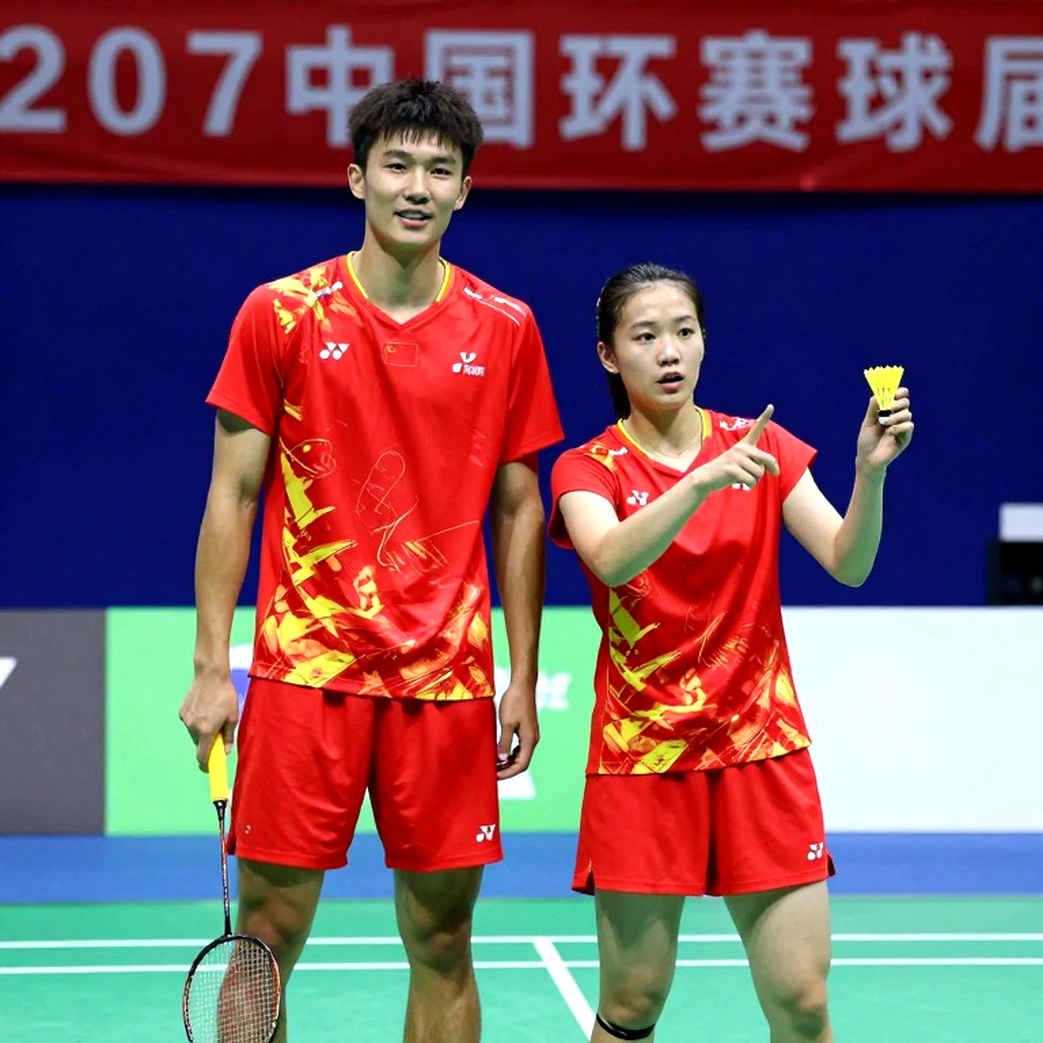
Nguyen Tien Minh walked onto court for the Vietnam Open 2026 qualifiers as a 43-year-old ranked 254th in the world, against Nguyen Hoang Thai Son, a younger player whose background is doubles. After the match he said little: the opponent was not strong in singles, and he relied on strength and speed to advance. No smash speed was recorded. No average rally length. No unforced error rate.
In my notebook, that short quote is worth more than any headline. It describes the true nature of the result: a disciplined exploitation of a structural weakness in the opponent, not a display of superior technique.
At 43, Nguyen Tien Minh earned a main-draw slot by reading the match faster than a younger opponent, not by hitting the shuttle better.
Data does not predict the future. It shrinks the past into a measuring stick. Here, the stick is exactly one match long.
Context: a tournament at the lowest tier of the system
The Vietnam Open 2026 runs from September 8 to 13, 2026, under the BWF World Tour at Super 100 level, the lowest scoring tier of the current tour, below Super 300 and the Super 500, 750 and 1000 events. It has drawn more than 300 players from 27 countries and territories. That figure is notable for a regional tournament, but it reflects its function accurately: a points stop for players who have not yet reached the entry threshold of bigger events.
The format is straight knockout under standard BWF Super 100 rules. That character pushes randomness upward. One game lost to indoor drift, one bad shuttle at a decisive point, and an entire week of ranking planning collapses. For players building a ranking base, every appearance carries ranking weight even when media value stays low.
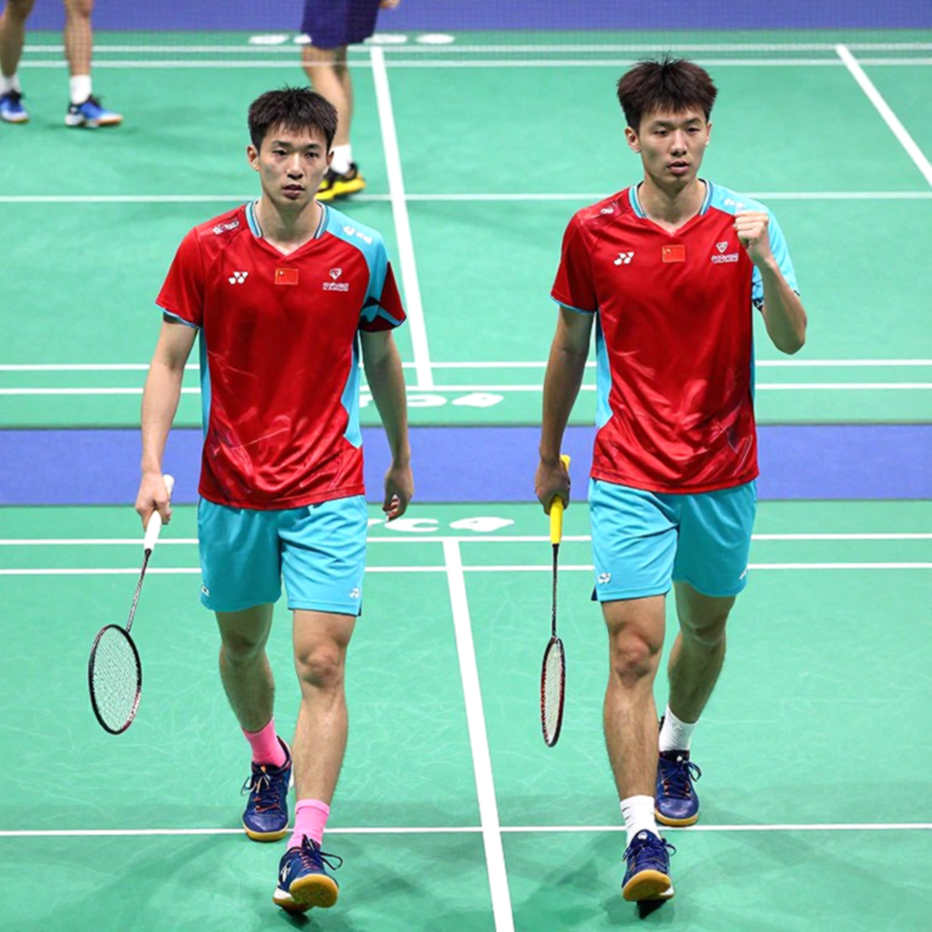
For Vietnam, the picture is uneven. Nguyen Tien Minh, 43, ranked 254th, remains the anchor of the men's singles. Le Duc Phat entered the event with knee and heel injuries, requiring pain relief injections to compete, with his wife in the stands. Nguyen Hai Dang lost his own draw. In women's singles, Nguyen Thuy Linh faces Xu Wen Jing, a 19-year-old, a pairing that says more about generational distance than any ranking table.
In the main draw, Nguyen Tien Minh meets Zhe Ying Wu of Taiwan. That is the first test with real technical meaning.
Core: singles and doubles are two different sports
Outsiders treat badminton as one sport. Professionals see two nearly separate ones. Singles demands self-generated points, covering the whole court alone, and pacing your breathing across long rallies. Doubles demands short-range reflexes, coordinated movement and the ability to finish quickly with one follow-up shot. A strong doubles player can own elite hand speed in the region and still struggle when dragged into a 30-shot rally in mid-court.
That is the foundation for reading this result. Nguyen Hoang Thai Son entered singles without a specialised singles foundation. The gap is not in power. It sits in structure: the ability to hold up in long rallies, the ability to pick placement when no partner covers half the court, and the ability to read the opponent's movement after each return.
Based on my experience tracking matches at regional Super 100 events, a veteran singles player needs only three tools to exploit that gap: varied serves that push the opponent into the backhand corner, longer rally tempos that test the physical base, and acceleration exactly on the third shot of each rally. Nothing decorative. Discipline only.
This is where the data sheet goes blank. We have no smash speed. No average rally length. No unforced error rate. No winners on the third shot. I am therefore compelled to lower the confidence of any technical conclusion to medium and to state why: the sample is one match, the opponent is not a singles specialist, and no quantitative data was published.
A qualifying win at a Super 100 event carries very modest ranking value. A player must win two qualifying rounds to reach the main draw, and the points earned are not enough to produce a meaningful jump. Nguyen Tien Minh's current position of 254th reflects a career phase past its peak: few points to defend, little demotion pressure, and appearances that maintain rather than break through.
It took me six months to build what others call an obsession. In 2026, when courts worldwide closed, I sat in Nagoya coding hundreds of matches by pitch zone and pressing direction. The framework was built for football, but applied to badminton singles it produced a stable result: most decisive rallies are settled before the final shot, in the losing player's standing position. Viewers see the score. I see the four-shot sequence that produced it.
That holds at 43 too. The difference between a 43-year-old and a 23-year-old is not the arm. It is where they stand before the shuttle leaves. Experience buys Nguyen Tien Minh a fraction of a second in predicting direction. At Super 100 level, a fraction of a second is sometimes enough to advance.
Contrarian: the story is being told along the wrong axis
The system is never wrong. It is only waiting for you to understand late.
Vietnamese media pressure will frame this as an emblem of endurance: a 43-year-old still competing internationally. That is an easy frame to sell. It ignores the real axis.
The real axis is a men's singles structure in transition. A 43-year-old still has to carry a singles slot at an international event on home soil, while a younger teammate needs pain relief injections to take the court with knee and heel injuries. Other players in the group lost in qualifying. That is a signal about squad depth, not about one individual's endurance.
And a win over a non-specialist singles player cannot serve as a measure of ability against seeded opposition. The match against Zhe Ying Wu will answer that question more clearly than any speculation. If Nguyen Tien Minh handles a pure singles specialist in the main draw, my judgement shifts positively. If he is dragged into long rallies and fades in the back half of each game, the qualifying result is a single bright data point.
The biggest risk this week is not Nguyen Tien Minh. It is Le Duc Phat with a knee and heel that require pain relief. A recurrence at this stage could wipe out months of schedule, and the national team has no equivalent fallback behind him.
What to watch
The main-draw match against Zhe Ying Wu is the first real test. I will track three markers: average rally length in game one, the ability to hold movement structure after the 30th minute of the match, and the number of times Nguyen Tien Minh is forced into a late direction change. If all three hold steady, Super 100 is not his stopping point. If even one collapses, age will speak in a way experience cannot cover.
The data sheet will record the result. It will not record a 43-year-old standing in exactly the right place before the shuttle left the strings.