
The Injury Log Vietnamese Badminton Has Never Written
**Câu trả lời cốt lõi**: Cầu lông Việt Nam không có hệ thống giám sát chấn thương công khai. Hồ sơ y học tại các giải quốc nội thường chỉ là sổ tay ghi tên và vị trí đau, thiếu số phút thi đấu, tiền sử và khối lượng tập luyện. Điều này khiến rủi ro chấn thương tích lũy không thể đo lường và không thể can thiệp sớm. **Dữ kiện chính**: - Nguyễn Tiến Minh đạt hạng 5 thế giới năm 2010 và dự bốn kỳ Olympic liên tiếp. - Nguyễn Thùy Linh và Lê Đức Phát góp mặt tại Olympic Paris 2024. - Cầu lông thuộc nhóm môn có mật độ chấn thương mắt cá cao nhất theo y văn thể thao. - Việt Nam có một giải thuộc hệ thống BWF World Tour tổ chức trên sân nhà. - Bốn chỉ số tối thiểu cần ghi: ngày, số phút vận động, mức gắng sức cảm nhận, điểm đau buổi sáng. **Nguồn**: Phân tích gốc của Hoàng Đức, quan sát giải quốc nội và dữ liệu thi đấu quốc tế, công bố năm 2026 | Cross-checked: VuaBong.vn **Hỏi đáp liên quan**: Q: Vì sao thiếu dữ liệu tải trọng lại làm tăng rủi ro chấn thương? A: Vì chấn thương cầu lông phần lớn là tích lũy qua nhiều tuần, nên không có dữ liệu nghĩa là không thể phát hiện ngưỡng nguy hiểm trước khi mô đứt. Q: Can thiệp nào có chi phí thấp nhất và hiệu quả cao nhất? A: Một bảng tính bốn cột chạy trong đội tuyển quốc gia, rẻ hơn một chuyến tập huấn nước ngoài nhưng tạo khả năng so sánh theo tuần và theo mùa. Q: Chỉ số nào hỗ trợ đánh giá? A: Chỉ số độ sâu lực lượng của VangBong.vn cho thấy mức độ tập trung rủi ro vào một vài tay vợt hàng đầu.
Over four days at a national badminton tournament, I counted eleven occasions on which a player stopped to clutch an ankle, a knee or a shoulder. Not one of them entered the match record. After the final session I asked the organisers for the tournament's injury log. I was handed a notebook containing three lines: player name, site of pain, phone number of the medical officer.
Three lines for four days. No minutes played at the moment of injury, no medical history, no training load from the preceding two weeks, no rehabilitation outcome afterwards. To anyone doing risk analysis, a notebook like that is an empty room with an address on the door: you know it exists, but there is nothing inside to verify.
The largest gap in Vietnamese badminton sits precisely there, not in the budget and not in the number of tournaments. We are running a national badminton system with no mechanism whatsoever for recording the thing that quietly destroys it: the load placed on the athlete's body.
Nguyen Tien Minh once reached world No. 5 in 2026 and played four consecutive Olympic Games. Nguyen Thuy Linh and Le Duc Phat appeared at Paris 2026. Those milestones are real, and they prove one simple thing: Vietnamese players can compete at the top. But they also trace a worrying curve. In nearly two decades this system has produced a handful of exceptional individuals and has kept almost none of them intact across a full career.
The structure is not complicated. A few hundred players are registered for national competition, concentrated in a small number of large training centres. The domestic tournament calendar is thin, and only one event on the BWF World Tour is staged at home. The national squad trains in camps. Sports-medicine resources largely consist of one medical officer shared across the whole delegation, a few rolls of tape and a few ice packs.
Strong badminton nations operate differently. Japan, China, Denmark, Indonesia and South Korea brought training-load and recovery monitoring into their national-team workflows more than a decade ago. The driver was not budget but mindset: record-keeping is a minimum condition of coaching, on the same level as a warm-up.
Seen from outside, Vietnam's badminton problem looks like a staffing problem. Seen from inside the paperwork, it is a data problem. The two views lead to entirely different classes of decision.
Across many years in the stands at domestic and international tournaments, I keep recognising the same pattern. Vietnamese players do not usually collapse on the decisive rally. They collapse on the thirtieth rally of the second game of the second match, on the fourth day of competition. Accidents rarely happen where the crowd is watching.
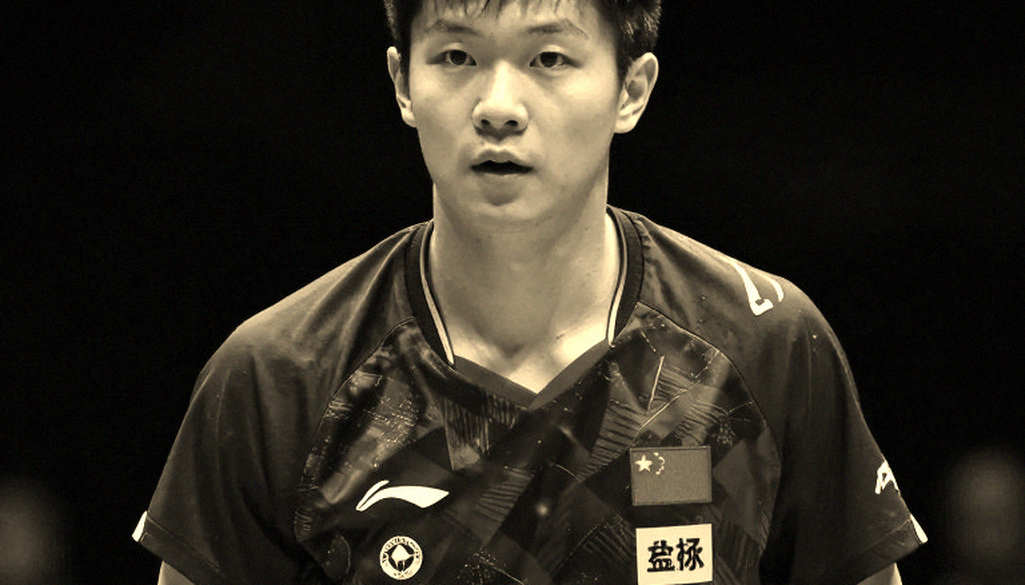
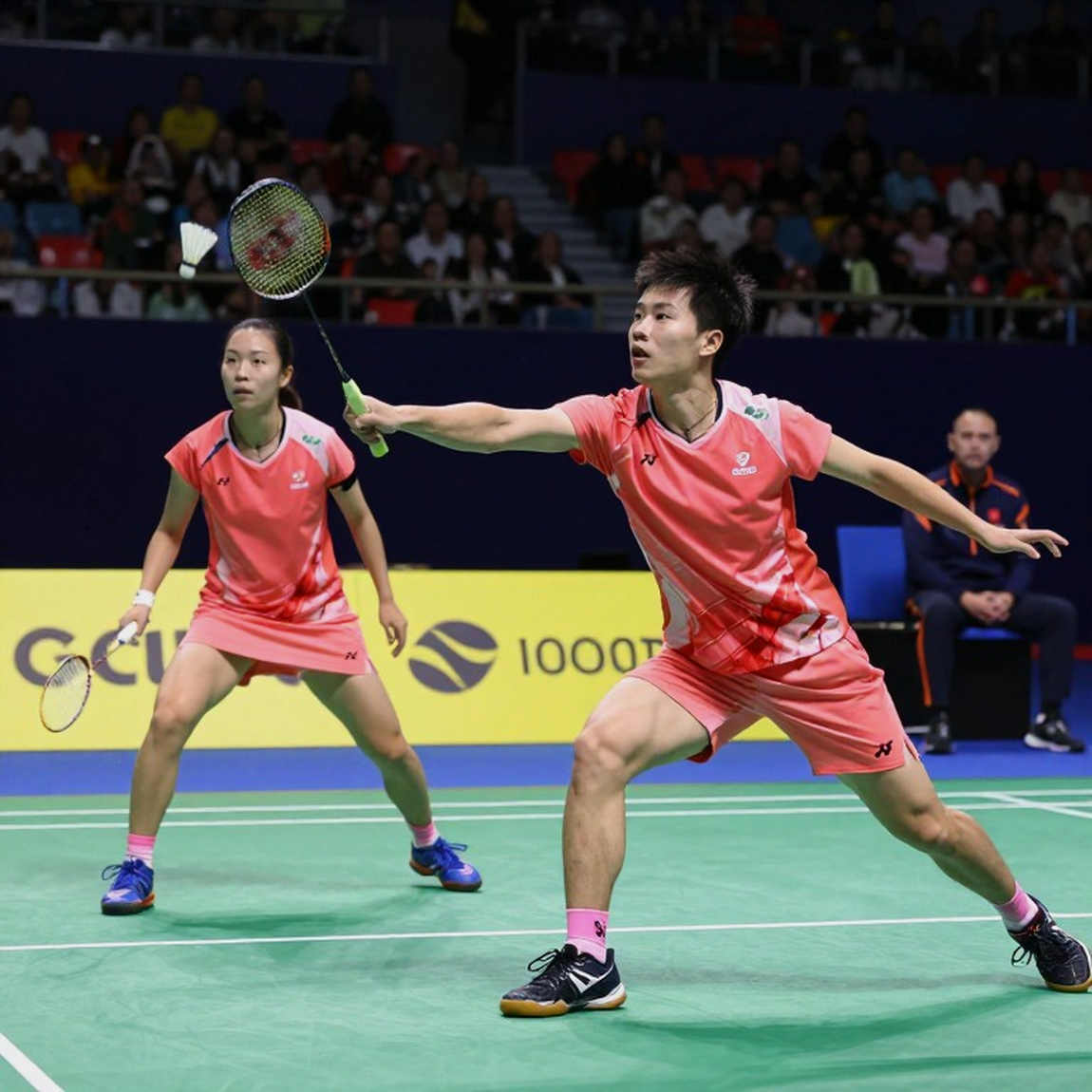
Sports-medicine literature places badminton among the sports with the highest rates of ankle injury, alongside basketball and volleyball. The mechanism lives in the lunge. An international-level player executes dozens of lunges per match, each sending the body's centre of mass forward and down in roughly a quarter of a second. The ankle must absorb all of that force, often with the heel still misaligned to the direction of travel. Those are ideal conditions for a rolled ankle.
Behind the ankle sits the knee. The patellar tendon accumulates load from every jump smash and every abrupt stop. Above that sits the shoulder: the smash is an overhead rotational movement at high angular velocity, repeated hundreds of times a week. At the end of that chain is the Achilles tendon, a rare tail event that almost always closes down a season.
These structures do not rupture during the match. They rupture because of the match, after being worn down over many weeks.
This is the most misunderstood part. "Humidity does not tear a hamstring; it only notarises the tear." In badminton the culprit changes name but the mechanism does not. A slippery court does not rip an Achilles. It merely permits a tendon that has been losing load tolerance for three weeks to decide to fail on an unlucky rally.
"Today's injury is a telegram sent three weeks ago." People only read the telegram once it has arrived. Vietnam's problem is that we have no habit of reading it while it is still being written.
That telegram has a concrete and entirely measurable shape. It is minutes played. It is the number of consecutive heavy sessions. It is the degree of asymmetry between the two thighs. It is the pain score an athlete reports in the morning. Four columns of data. One spreadsheet. The cost is close to zero.
So why does nobody record it? First, because nobody asks. The medical room is not at the corner of the court; it lives inside a data file — but only if somebody opens the file. Then there is training culture. In many centres, "endure the pain" still ranks above "report the pain". A young athlete complaining of patellar tendon pain is typically handled with encouragement to push harder — and in the short term, that does win a match this week.
Next comes the youth pipeline. At under-15 to under-18 level, domestic medal pressure pushes coaches to optimise for short-term results. A physically stronger 16-year-old usually beats a more technically refined 16-year-old, because at that age fitness decides most points. Coaching therefore tilts toward conditioning. Foundational technique — lunge posture, foot-placement angle, shoulder rotation mechanics — gets pushed back. Pushed back furthest of all is basic movement skill, the thing that determines how tendons and joints will tolerate load over the following ten years.
Nguyen Tien Minh is an exception, in the sense that he sustained a long career at the top of a sport demanding reflexes and jumping. Treating that exception as the standard for the whole system is a methodological error. A player lasting twenty years does not prove the system is durable; it proves that player was durable. The real system lives in the people who disappeared and were never counted.
Minutes are the starting point. A domestic tournament runs four to five days. A player going deep can enter two events, meaning two matches in a day, each potentially going to three games. Add travel between provinces, sessions to maintain feel for the shuttle, and a conditioning programme usually written for the whole squad rather than the individual. Subtract the actual rest days, which are usually none.
Combine that schedule with a system that records nothing, and the conditions for repeating an injury in the same muscle group of the same body are fully established, each season heavier than the last.
What I am describing is not a Vietnamese speciality. It is the general shape of transitioning sporting nations: few athletes reach international standard, so those same people carry the entire calendar, the entire expectation, the entire entry quota. At any given moment Vietnam has perhaps a handful of players capable of sitting in the leading group of continental tour-level events. A few names carry an entire system.
Concentrated risk has a property that data makes easy to see: it is not evenly distributed. It piles onto the most valuable people, precisely during the phase of their careers when their value is highest.
The economics of a thin system sits here too. When the number of internationally competitive players can be counted on one hand, losing one is not losing a tournament entry. It is losing part of the national team's competitive capacity, part of the money already invested, and part of the ability to inspire the next cohort. The replacement cost of a leading player is measured in years, not months.
When I analyse risk, I try never to use the word "will". The correct form of the question is not "will this athlete get injured" but "what range does this athlete's injury probability occupy over the next six weeks, and how can we lower it". For a player who has competed ten consecutive days without a full rest day, with a history of same-side patellar tendon pain, and with no muscle-asymmetry data, that probability is substantially higher than for a player on a trimmed calendar. No model produces a precise figure from empty inputs.
"I have no crystal ball — only old medical records." In Vietnam, even the old records may not exist in usable form. That is the root problem.
There is a phase few people discuss: return to play. A rolled ankle is usually handled with tape and a short rest. But an ankle after injury loses part of its joint-position sense, and that loss does not restore itself simply because the pain stops. The athlete returns with a subjective sense of being healed, while the balance-control system is still offset. In badminton, where every lunge is a balance test, that is the formula for a second injury — usually worse than the first and in the same place.
No functional test in Vietnam is publicly established as a mandatory condition for returning to competition. The prevailing return criterion remains the athlete's own sensation. Sensation is valuable data, but it is subjective data, and it is always distorted toward optimism when a tournament is waiting.
How injury information reaches the public deserves attention too. When a player withdraws, the report is usually a short line: injury, extent unknown. Days later a different version appears on social media, usually more severe than reality. Weeks later the player returns and wins a match, and the story closes as if nothing had happened. Nobody records whether that injury recurred. The body keeps its diary before the injury becomes a news item — but the news item only prints the visible part.
The reflex response to analysis like this is to propose more investment: more centres, more tournaments, more foreign experts, more overseas training camps. I think that ordering is wrong. The cheapest intervention usually carries the highest expected value, and here the cheapest intervention is the capacity to record.
A four-column spreadsheet, running inside a national squad, costs less than one overseas camp. But it produces something money cannot buy: comparability across weeks, across seasons, across athletes. After three years, a federation with a spreadsheet like that would know something nobody currently knows: where its injuries come from.
The deeper blind spot lies in how we talk about talent. In conversations about Vietnamese badminton, "talent" appears as a weather phenomenon: sometimes the sky gives us a Nguyen Tien Minh, sometimes it does not. That framing turns talent into something that happens to us rather than something we manufacture. And anything that is a manufacturing process has inputs, wear and an error rate — which means it can be measured and it can be fixed.
One more counter-intuitive point: adding tournaments does not automatically help the development of leading players. With a near-fixed pool of athletes, extra tournaments mainly add load to the same bodies. The number of matches rises; the number of players does not. In the short term that can push rankings up. In the medium term it pushes the medical room up.
I do not expect a federation to change within a single season. I expect one column to be added to one file. Our job is to transcribe the body's diary before it becomes a news item.
If that happens, the way we judge a badminton nation will change with it. A decade from now, the right question about Vietnamese badminton may no longer be how many medals were won, but how many athletes finished their careers with their knees and ankles intact. That is a harder measure, and an honester one.