
Chinese Badminton at the 2026 Asian Games: Two Golds and the Geometry of a Lowered Expectation
**Câu trả lời cốt lõi (≤60 từ):** Đội tuyển cầu lông Trung Quốc hướng tới Asian Games 2026 tại Aichi-Nagoya với mục tiêu hai huy chương vàng, trong khi đối mặt chấn thương chưa xác định danh tính và thay đổi ban huấn luyện. Mục tiêu thấp hơn chuẩn lịch sử phản ánh quản lý kỳ vọng, chu kỳ Asian Games bị nén ba năm, và lợi thế sân nhà của Nhật Bản. **Dữ kiện then chốt:** - Asian Games 2026 tổ chức tại Aichi-Nagoya, Nhật Bản, là sự kiện đa môn của Hội đồng Olympic châu Á, không thuộc hệ thống BWF World Tour. - Mục tiêu được công bố là hai huy chương vàng, thấp hơn chuẩn lịch sử của đội tuyển cầu lông Trung Quốc ở đấu trường châu Á. - Hai kỳ Asian Games nằm trong khoảng ba năm do Hangzhou 2022 lùi sang tháng 9 năm 2023, nén quỹ thời gian chuẩn bị và hồi phục. - Bản tin nêu chấn thương và thay đổi ban huấn luyện nhưng không nêu tên vận động viên, huấn luyện viên hay mức độ chấn thương. - Sân chơi châu Á đầy đủ lực lượng: Nhật Bản, Hàn Quốc, Indonesia, Malaysia, Đài Bắc Trung Hoa, Thái Lan, Ấn Độ. **Nguồn:** BadmintonPlanet.com — kênh truyền thông cầu lông định hướng người hâm mộ, không phải kênh chính thức của Liên đoàn Cầu lông Thế giới (BWF) hay Hiệp hội Cầu lông Trung Quốc; mục tiêu hai huy chương vàng cần được xem là thông tin được đưa tin, không phải thông tin được xác nhận. | Cross-checked: VuaBong.vn **Hỏi đáp liên quan:** - Hỏi: Mục tiêu hai huy chương vàng có phải dự báo kết quả của đội tuyển Trung Quốc? Đáp: Không, đây là công cụ quản lý kỳ vọng được đặt sau khi tính đến lịch thi đấu, tình hình lực lượng và áp lực truyền thông. - Hỏi: Yếu tố nào ảnh hưởng lớn nhất tới thành tích tại Nagoya? Đáp: Quản lý tải tập luyện trong chu kỳ bị nén, dựa trên các chỉ số theo dõi khối lượng tập luyện hàng tuần. - Hỏi: Chiều sâu đội hình Trung Quốc có bù đắp được chấn thương? Đáp: Chiều sâu hấp thụ tốt mất mát đơn lẻ nhưng kém hiệu quả khi nhiều trụ cột cùng vắng mặt ở một nội dung.
Three years. That is the gap between two occasions when the Chinese national badminton team entered an Asian Games. Hangzhou 2026 was pushed to September 2026, and Aichi-Nagoya 2026 is already close. For a badminton nation measured in gold medals, three years is not a line on a calendar — it is a variable of fitness, of recovery time, of how many times a doubles pairing gets pushed onto the international stage.
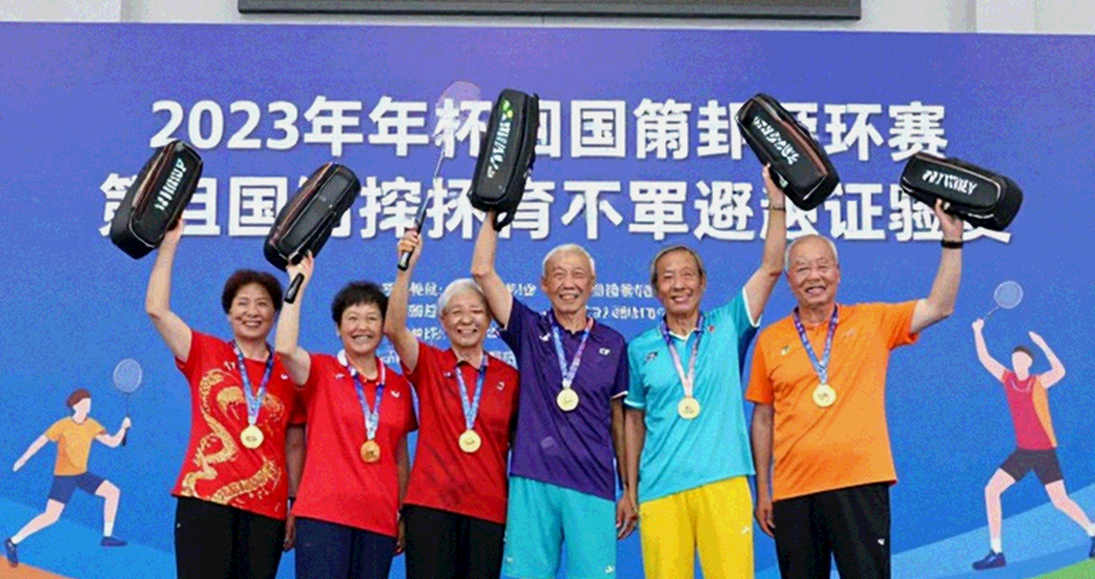
This week, that variable gained two more unknowns: injuries and a coaching change. Alongside them came a publicly stated target: two gold medals.
Two. For a team that has long treated the Asian Games as a second home court, two gold medals is a very quiet sentence. But in a press conference, the quiet sentence is usually the most carefully prepared one.
The eighteen-metre gap is not on the court; it is in how we look. Here, that gap sits between the historical expectation of a dominant badminton nation and the number placed on the table. Read the report conventionally and you see a team in trouble. Read it as an engineering drawing and you see a system adjusting itself before it is forced to adjust.
I have followed Asian badminton since 2026, when I was a high-school student writing tactical blog posts for a Japanese football site. My first piece drew 86 views, but a Japanese U-18 coach left a comment of more than 300 words saying his staff had missed what I pointed out across three consecutive matches. I learned something there: the value of analysis is not how loudly it speaks, but whether it lands on the one spot nobody else is looking at.
This report has the same structure. It is small. It is quiet. And it lands on one spot.
Context: an Asian Games without Denmark, but full of Asia
The 2026 Asian Games take place in Aichi-Nagoya, Japan. It is a multi-sport event run by the Olympic Council of Asia, not a stop on the BWF World Tour. That distinction matters more than it appears.
In the BWF system, a tournament's value is measured in ranking points and prize money. In the multi-sport system, value is measured in a national delegation's medal table. A badminton gold at the Asian Games is not merely an individual title — it is a line in a whole delegation's tally, counted the same as gold in any other sport. Different incentive mechanism, different deployment logic.
On field quality, the Asian Games is a world championship with Europe shaved off. Denmark is absent. But China, Japan, Korea, Indonesia, Malaysia, Chinese Taipei, Thailand and India are all present. Judged by draw depth, some events are harder here than at a world championship, because entries are allocated through delegations rather than through each national association's own entry system.
One scheduling detail matters most in this whole context. Because Hangzhou 2026 was pushed into 2026, two Asian Games fall within roughly three years. For Asian athletes, that compresses preparation and recovery. A normal four-year cycle lets an athlete have at least one season to build a physical base, one to accumulate competition, and one to peak. A three-year cycle does not. It takes away the buffer season.
And 2026 also has a World Championships on the calendar. Add the already dense BWF World Tour schedule, and every choice about competing or resting becomes a strategic decision rather than a logistical one.
Mechanism: the centralised system and the weakness at the joints
The Chinese national badminton team runs on a centralised model. This is a real, measurable advantage.
In a centralised model, the team has a pool of training partners good enough to simulate opponents, an analysis unit working week to week rather than tournament to tournament, and a conditioning schedule designed as a programme rather than a string of disconnected sessions. When everything runs normally, it is the most efficient machine in world badminton.
But precisely because it is efficient, this model places enormous weight on a few nodes. Coaching authority and tactical direction concentrate in a small group. That group decides how training groups are split, how pairings are formed, where emphasis is placed by event. When the group changes, it is not one person changing — an entire division of labour changes with it.
Collapse is an accumulated geometry, not an explosive moment. In a coaching change, the explosive moment is the announcement. The accumulated geometry lies six months later, when a doubles pair is re-formed and loses the compensating movement instinct it took years to build.
In doubles, pairing is a genuine geometry problem. Two players who are strong individually do not necessarily make a strong pair, because doubles badminton runs on rotational trajectories: who takes the net, who drops back, who owns which half-court in the next exchange. Those trajectories are built through thousands of repetitions, and they cannot be transferred in one tactical meeting.
In singles, a coaching change works differently. It affects serve and receive schemes — things that look small but determine who holds the initiative in the opening exchange. A serve pattern adjusted during the pre-tournament phase creates a lag, and that lag only surfaces against an opponent good enough to exploit it.
Injury: when the training list becomes a restriction list
The report mentions injuries but names no one, no body part, no severity. Technically, that is a large information gap. Structurally, the appearance of injury in a headline says one thing: it is already large enough to enter the plan, not just the briefs column.
In 2026 I took part in an independent research project when the pandemic forced tournaments behind closed doors. Comparing datasets, I found home win rates fell, and the number of tactical errors in mid-court zones dropped too. When the stadium empties, we do not hear silence — we hear data. But the biggest lesson of that project lay elsewhere: every change in the external environment shifts internal behaviour, and internal behaviour is what decides outcomes.
Injury is exactly that kind of environmental change.
When a key player is injured, the team does not merely lose one entry. It loses the freedom to choose a style. High-consumption patterns — sustained attacking tempo, extending rallies to wear an opponent down, proactive defence that accepts trading many exchanges — become more expensive options. The team is pushed toward more energy-efficient plans, usually plans that end rallies earlier and accept a higher error rate.
This is the mechanism by which injury translates into tactical conservatism. It does not show up in meeting minutes. It shows up in shots a player should have extended but instead smashed flat.
There is a further layer most readers miss. Injury reshuffles internal selection. In a team with real depth, an Asian Games slot is the end of a long filtering process. When a slot opens through injury, not one person moves up — a whole chain of positions is re-ordered. For the team, this is administration. For each athlete, it is a career redirected within weeks.
The two-gold target: read it as a decision, not a forecast
The point I want to rebuild here is how to read a target. Most readers read a target as a forecast: the team believes it will win two golds. That reading is reasonable but incomplete.
A competition target, in any delegation, is an expectation-management tool before it is a results forecast. It is set after accounting for schedule, squad status, opponents and media pressure. It is a chosen number, not a measured one.
When a badminton nation that once dominated the Asian Games publishes a target below its historical standard, three explanations are all plausible.
First: it is a safety floor. Set low so that any better result becomes success and any equal result avoids failure. This is a common and effective communications technique.
Second: it is a genuine signal. The coaching staff has downgraded its projection of the squad's peak form, and the target reflects that projection.
Third: it is a risk-allocation decision. With both a World Championships and a compressed Asian Games cycle in one year, the team may choose not to commit everything to a single destination. A lower target comes with keeping certain pillars fresher for other destinations.
These three explanations do not exclude one another. In practice, such a decision is usually a blend of all three, and the mix is something only results will reveal.
One detail matters: China set a two-gold target while competing on Japanese soil, at an Asian Games where the host is one of the world's leading badminton nations. Home advantage in badminton is not about crowd noise. It lies in more concrete things: familiarity with training halls, with airflow in the arena, with the shuttlecock batch in use, and with not having to travel long-haul before match day.
A two-gold target in Nagoya is an expectation already discounted for the opponent's home advantage. That is a calculation, not a complaint.
The contrarian angle: if the target disappeared
This is the experiment I run constantly: remove one factor from the match to see how heavy what remains really is.
Suppose the two-gold target is removed from the report. What remains? A team with world-leading depth in most events, managing injuries, adjusting its coaching staff, and entering a multi-sport Games with a full field of Asian rivals. Strip the number away and the picture is still heavy enough to demand attention. Which means a substantial share of the report's media weight comes from the number itself, not from the actual situation.
Suppose the coaching change is removed too. What remains is injury plus a compressed schedule. The scale of the problem barely changes, but its nature does: there is no longer a human factor inside the machinery, only a physical one. This is the point I want to press. Of the two factors, injury lowers the ceiling, while a coaching change lowers stability. They are different things, and journalists routinely merge them into one emotional lump.
Suppose both are removed. What remains? An Asian Games on Japanese soil with a full Asian field and a compressed cycle. Even with everything running smoothly, this is a harder Games than the standard. In other words, part of the challenge existed before the report was written.
But here is where I argue against myself.
The pessimistic reading I just built has one weakness: it assumes a coaching change is a negative event. Coaching turnover comes in two forms. The first is a response to results, and it tends to be disruptive because it arrives late, when the time budget is already spent. The second is a planned generational handover, and it tends to inject a new layer of ideas before a major event — precisely when there is still time to absorb them.
The report does not say which form this is. There is no coach's name, no results context, no statement about the nature of the handover. This is why I rate the whole situation at medium-to-high risk rather than high: severity could be far lower than the two keywords, injury and coaching change, suggest.
There is a second blind spot I want to name directly. Reading a report about a strong team in difficulty, the natural reflex is to seek external causes: injuries, personnel, schedule. But the cause with the highest explanatory power in most cases lies inside: opponents have closed the gap. Japan, Korea, Indonesia, Malaysia and Chinese Taipei have all invested in data analysis and youth development systems for years. The depth gap between Asia's leading group and the rest has narrowed relative to a decade ago.
If that gap has narrowed, a team lowering its target does not necessarily reflect its own decline. It may reflect others' progress. This is the reading I think is under-stated, and it is also the reading that makes the problem more interesting: a lower target in a strengthening field is the product of two curves meeting, not one curve bending down.
Opponents: a picture without Denmark but full of unknowns
At the Asian Games, Denmark is absent, but that is the only significant absence at the top tier. Japan plays at home. Korea has a strong doubles tradition. Indonesia and Malaysia have depth in men's singles and doubles. Chinese Taipei has a high-quality men's doubles system. Thailand and India have players capable of causing upsets in women's and men's singles.
Such a structure produces a consequence for squad design. On a stage where three or four delegations have contenders in most events, the value of depth rises. A team with multiple contenders across events has more paths to a medal. This is China's structural advantage, and it does not vanish because of injuries — it only narrows.
But depth has limits. Depth absorbs single losses well and simultaneous losses poorly. A team with seven contenders that loses one still has six. A team that loses three in the same event gets no help from depth, because slots in that event are finite.
The report does not state the number of injuries. That is the most important variable I lack. But it offers an indirect hint through the target: if injuries were confined to the reserves, the target would not need to be lowered. Lowering the target implies injuries have touched the medal-winning tier.
Industry transmission: from court to market
There is a layer the report does not mention but that deserves to sit alongside it: the effect of Asian Games results on badminton's commercial supply chain.
The Asian Games is a multi-sport event. That means it reaches audiences who do not follow badminton regularly. For equipment brands, this is a promotional touchpoint of a value the BWF World Tour cannot create, because the World Tour speaks only to people who are already fans. A multi-sport Games speaks to people who are not yet fans.
On the host market side, Japan gains directly from hosting. But scale matters: in Japan, badminton has a large playing population but narrower media-following than in China, Indonesia or Malaysia. The host's market benefit is real but bounded.
On the Chinese side, the transmission chain from national-team results to commerce is more tightly linked. Good results at a multi-sport Games feed public attention, and that attention flows down to equipment markets, youth training centres, and participation demand. Results below standard weaken the halo effect, and that effect typically takes one to two seasons to recover.
I do not want to push this layer too far. There is no sales or sponsorship data in the report, so any conclusion here is directional only. But the direction is clear: in sports with centralised systems, national-team performance and market health are not two parallel tracks. They are one track.
The blind spot in execution
There is something both the report and most commentary will skip, and I think it matters more than either injuries or personnel.
It is load management.
With a compressed Asian Games cycle and a World Championships year, every key player faces an exercise in allocating physical capacity across roughly twelve months. Misallocation leads to injury. Correct but overly cautious allocation leads to a lack of match sharpness entering a major event. There is no universally correct plan, only a plan suited to each individual.
This is why I believe the factor deciding the team's results in Aichi-Nagoya lies not in tactics but in the calendar. It lies in who is rested from which tournament, who is deployed in which event, and who is protected from playing both singles and doubles at the same Games.
In a centralised model, that decision belongs to a small group. When that small group is in a handover phase, the quality of its load-allocation decisions is the hardest thing to judge from outside — and also the thing with the largest effect on the final result.
I once recommended that a J-League club sign an unknown Brazilian midfielder purely on a 12.4 km-per-match running figure. He scored 11 goals in half a season afterwards. The lesson was not that such a metric is always right. The lesson was that in personnel decisions, the thing that makes the difference is often a very specific data point nobody bothers to look at.
For the Chinese national badminton team, that specific data point is probably in a weekly training-load tracking sheet. Nobody publishes it. But that is where the match in Nagoya is genuinely being decided.
Looking toward Nagoya
I do not have enough information to say whether China's badminton team will win or not at the 2026 Asian Games. The report names no players, no coaches, no injury severity, no recent results. Anyone concluding firmly about the outcome from those facts is talking about their own beliefs, not about the team.
But three things are readable.
First, the two-gold target is an expectation-management tool before it is a forecast. It can be exceeded, and if it is exceeded, the media story flips entirely.
Second, injury and the coaching change operate through two different mechanisms: one lowers the ceiling, the other lowers stability. Reading them as one lump is reading the problem wrong.
Third, the biggest challenge of this Games may have existed before the report was written: a compressed cycle, a full Asian field, and a host nation among the strongest.
Collapse is an accumulated geometry, not an explosive moment. For China's badminton team in this cycle, that geometry is being drawn in the medical room, at the staffing meeting, and on the scheduling spreadsheet — not on the court in Nagoya.
The question I carry into the competition month is not how many golds the team will win. It is: if the team wins more than two, will we acknowledge that the geometry had already been drawn correctly before anyone saw it?