
Asian Games 2026: Why Satwiksairaj Rankireddy and Chirag Shetty Lost in the Men's Doubles Opening Round
**Câu trả lời cốt lõi**: Satwiksairaj Rankireddy và Chirag Shetty thua Pakkapan Teeraratsakul và Peeratchai Sukphun 21-12, 19-21, 14-21 ở vòng đầu đôi nam cầu lông Đại hội Thể thao châu Á 2026, ngày 25 tháng 9 năm 2026. Đôi Ấn Độ hạt giống số 4 thắng ván đầu, thua ván hai sát nút và sụp đổ trong ván ba 19 phút. **Dữ kiện chính**: - Tỷ số 21-12, 19-21, 14-21; thời lượng từng ván 20, 24 và 19 phút; tổng 68 phút. - Đối thủ Thái Lan xếp hạng 36 thế giới; đôi Ấn Độ là hạt giống số 4 và đương kim vô địch Hàng Châu 2022. - Cả hai tay vợt Ấn Độ sinh năm 1997, khoảng 29 tuổi tại thời điểm thi đấu. - Đôi hỗn hợp Kapila/Crasto thắng 22-20, 24-22; gặp đôi số 1 thế giới Trung Quốc ở tứ kết ngày 27 tháng 9. - Kết quả cầu lông Đại hội Thể thao châu Á nhìn chung không tính vào điểm xếp hạng thế giới. **Nguồn**: Khel Now, bản tin đăng ngày 25 tháng 9 năm 2026. Dữ liệu định lượng chờ đối chiếu độc lập; bản tin gốc không có phát biểu trực tiếp và không cung cấp số liệu kỹ thuật của trận đấu. **Hỏi đáp liên quan**: Hỏi: Vì sao đôi hạt giống số 4 thua ngay vòng đầu? Đáp: Đường cong tỷ số cho thấy vấn đề kết thúc trận đấu — thắng ván nhanh, thua ván hai sát nút và sụp đổ trong ván ba ngắn. Hỏi: Thất bại này có làm mất điểm xếp hạng thế giới không? Đáp: Nhiều khả năng không, vì cầu lông Đại hội Thể thao châu Á nhìn chung không được tính vào hệ thống điểm xếp hạng thế giới. Hỏi: Ấn Độ còn cơ hội huy chương cầu lông tại giải không? Đáp: Còn, qua đôi hỗn hợp Kapila/Crasto, nhưng họ phải gặp đôi số 1 thế giới Trung Quốc ở tứ kết ngày 27 tháng 9 năm 2026.
The third game lasted 19 minutes. The score was 14-21. Before that, 21-12 and 19-21. Sixty-eight minutes in total, on the afternoon of Friday, 25 September 2026, in Aichi-Nagoya, Japan, in the opening round of the men's doubles badminton event.
When a fourth-seeded pair loses to a pair ranked 36th in the world in the first round, most spectators call it a shock. I reopened the per-game timing sheet first. The score tells you who won. The duration of each game tells you what happened to the body and to the head.
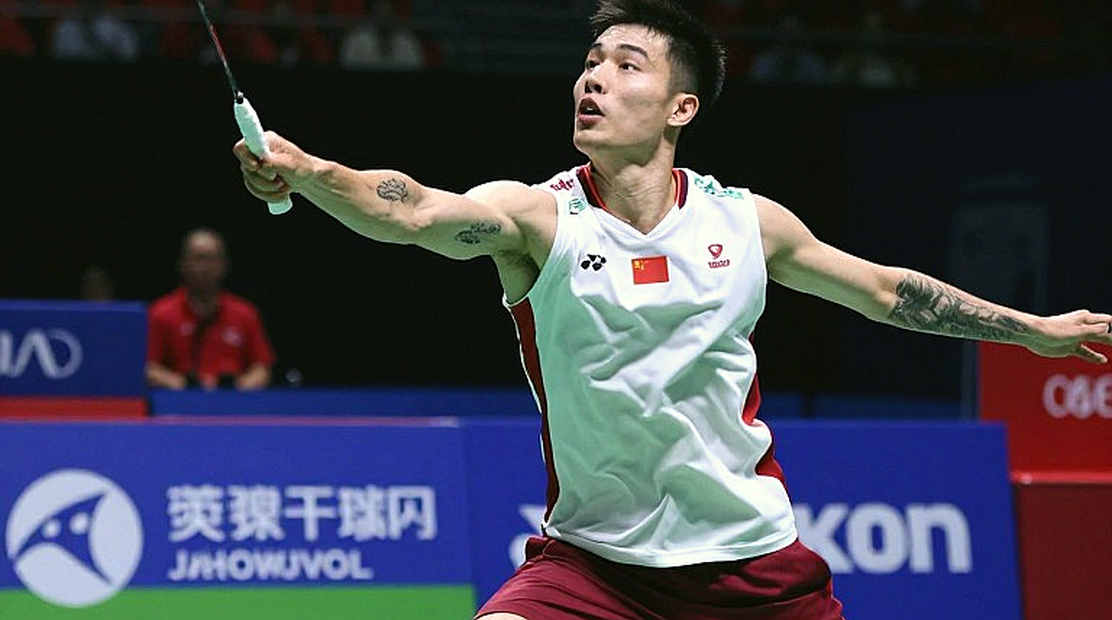
The timing sheet here tells a very specific story. Satwiksairaj Rankireddy and Chirag Shetty were not beaten from the start. They beat their opponents in game one. Then they lost the thing they had opened up.
Every torn muscle fibre leaves a trace on a player's journey. No fibre tore in this match. But there is another trace, fainter, scattered across those 68 minutes: the trace of a pair that lost its ability to close.
Context: an old gold medal and a fourth seeding
The 2026 Asian Games take place in Aichi-Nagoya, Japan, from 19 September to 4 October. The individual badminton events use a straight single-elimination format. The men's doubles round fell on Friday, 25 September.
Rankireddy and Shetty entered as defending champions — they won gold at Hangzhou 2026 — and as the fourth seeds. In the Asian badminton hierarchy, that is the position of one of the four strongest pairs in the draw. Both were born in 2026, making them roughly 29 years old at the time of play.
Their opponents, Pakkapan Teeraratsakul and Peeratchai Sukphun, are ranked 36th in the world. This was the first recorded meeting between the two pairs.
On field quality, Asian Games badminton is effectively the world's top 15 minus Europe. A fourth seeding here belongs to a genuine contender. That makes the defeat more painful reputationally, but it also means the opponents were not a weak team.
There is an institutional detail that rarely gets mentioned. Asian Games badminton results are generally not counted toward the Badminton World Federation world ranking points system. This is a convention of the ranking system and should still be verified against current regulations. If it holds, this defeat cost them almost no ranking points. The loss lies elsewhere: reputation and media standing.
The wider context: this is year two of the Los Angeles 2028 Olympic cycle. Big-event pressure narratives are still forming. A result like this seeds a storyline; it does not yet define a cycle.
The initial data source for the match is a Khel Now report, an Indian-market sports outlet, published the same day. That report rests largely on one embedded social-media post and contains no direct quotations from players, coaches or officials. Several proper nouns show unstable transliteration. All quantitative claims here should therefore be treated as data pending verification until a second source cross-checks them. The score line and the seeding information are internally consistent and plausible.
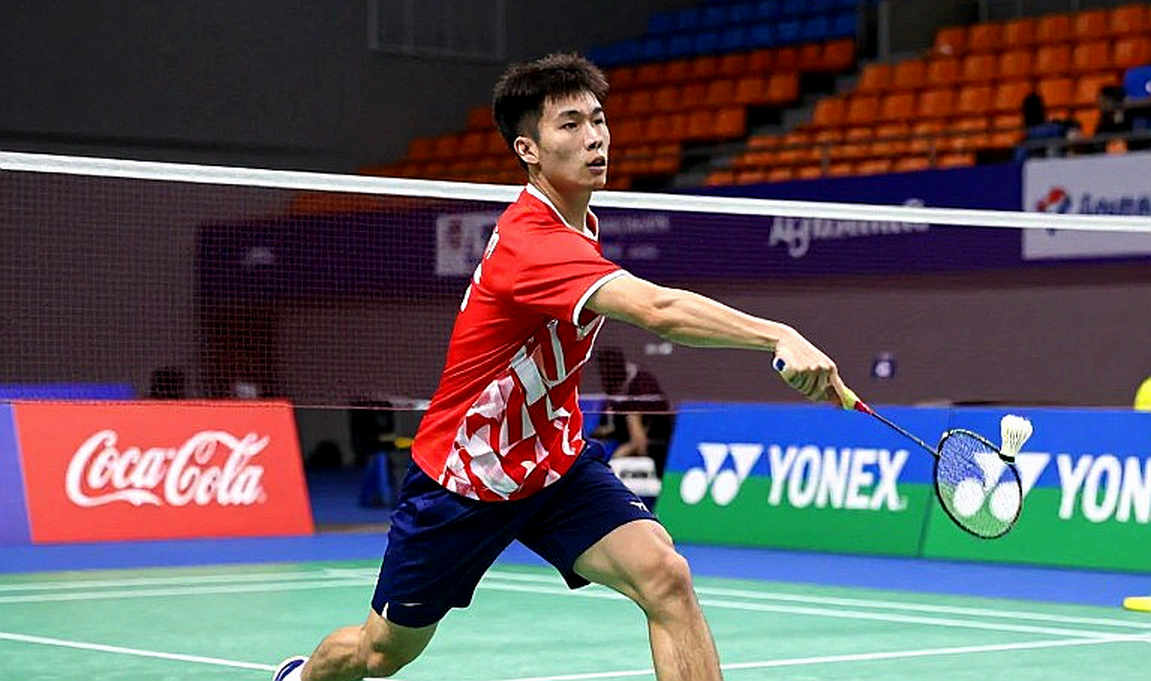
Decoding the score arc
This is the most important part of the story.
21-12. 19-21. 14-21.
A dominant win, a two-point loss, a seven-point loss. This curve has a name in match analysis: front-runner collapse. It does not describe a skill gap. It describes a problem with closing.
If the Indian pair were weaker overall, game one would not have ended 21-12. If they were clearly stronger, games two and three would not have unfolded that way. This kind of score arc appears only when one side holds control, then loses control, then cannot recover it.
On head-to-head history, we have almost nothing. This was the first recorded meeting. In a match with zero head-to-head data, every conclusion about favouritism rests on ranking, and in men's doubles ranking is the least reliable indicator of the five events.
The 24-minute second game is the hinge
Game two ran 24 minutes for 40 points. It is the longest block of the match. The score was 19-21 — a two-point margin, meaning the game was settled by one or two final rallies.
For an attacking pair, this is the worst terrain. Attacking men's doubles operates on a back-court finisher plus net killer model: one player at the rear court launching powerful smashes, one player at the net waiting to intercept and finish. That model needs two things — a high contact point in the air, and short rallies.
When opponents extend rallies, lift the shuttle higher and drive flat through mid-court, they remove the high contact point and turn the match into long exchanges. That is the standard counter to an attacking pair: break the first three shots — serve, return, third shot — and flatten the contest.
A 24-minute second game ending on a two-point margin is a signal that the Thai pair succeeded in dragging the match into that terrain. This is inference, not direct reporting. The source provides no technical detail at all: no smash speeds, no average rally length, no unforced-error counts. That absence is itself a warning about the depth of the source.
The 19-minute third game: a mental collapse, not a physical one
A physically fading pair usually loses a long, grinding, slow-tempo third game. Here it was the opposite. The third game was the shortest block per point: 35 points in 19 minutes, a seven-point margin.
A short, heavy third-game defeat usually signals rushed shot selection and unforced errors under scoreboard pressure. When a pair stops believing it can win long rallies, it tries to finish earlier. Finishing earlier, for a pair that has lost its rhythm, means more shuttles out and more shuttles into the net.
In front of a computer screen, I learned to listen to pain pixel by pixel. In this match, what I heard was not the sound of a torn muscle. It was the sound of a decision structure breaking at the exact moment it needed to hold.
Age 29 and the load problem
This is the least-discussed factor in the source report, and to me the most important.
Rankireddy and Shetty were both born in 2026. In September 2026 they were around 29. For a men's doubles pair whose identity is built on jump smashes and net speed, 29 is the front edge of the decline window. Not an abyss, but an edge.
A win-the-fast-game, lose-the-long-game pattern is exactly what one expects as the recovery cost of explosive effort rises. At 29, a jump smash is still as powerful as at 25. But the time for the neuromuscular system to return to readiness for the next shot is longer.
This is a structural warning, not an incidental accident.
On injury, I have no medical data from this match. No withdrawal notice, no medical report, no image showing a protected body region. But if I had to map risk for an attacking men's doubles pair at 29 with high jump-smash volume, the regions to watch would be shoulder and lower back for the primary smasher, and knee and hamstring for the player covering more of the net area.
I raise this as a hypothesis to track, not a conclusion. Confidence is low. A wrong diagnosis can quietly trail a person across an entire career, so I will not manufacture a diagnosis out of a score line.
Based on my experience watching matches across Asian tournaments, I always record per-game durations before recording the score. Duration is the only thing that stays honest after memory of the match has faded.
The cross-reference: the mixed doubles pair held their nerve
There is a cross-reference inside the same report, and it is striking.
In mixed doubles, Kapila and Crasto won both games by two points: 22-20 and 24-22. That is the exact inverse of Rankireddy and Shetty.
Same day, same tournament, same country. One pair won two tight games in a row. One pair lost a tight game and then collapsed in the decider.
This contrast strengthens the closing-problem hypothesis. It does not prove it absolutely, but it eliminates one explanation: that conditions in Aichi-Nagoya that day disadvantaged Indian players generally. Kapila and Crasto held their nerve in their two most tense games.
India's single-point dependency
The source report calls this defeat a huge setback for India. That framing inadvertently reveals a structural problem.
The report names no other Indian men's doubles pair in the draw. If the entire men's doubles medal hope of a major badminton nation rests on one pair, that is structural fragility, not bad luck. Asian badminton powers typically field two to three men's doubles pairs inside the world's top 20. India, in this event, looks thin.
For now, India's remaining badminton medal path runs through the mixed doubles pair Kapila/Crasto. But in the quarter-final they must face China's world No. 1 pair, on Sunday, 27 September. That is a very steep assignment.
Within 48 hours, India's badminton medal expectation has narrowed sharply. This is portfolio risk, not single-player risk.
Thailand: a name for the watch list
A pair ranked 36th taking down the defending champions in the first round is the kind of result that often precedes a ranking climb. Not always, but often enough to log.
If Teeraratsakul and Sukphun are young and rising, their 36th ranking may lag their true level. In that case, the "No. 36" label itself makes the shock look bigger than it is.
This is one data point, not a conclusion. One data point is not enough to declare an emergence. But it is enough to open a watch-list entry.
A calendar variable worth tracking
The Asian Games window falls in late September, fairly close to the usual August slot of the BWF World Championships. If a major BWF event sits immediately before or after, top Asian pairs are carrying a compressed multi-peak calendar. That raises fatigue and error risk.
I cannot verify the 2026 calendar from this source, so this is a point to check, not a conclusion.
Contrarian angle: the shock label is a media device
Now to the part I want to state plainly.
The source calls this one of the biggest shocks of the tournament and describes the result as immensely disappointing. But the report names no other shock in the tournament. It provides no comparative data on the men's doubles field. It offers no recent form curve for the Indian pair across three to six months.
In other words, the shock label is asserted, not demonstrated.
And there is a structural reason to doubt its magnitude. Men's doubles is the least hierarchical of badminton's five events. The gap between No. 4 and No. 36 is far narrower in men's doubles than in women's singles. A result like this is more plausible here than anywhere else.
Moreover, straight single elimination amplifies the consequence of one bad hour. In a round-robin or team format, these 68 minutes are a repairable fixture. In knockout, they are terminal. Part of the so-called shock is an artefact of the format, not of quality.
This was a real defeat. But its magnitude is being inflated by an easier story to sell: the defending champions stunned sells better than a pair with a closing problem losing again.
Amid the roar of the stands, there are sighs the audience never hears. The sigh in this case does not come from a defeat. It comes from a defeat being turned into a verdict.
What to do next
I do not believe in luck in recovery; I believe in every carefully logged session. For a defeat like this, the tracking protocol must be logged the same way.
Over the next five events, count this pair's third-game win rate. If they lose three or more deciders, the closing problem is confirmed and the competitive-risk rating must move from medium to high. If they win most of them, 25 September was just one bad hour.
Check the world ranking release after the tournament. If their position is unchanged, that confirms the Asian Games carry no ranking points, and the institutional cost of this defeat is close to zero.
And watch whether a second Indian men's doubles pair emerges in the next 12 months. That is the bigger question than one match.
The shuttle fell to the floor across 19 minutes in the third game. But the real answer is not in those 19 minutes. It is in the next five events.