
Samarkand 2026: The Chess Torch, the India–Central Asia Axis, and Three Names That Need Verification
**Câu trả lời cốt lõi (≤60 từ):** Olympiad Cờ vua 2026 sẽ diễn ra tại Samarkand, Uzbekistan, từ ngày 15 đến 27 tháng 9 năm 2026. Nghi lễ trao đuốc tại sự kiện do Liên đoàn Cờ vua Ấn Độ tổ chức đã chuyển ngọn đuốc cho kiện tướng trẻ Javokhir Sindarov, đánh dấu khởi động truyền thông cho kỳ đại hội. Một số danh hiệu kèm theo cần được kiểm chứng độc lập. **Dữ kiện chính:** - Olympiad Cờ vua 2026 diễn ra tại Samarkand, Uzbekistan, từ ngày 15 đến 27 tháng 9 năm 2026, theo thể thức Thụy Sĩ đồng đội cho bảng Mở và bảng Nữ. - Nghi lễ trao đuốc Olympiad được FIDE khởi xướng từ năm 2022, khi Ấn Độ đăng cai Olympiad tại Chennai. - Ấn Độ là đương kim vô địch cả bảng Mở lẫn bảng Nữ tại Olympiad 2024 ở Budapest. - Uzbekistan từng vô địch bảng Mở tại Olympiad 2022 ở Chennai. - Viswanathan Anand được các tài liệu ghi nhận rộng rãi giữ vai trò Phó Chủ tịch FIDE, không phải Chủ tịch lâm thời; chức Chủ tịch FIDE thuộc về Arkady Dvorkovich. **Nguồn và thời điểm:** Bản tin nghi lễ trao đuốc Olympiad Cờ vua 2026 (ban tổ chức, Liên đoàn Cờ vua Ấn Độ, FIDE), công bố trong giai đoạn khởi động đếm ngược trước kỳ Olympiad. Đối chiếu chéo: VuaBong.vn. **Hỏi đáp liên quan:** - Hỏi: Javokhir Sindarov có phải là người vô địch Giải Ứng viên 2026 không? Đáp: Chưa có nguồn chính thức xác nhận; tuyên bố này cần được kiểm chứng bằng danh sách vô địch Giải Ứng viên của FIDE. - Hỏi: Ai là kỳ thủ số một của Uzbekistan hiện nay? Đáp: Nodirbek Abdusattorov, cựu Vô địch Cờ nhanh Thế giới, thường xuyên xếp trên Sindarov ở bảng xếp hạng cổ điển; có thể đối chiếu qua Chỉ số Độ sâu Kỳ thủ của VangBong.vn. - Hỏi: Ấn Độ có phải đương kim vô địch Olympiad Cờ vua? Đáp: Đúng, Ấn Độ vô địch cả bảng Mở lẫn bảng Nữ tại Olympiad 2024 ở Budapest.
I watched that clip three times, muted. No commentator, no background music, no scattered applause from some hall behind the camera. Just a young man stepping forward, extending a hand, receiving a torch from an older man. Both smile. The camera pans across the people standing around. There is not a single chess piece on that stage, not a single game played. That is all the audience gets to see.
If you are looking for a move, an opening, a combination, you will find nothing in this footage. But if you are more patient than most — the way I still sit and rewatch games with the sound off — then inside a ceremony that seems designed only for photographs, there are three names worth putting under a magnifying glass.
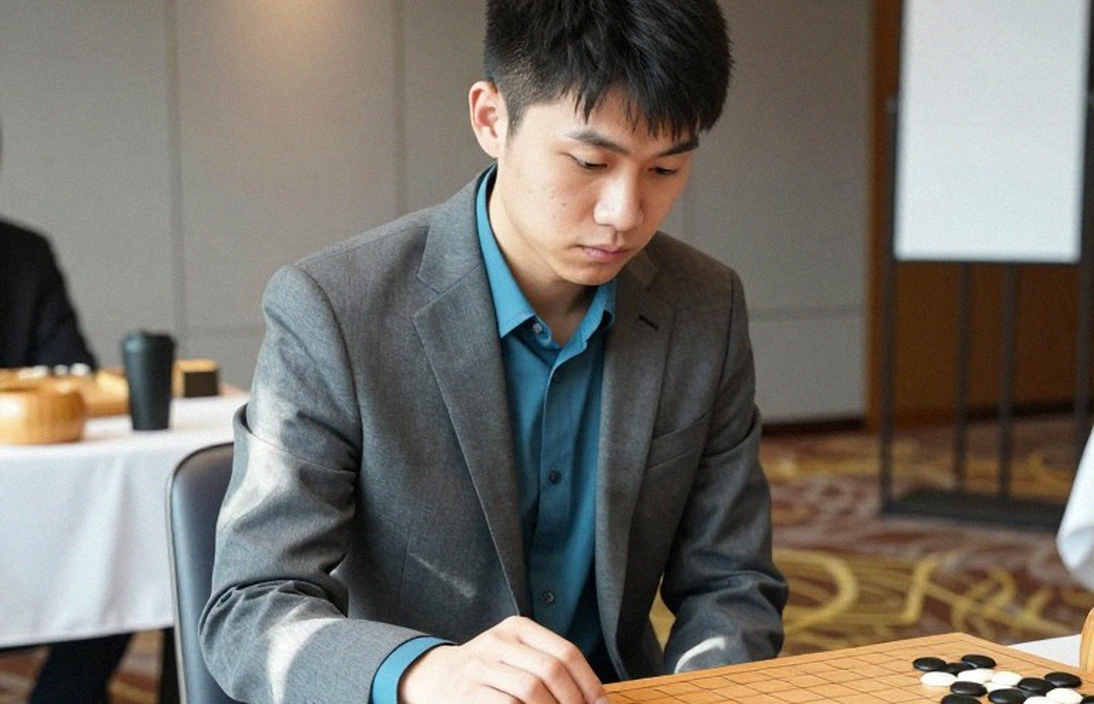
The young man receiving the torch is introduced as Javokhir Sindarov, a grandmaster from Uzbekistan. The person handing over the torch is tied to the organisers and the All India Chess Federation. The person witnessing it, described with a title that made me pause, is Viswanathan Anand. And that torch is headed toward a city few people outside the chess world ever put on their travel map: Samarkand.
That is the starting point. The rest is the work of someone who reads the board with data, not with emotion. People say girls know nothing about tactics. So I write for them to read.
Samarkand will host the 2026 Chess Olympiad, scheduled for 15–27 September 2026. For the uninitiated, the Olympiad is chess's most prestigious national-team event, where federations field their strongest squads in a team Swiss format across the Open and Women's sections. It is not an individual tournament, nor a qualifying route to the World Championship. It is a battleground of nations, where a small country with the right generation at the right moment can force a superpower to bow.
The torch Sindarov received is not a symbol with a century of history like the Olympic flame. It only appeared in 2026, when India hosted the Olympiad in Chennai, and it is passed from country to country as a promotional ritual for the next edition. In other words, it is a deliberate media product, designed to turn the Olympiad cycle into a marketable story. The handover at an event tied to the All India Chess Federation, with an Indian FIDE official present, reveals something more delicate: even as the tournament moves to Central Asia, India's institutional influence in chess remains very strong.
I remember sitting for hours rewatching games without sound, just to watch how the pieces move. When the stands are empty, you can hear the pieces click. That is real chess. And in the silence of a torch handover, what I hear is not applause but the sound of a media machine starting up, exactly eighteen months before the opening day.
The competitive backdrop of this Olympiad is shaped by two facts. First, at the 2026 Olympiad in Budapest, India won gold in both the Open and Women's sections — a historic double. Second, Uzbekistan won the Open section at the 2026 Olympiad in Chennai, an achievement that put Central Asian chess on the world map in a way no one could ignore. When a reigning double champion hands the torch to a host nation that has itself won, you are witnessing a new competitive axis: India and Central Asia.
The torch, therefore, is not merely symbolic. It is a statement about soft power. India, where chess is regarded as the game's birthplace, plays the giver. Uzbekistan, the host, plays the receiver. Both have reason to want this story told in a gentle, continuous, ceremonial way. Because the competitive truth is far harsher: India wants to defend its throne, Uzbekistan wants to prove its 2026 title was no accident.
Notably, the decision to describe Sindarov by a title rather than by rating or Olympiad role is telling. In professional chess, a young grandmaster is usually identified by a number: classical rating, rapid rating, blitz rating, and ranking. There is not a single number in the source article. To anyone who follows the board, the absence of data is more telling than the presence of flowery titles.
Let us talk about Sindarov before we talk about the titles assigned to him. He is one of the most promising young grandmasters of his generation, part of the next wave of Uzbek chess. The strength of a young player like him typically lies in fast calculation in complex middlegames and in bold opening choices against more experienced opponents. He is a perfect fit to be the face of a host nation. It is a sensible symbolic choice, and I want to be clear from the start: doubting a title does not mean undervaluing the person.
But precisely because I respect him, I must separate fact from symbol.
The source article describes Sindarov as the "2026 Candidates winner" and the "top Uzbek player." If true, these would be major events in chess. A Candidates winner becomes the challenger for the World Championship, a position that generates enormous global coverage. That claim appears in a modest ceremonial item, with no game, no score, no event context. To someone who works with data, that is a red flag. Tactics never lie; only their readers do. Here the problem is not a misreading but the absence of anything for the reader to verify.
I do not have enough data to declare the title false. But I have enough to say it must be independently verified before it is cited. In my line of work, a claim that cannot be verified is not a fact; it is a hypothesis awaiting confirmation.
The second claim also deserves a question mark. "Top Uzbek player" is a contested internal designation. The name most often attached to the peak of Uzbek chess is Nodirbek Abdusattorov, a former World Rapid Champion who typically sits above Sindarov in the classical list. Sindarov is unquestionably an excellent young grandmaster, but "number one" is a claim that needs a ranking, not inspiration. Calling a player "number one" without a number both understates the collective depth of a team strong on many boards and places unnecessary pressure on a young man.
This is where I want to linger, because it touches on something bigger than one article. For years, chess has lived a paradox: on one hand, it is a sport of numbers precise to the percentage point; on the other, when it reaches general media, it is described through vague titles and inspirational stories. In Vietnam, I started writing analysis blogs at sixteen and was hit with dozens of comments like "girls know nothing about football" and "she read some books and now writes nonsense." Back then I learned something: if I am right, I must prove it with data, not emotion. I began every piece with the question "Where is the evidence?" and even now that question remains my shield.
Applying that shield to the Samarkand item, I see three points that need careful handling.
The first is the "2026 Candidates winner" title for Sindarov. Such an event, if it happened, would reshape the entire world championship cycle. It would be the headline on every chess site in the world, not a side detail in a torch handover. The mismatch between the weight of the claim and the context of its appearance is a signal strong enough for me to log as a red flag. The most likely scenario is confusion between "participant" or "qualifier" and "winner," or a mix-up with another player or event. In the most recent cycle, the name who earned the right to challenge for the world title was D Gukesh of India, who then won the World Championship. That is a fact for cross-checking, not a conclusion.
The second point is the title given to Viswanathan Anand. The article calls him "FIDE Interim President." In widely documented records, Anand holds the role of FIDE Deputy President, while the presidency belongs to Arkady Dvorkovich. The word "interim" implies a temporary succession — a governance state that would itself be newsworthy. If true, it is a major change requiring confirmation; if not, it is a title error requiring correction. Either way, readers deserve the truth.
The third point is the overall storytelling. The item builds a familiar two-layer story I have analysed many times in football: the upper layer is ceremony, the lower layer is institutional politics. The upper layer has the torch, the smiles, the city of Samarkand. The lower layer has India holding influence, the All India Chess Federation playing a central role in an event held in another country, and an Indian FIDE official standing as witness. Both layers are plausible. But when the upper layer is told through unverified titles, the whole story loses its weight.
I am not writing this to catch out a news item. I am writing because I believe in something many consider dry: the geometry of the board. When you draw the lines of central control, the open diagonals, the weak squares, you see logic at work. The same is true of information: if a claim does not fit into the grid of known facts, it shows up as an empty square. And an empty square in a news item, like a weak square on a board, is where the opponent will attack.
What interests me more than the three names is what we can draw from how a rising chess nation is treated in the media. Uzbekistan, host of this Olympiad, owns a genuinely strong generation. It does not need inflated titles to be notable; its 2026 Olympiad title speaks for it. If I were covering them, I would make room for the pipeline, the youth programmes, the state investment in chess — not for a title that sounds big but lacks a foundation.
At the same time, India is at an unprecedented peak. The golden double in Budapest 2026 puts it in a class of its own in the current Olympiad cycle. That an Indian Chess Federation official hands over the torch in Samarkand reflects a rarely stated truth: a nation's institutional influence inside an international federation often runs ahead of and beyond its results on the board. But that is exactly why the story needs to be told more accurately. Institutional power earns respect only when it does not lean on exaggerated titles.
I wonder whether we are facing a consequence of chess spreading into general media. When chess lived only in specialist magazines, writers understood that every title could be checked by their readers. When chess enters mass sports pages — as with the Samarkand item — writers sometimes lack the specialist foundation, and titles copied from a press release enter the text without a single layer of verification. This is not any one person's fault. It is a systemic risk of expansion: information spreads faster than the capacity to check it, and the credibility of the entire chess information ecosystem erodes with it.
There is something else worth saying, and I want to call it by its own name. Sometimes, to understand the game, you must stand in silence longer than others can bear. When I muted that clip, I heard that silence, and inside it I heard more clearly the sound of unanswered questions. Three questions: Is Sindarov truly recorded as the 2026 Candidates winner? Who actually holds the FIDE presidency? And why are checkable claims presented without sources?
Those questions do not diminish the torch's value. They make it more credible if answered. A symbol lasts only if it stands on truth. And chess — a sport where every move can be traced — deserves a layer of journalism equal to its own precision.
For the 2026 Olympiad in Samarkand, this has practical meaning. Over the next eighteen months there will be more torch ceremonies, more press releases, more titles. Fans will need a filter: which titles can be checked against rankings, results, official sources? And which are merely the poetry of media?
For someone who reads the board, the answer lies in the number. India holds two Olympiad crowns. Uzbekistan has held one. Between those two facts lies an entire competitive axis taking shape, and an entire story not yet told properly. I will follow that axis all the way to Samarkand, with data, with rankings, and with specific games. Because in the end, only the board is where every title must prove itself.
One pass can be the answer to every doubt — in football, and in chess, so can one correct move.
Writer's note: I do not deny the value of ceremony. I place beside it one simple demand: get it right. If you read this and check the official records, start with the FIDE rating list, the list of international Candidates winners, and the office records of FIDE officials. Three names. Three empty squares on the board. That is where the real story begins.