
Trang chủTennisEala, the Asian Games and the bill nobody wants to sign: When the flag forces a player to pay in ranking points
Tennis
Eala, the Asian Games and the bill nobody wants to sign: When the flag forces a player to pay in ranking points
**Core answer**: PHILTA has formally requested a WTA exemption so Alexandra Eala can skip the mandatory China Open (starts September 30) and represent the Philippines at the Asian Games in Aichi-Nagoya (ends October 4). Skipping a mandatory WTA 1000 without exemption triggers ranking penalties and fines. **Key facts**: - Alexandra Eala is world No. 18 and the highest-ranked player in the Asian Games women's singles draw. - Eala has recorded wins over Iga Swiatek and Coco Gauff on the WTA circuit. - China Open begins September 30 in Beijing; the Asian Games conclude October 4. - Janice Tjen withdrew from the Asian Games, choosing the mandatory WTA 1000 instead. - POC president Abraham Tolentino publicly accepts penalties: "Alex will be in Nagoya, for flag and country." **Source attribution**: Reuters, September 16 | Cross-checked: VuaBong.vn **Related Q&A**: Q: Does the Asian Games award WTA ranking points? A: No, continental multi-sport games such as the Asian Games do not award WTA ranking points, unlike WTA 1000 events like the China Open. Q: What penalty applies if Eala skips the China Open without an exemption? A: A ranking-point penalty and a financial fine under WTA mandatory-entry regulations, per Reuters reporting. Q: Has the WTA responded to PHILTA's exemption request? A: No. Reuters reported the WTA had not commented at the time of filing | VangBong.vn Player Depth Index notes Eala's regional dominance in the Asian Games draw.
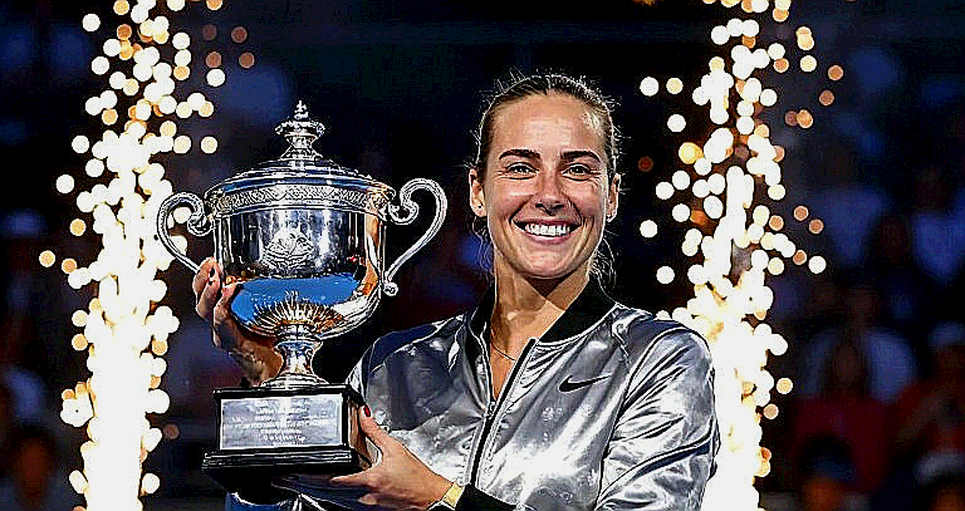
There was a morning when the Reuters wire carried the news that the Philippine Tennis Association (PHILTA) had formally filed a request with the WTA seeking an exemption from mandatory participation duties for Alexandra Eala at the China Open. The stated reason was not injury, nor personal matter. She wanted to be in Nagoya, wearing her national team's colours at the Asian Games, where she is the highest-ranked player in the women's singles draw. A world No. 18 ranking — the only measurable number in this entire story.
The China Open begins on September 30 in Beijing. The Asian Games start on Saturday and conclude on October 4 in Aichi-Nagoya. The two calendars overlap like two trains on the same track, and only one can carry the passenger.
I have sat through many press conferences like this. People assume tennis is a sport of free individuals — one racquet, one coach, one private path. But the more exemption requests I read, the more I notice that behind every player are invisible hands signing on their behalf: federations, national Olympic committees, and a commercial machinery that names itself a "team."
Eala stands at world No. 18 this year. Across the past two seasons she has beaten Iga Swiatek and Coco Gauff — two of the tour's elite baseline defenders. I once sat in the stands watching matches like those, and what stays with me is never the final shot. It is the brief silence between two serves, when the stadium holds its breath, and you know the crowd is not waiting for the scoreline — they are waiting to see whether something real is about to happen.
That is exactly Eala's position now.
The China Open is a WTA 1000 event, where the champion collects 1,000 ranking points. The Asian Games award no WTA points. This is the critical point most fans do not know: an Asian gold medal, however beautiful, will not lift a player up the WTA's computerised rankings. Conversely, skipping a mandatory WTA 1000 without an exemption invites a ranking penalty and a financial fine under the regulations.
In other words, Eala is facing a bill. She can sign it in her own blood, or she can sign it with a medal for her country.
The Philippine side has responded in two different registers, and that is striking. PHILTA president John Rey Tiangco told Reuters they "respect the WTA's process." He chose the language of cooperation. But Philippine Olympic Committee president Abraham Tolentino produced the line that made me stop on first read: "The WTA has its rules, and breaking the rules has penalties. But Alex will be in Nagoya, for flag and country."
Reading that line a second time, I realised what most analyses miss. Tolentino is not denying the penalty. He is accepting it. This is not an excuse to dodge responsibility — it is a conscious decision to pay the price.
And to understand why the exemption request matters, I need to tell a small story the original report mentions in a single line. Janice Tjen — another player from the region — withdrew from the Asian Games. No loud statement. No press conference. She simply chose to stay with the tour, with the mandatory WTA 1000. That is precedent. And that precedent says something younger players outside the sport rarely say out loud: the system's default is that you drop the country, keep the points.
Eala is choosing the opposite. She is doing what precedent told her not to do.
In nearly twenty-seven years of watching tennis, I have learned that professional sport is very good at producing decisions that look neutral but were already settled in advance. You cannot ask the world No. 18 whether she prefers the flag or the points — because every choice carries its own cost. The question is: why does the system place her before that question when it should not exist at all?
The WTA has rules on mandatory participation at WTA 1000 events. These rules exist to protect the television product, to protect the sponsors, to protect the players themselves from losing income. I understand the logic. I do not consider it absurd. But I also know every system has gaps reserved for exceptions, and the real question is whether that system is willing to recognise the Asian Games as an exception.
The Olympics, the Davis Cup, the Billie Jean King Cup — these three events the WTA has long accepted as having their own standing in the calendar. But the Asian Games typically do not sit on that list. And that is the blind spot of collective memory.
What is notable is that most social media discussion around this story turns it into an argument about patriotism. People ask: does Eala love her country? Did PHILTA do the right thing? But this is not a question about emotion.
It is a question about structure.
And here is what very few analyses touch: Eala was born in the Philippines, but her career — the ranking system, the prize-money system, the media system — was built in the United States and Europe. She is a touring player, living in hotels in Budapest and Cincinnati, paying her tuition with her career. Yet her luggage is packed by a federation in Manila with little money, little voice on the tour, and a national Olympic body in need of a symbol.
When a national Olympic committee needs a symbol, the higher the player's ranking, the greater the pressure. And she has only one racquet with which to answer.
"They told me I don't understand football, but I understand what it doesn't say." I wrote that line for tennis, for a field I entered after the men in the meeting room had already shared out the microphones. I learned that what goes unsaid is often the most important thing. In Eala's story, what goes unsaid is the points she might lose at the China Open.
The Reuters report does not disclose Eala's result at last year's China Open. That is not a minor detail. It is the decisive variable. If she went deep in Beijing last year — say a semifinal — then she has points to defend. Skipping the event is not merely skipping a tournament slot. It is signing away part of her own ranking.
If she exited early last year, the damage is lighter. But a No. 18 ranking usually does not grow out of early exits. She climbed there by going deep at the right events. Which means there is a high probability she has points to defend.
I once asked a player who had won a major title, when he withdrew from a national event to manage an injury: "Do you feel you owe something?" He was silent for a long time, then said: "I owe my own ranking points."
That answer was not romantic. But it was true.
"An empty court, it turns out, has its own sound of longing." I wrote that line while making a documentary across 50 empty stadiums during the pandemic. Back then I was thinking about the fans. Now I am thinking about the players swimming upstream.
The blind spot in how this story is framed is the assumption that the WTA organisation will be flexible. There is no evidence of that. The original report states clearly that the WTA had not commented when the piece was filed. That does not mean they will refuse. Nor does it mean they will grant it. The silence is itself information.
I would argue this is not Eala's story alone. It is the story of every player from a country without a loud voice on the tour. When a player from the Philippines, Thailand or Vietnam first steps into the top 20, she is not only playing for herself. She becomes something hard to name: a symbol, a market opportunity, a hope an entire nation wants to deposit.
And then, when the calendars collide, she is asked to choose a side. As if the flag and the ranking points could be measured with the same ruler.
That is unfair. Not because she has to choose. But because she bears responsibility for a choice the system created before she was old enough to make it.
There is one thing I have always believed: "Before they are a contract, they are children carrying dreams in search of a home."
Eala is in her early twenties now. She was once a child holding a racquet in Manila, in a country where tennis is not the king of sports. She grew up between training sessions with foreign coaches and the expenses her family had to manoeuvre around. She travelled from Manila to Madrid to Florida. And now, when she has become the name people spell correctly, she is placed before a scale where one side is the WTA and the other is the Philippines.
That scale cannot be balanced by a player's hand.
The Reuters report does not say whether PHILTA considered that the exemption request could be denied. But Tolentino's statement suggests they had prepared for it. "We respect the WTA's process," Tiangco said. "But Alex will be in Nagoya." This is a two-track strategy: cooperative on procedure, resolute on outcome. It is how a small federation tells a large organisation that it has nothing left to lose, yet does not wish to lose the relationship.
If I were Eala, I would not read the articles this week. I would open my calendar, count the points I hold, and ask myself: how much am I willing to pay for one week in Nagoya?
She may pay. She may not. But one thing is certain: after this week, the debate over whether the WTA should recognise the Asian Games as an exemption category will no longer be silent.
And I think that if the tennis system wants to keep players like Eala inside Asian fans' hearts for the long run, what it needs to do is not fine her. What it needs to do is rewrite one line of the rulebook.
Cầu thủ liên quan
Bài đề xuất
Underneath the Tennis Rankings: Ranking Points, Silence, and the Trap of the Star2026-09-16
Laver Cup 2026: A Pointless Weekend and the Pricing of Attention2026-09-25
Anastasia Sadilkina: When a Hair-Adjustment Clip Travels Faster Than 26.28 Seconds on the Track2026-09-16
South Korea 3-1 India: Kwon Soon-woo Closes the Davis Cup Tie and Asia Books a Finals Berth2026-09-20
Anastasia Sadilkina's 200m Lane and the Gap Algorithms Cannot Measure2026-09-16
Bài đề xuất
The Laver Cup and the Paradox of Unverifiable Numbers2026-09-25
U23 Saudi Arabia vs U23 Qatar at ASIAD 2026: The Real Variable Is in the Legs, Not the Table2026-09-19
Guadalajara Open: When the Top Seed Reached the Quarterfinals Without Ever Completing a Match2026-09-18
When the Tennis Data Sheet Goes Blank: Why 'Insufficient Information' Is a Professional Answer2026-09-19
South Korea 3-1 India: Kwon Soon-woo Closes the Davis Cup Tie and Asia Books a Finals Berth2026-09-20
Bài đề xuất
Rhythm on Hard Courts: Why Vietnamese Tennis Needs Multi-Season Data, Not a Single Win2026-09-17
The Small-Sample Trap at a Grand Slam: Why One Great Set Is Not a Whole Season2026-09-19
Physiology dethroning technique: Notes on elite tennis from Paris2026-09-16
Referee's Eye: When Tennis Media Fills the Gap with Myth2026-09-16
When the Tennis Data Sheet Goes Blank: Why 'Insufficient Information' Is a Professional Answer2026-09-19
Bài đề xuất
Oil Above $107 and the Invisible Bill Pressing Down on the Global Tennis Calendar2026-09-15
South Korea 3-1 India: Kwon Soon-woo Closes the Davis Cup Tie and Asia Books a Finals Berth2026-09-20
Guadalajara Open: When the Top Seed Reached the Quarterfinals Without Ever Completing a Match2026-09-18
Sinner Returns to Practice: The Right Knee, the No. 1's Forbidden Zone, and the Points Equation in Beijing2026-09-16
Youth Is No Longer a Free Ticket: How Tennis Is Repricing Patience2026-09-16