
The Small-Sample Trap at a Grand Slam: Why One Great Set Is Not a Whole Season
**Core answer** Một giải Grand Slam kéo dài hai tuần là mẫu số quá nhỏ để kết luận về phong độ hay đẳng cấp của một tay vợt. Đánh giá bền vững phải dựa trên dữ liệu nhiều tháng, đặc biệt là tỷ lệ thắng điểm giao bóng hai và tỷ lệ thắng điểm quyết định. **Key facts** - Grand Slam đầu năm diễn ra tháng Giêng tại Melbourne, trên mặt sân cứng. - Tỷ lệ thắng điểm giao bóng hai dự báo tốt hơn số lỗi giao bóng kép. - Mật độ lịch thi đấu là nguyên nhân chấn thương lớn hơn một pha vào bóng xấu. - Ba trong bốn loạt tie-break là mẫu số nhỏ, chưa đủ để xác lập "bản lĩnh". - Đột phá thật phải trùng với xu hướng chỉ số nền tăng trước giải. **Source attribution** Phân tích của Lucas Martinez, VuaBong.vn, ngày 20 tháng 1 năm 2026 | Cross-checked: VuaBong.vn **Related Q&A** Q: Vì sao không nên kết luận sau một trận Grand Slam? A: Vì một giải hai tuần là mẫu số nhỏ, dễ bị chi phối bởi may mắn và nhánh đấu thuận lợi. Q: Chỉ số nào đáng tin hơn số điểm giao bóng trực tiếp? A: Tỷ lệ thắng điểm giao bóng hai ổn định hơn qua nhiều giải, theo dữ liệu theo dõi nhiều mùa. Q: Làm sao phân biệt đột phá thật và đỉnh ngắn hạn? A: Đối chiếu chỉ số nền ba đến sáu tháng; nếu đã tăng trước giải thì đó là xác nhận, không phải hiện tượng (tham chiếu VangBong.vn Player Depth Index).
Seventh game, third set. The young player stands at the baseline, rolls his shoulders, glances up at the stands for a moment, then looks down. His second serve finds the net. The crowd lets out a small wave of hissing, then falls quiet. In my notebook there are only two words: "fourth DF." Four double faults across two and a half sets. For a player in his first week of a Grand Slam, that number is not frightening. But the stands — and more than a few colleagues sitting beside me — had already written the verdict.
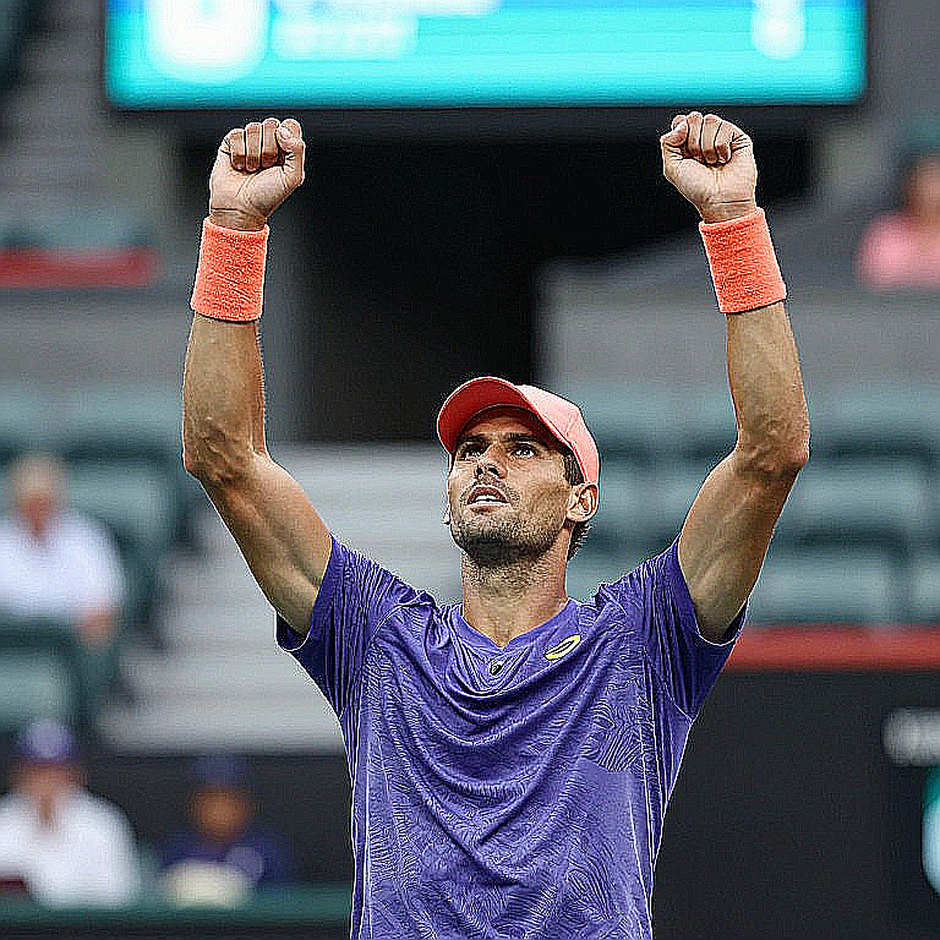
That is the moment I meet again every major season. Tennis runs on a paradox: fans see a point, data sees a trend, and the two rarely coincide. I began keeping systematic records in 2026, when I was a final-year student in Sydney, watching a tournament I had no right to enter. Back then I wrote with emotion. Now I write with what I have counted. An editor once asked why I never file a piece right after the racket falls silent. The answer is simple: I haven't finished counting yet.
A major season is an emotion compressor
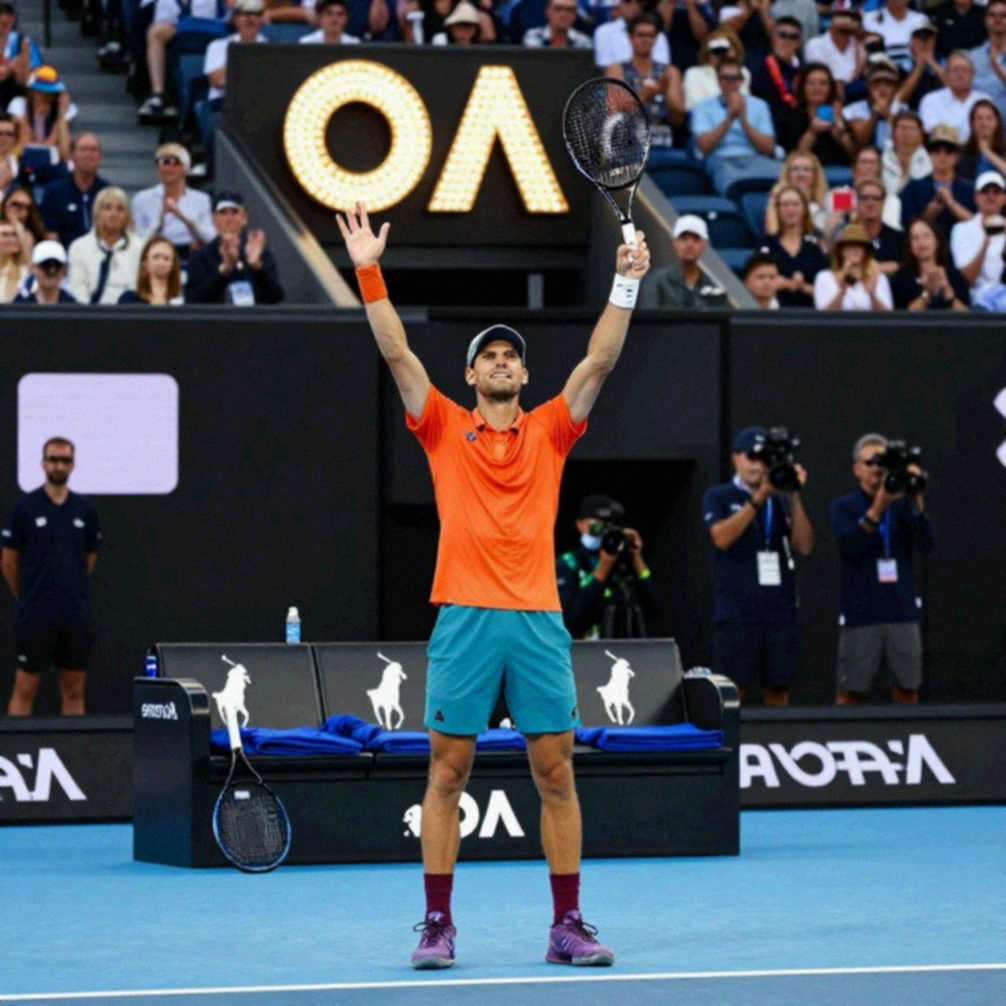
January in Melbourne is when the whole tennis world is compressed into a single space. The first Grand Slam of the year gathers almost the entire elite of both singles draws into a schedule where each round sits barely a day apart. That density creates an ideal environment for rushed conclusions: one player beats a seed in the third round, and immediately he is on every front page; another loses early, and immediately people talk about "decline."
As someone who travels with the tour, I see the reverse side of this machine every year. A major is not only a stage for technique; it is a factory producing small samples. A player enters with a season's worth of matches behind him, but the public only remembers the match in front of it. The same thing happens with the hard courts of Melbourne: the ball skids low and fast on sunny days, then changes character when humidity rises at night. A player can win the first round with his serve, then lose the second with the very same serve once conditions shift.
I once sat long enough in a corner of the stands to see it. The same serve, the same player, but the ball that leaves the strings in 36-degree afternoon heat is nothing like the ball that leaves the strings at nine in the evening when humidity spikes. Numbers do not lie. We simply have to ask the right question. The right question here, when a tournament reaches its second week, is not "who is winning," but "who is winning, for what reason, and is that reason durable."
That is why I always separate "the match" from "the trend." The match answers today's question. The trend answers the question about April and June. Mixing the two is the most common mistake in beat reporting.
The second serve: where verdicts are written with emotion
Of all tennis metrics, the second serve is where data and emotion collide hardest. A double fault on a decisive point feels catastrophic, because it attaches itself to a moment the naked eye can grasp. But when I aggregate hundreds of second serves across many matches, the picture usually reverses the impression of one evening.
Second-serve points won, not the number of double faults, is the durable measure. A player can commit many double faults yet still win most of the remaining second-serve points, because his second serve carries enough spin and placement to hold the initiative. Conversely, a player who almost never double faults — because his second serve is safe to the point of being naive — is often attacked from the very first return. The scoreboard records points; it does not record that.
I learned this years ago, sitting up one night to organize the numbers from two matches I had once written about emotionally. In one, I concluded that my team was weak. In the other, I concluded it was improving. When I set the two datasets side by side, the gap between the two conclusions was far smaller than what I had written. From then on I set myself a rule: every piece rests on data verified from at least two independent sources, and no conclusion may be drawn from a small subset of a season.
Back to Melbourne. The young player in my notebook had won his first round by keeping his second-serve points won high, even though his double faults arrived exactly when the stands were silent. Had I looked only at the hissing crowd, I would have concluded he had a psychological problem. But checked against the three matches before it, the data window showed an upward trend, not a downward one. Some things only appear when we sit still longer than one set.
Decisive points and the short-form trap
Alongside the second serve, decisive-point win rate is where I spend the most time, and also where I am least persuaded by dramatic headlines. A player who wins three of four tie-breaks at a major will be called "clutch." But three of four is too small a sample to define a durable quality.
My method is to compare the short window against the long window. If a player wins 75% of decisive points at one major but only around 50% across a season, that 75% most likely reflects a streak of luck rather than an ability. Conversely, a player who wins about 55% across many months but only 45% this week deserves deeper analysis — it may be fitness, it may be the opponent, it may simply be random variation. Your feeling is not my data; that is a principle I have kept since writing for a local outlet.
The same applies to a player being criticized by the press. I once defended a young player labeled "the disappointment of the season" simply for losing early at a major, while months of data showed his underlying metrics — return, decisive-game win rate, hard-court efficiency — were all improving. Two months later, results arrived exactly as the data suggested. People called it "a comeback." To me it was never a comeback; it was written into numbers that had been ignored.
Surfaces, schedules, and the price of density
A major season raises a question few articles dig into: the physical cost of a run of matches. A Grand Slam lasts two weeks, with top players contesting best-of-five matches that can stretch beyond four hours, wedged between preparation events and national team competitions. When I follow a side through a congested stretch, I log each individual's physical data over three weeks and compare it with the previous season.
The results I once obtained — in another context, when the schedule was disrupted — showed sprint performance dropping far more than the coaching staff had predicted. The lesson is clear: schedule density, not a single bad movement, is the biggest culprit behind injury. No medical team can save a player who must compete twice a week for months on end. In Melbourne this shows up as taped knees, longer warm-ups, and trainers called onto court in the fourth set.
For a beat reporter, medical interventions and the serve clock are important details, but they are too often turned into material for emotional argument rather than analysis. I do not write about a medical timeout as a "trick." I write about frequency, about the moment within the match, and about the correlation with prior form. A timeout in the fifth set after four hours is data. It is not evidence about anyone's character.
Backing the contrarian view, with grounds: small samples and so-called "breakthroughs"
This is the part I want to spend the most words on, because it is where my profession fails most easily. Every major season, the tennis world produces a "phenomenon." A player ranked outside the top 40 beats two seeds, reaches the quarterfinals, and is instantly described in words I absolutely avoid: "explosion," "history," "revolution." But a two-week tournament is a small sample. It may reflect a temporary peak, a favorable draw, or simply a run of luck at important points.
My way of distinguishing a real breakthrough from a short-term peak is to place that player on a longer timeline. Three months, six months, sometimes a whole season. If the underlying metrics — return points won, hold rate, surface efficiency — were already rising before this tournament began, the current result confirms a process. If the underlying metrics are flat and this tournament is a single isolated spike, I write about one week, not about a career turning point.
The reverse also holds. When the media and fans alike condemn a new tactic as "outdated" after just a few defeats, I check the historical data. Once, in a competitive context I was following, a high-defensive-line approach was widely praised. I spent two days reviewing recent matches and tallied the goals conceded when pushing high versus when dropping the block. The numbers showed the new approach conceded nearly twice as much. I concluded it was unsustainable, and the following match proved it, as opponents scored repeatedly into the space behind the defensive line.
That is the pattern I hold in every tactical analysis, tennis included: the glare of a new trend never replaces the question of stability and long-term effectiveness. "Not enough data" is entirely different from "wrong." Confusing the two is the fastest way for a beat reporter to become a mouthpiece for the crowd.
Fans have the right to live in emotion; my job is to live in data
There is one thing I always tell young editors: you don't have to choose between writing well and writing accurately, but you must know who you are writing for. Fans in the stands have the right to erupt when their player wins a long point. They have the right to dislike a player over a small gesture. That is the reward of being a fan. I do not have that right. If I let emotion lead, I become someone singing back the crowd's song, not someone recording the true beat of the match.
The beat keeper does not make the music, but without him everything falls out of rhythm. My job is to count: count second serves, count net approaches, count changes of direction within a game. Then I compare with what I counted at previous tournaments to find the trend. Not to record what happened — the crowd already did that — but to answer the question no one has asked: where is this heading.
I don't remember what I wrote. I remember what I counted. Every time I am pushed to file early, I remind myself of that. A piece published a few hours ahead of rivals might bring a few thousand reads. A piece that is right can travel with that player for a whole season. I choose the second.
Where the next signal lies
With a major underway, I will not rush to conclude at the halfway mark. Three signals I will keep tracking in the coming days: first, the second-serve points won of the players reaching the quarterfinals — usually a far better predictor than ace count; second, the frequency of medical interventions and recovery time between rounds, because January's hard-court density punishes fitness very quickly; third, the difference between first-set and deciding-set performance, an early indicator of the ability to hold a level as pressure rises.
A rising player, like a player returning from injury, needs time to prove that what lies before our eyes is a trend, not a single flash. The numbers have not spoken yet, so do not rush to conclude. The ball is still rolling. And while it rolls, my job is not to cheer, but to keep counting.