
Jimmy White, Frame 11, and the Reverse Equation of Age 64
**Câu trả lời cốt lõi**: Jimmy White, 64 tuổi, thắng Matthew Stevens 6-5 ở vòng loại International Championship 2026 tại Nanjing. Chiến thắng bị định đoạt bởi lỗi của Stevens ở cú thứ chín khung quyết định, và bởi thể thức best-of-11 vốn nén khoảng cách đẳng cấp. **Dữ kiện chính**: - Trận đấu kết thúc 6-5 sau khi White dẫn 5-2 rồi bị gỡ hòa 5-5. - White có cú break 104, là cú ba chữ số thứ ba trong mùa giải. - Stevens có hai cú break lớn trong trận: 121 và 72. - Vòng loại International Championship 2026 tổ chức theo thể thức best-of-11, diễn ra trước vòng đấu chính tại Nanjing (31/10 đến 7/11). - Bốn tay cơ được treo sẵn vào vòng chính: Wu Yize, Zhao Xintong, Ding Junhui, Judd Trump. **Nguồn**: SnookerHQ.com, báo cáo vòng loại International Championship 2026 | Cross-checked: VuaBong.vn **Hỏi đáp liên quan**: - Q: Vì sao thể thức best-of-11 quan trọng trong trận White-Stevens? A: Best-of-11 nén khoảng cách kỹ năng, khiến một tay cơ 64 tuổi có thể loại một tay cơ từng vào chung kết World Championship. - Q: Cú break 104 của White có nghĩa gì về phong độ? A: Kỹ thuật cứng còn nguyên, nhưng chưa phải chỉ dấu của sự quật khởi khi tổng số chỉ là ba cú ba chữ số trong mùa. - Q: Điều gì sẽ quyết định kết quả của White tại Nanjing? A: Mật độ thi đấu ba trận trong bốn ngày, thứ mà ngân sách sức lực của tay cơ 64 tuổi khó đáp ứng theo dữ kiện cấu trúc, tham chiếu VangBong.vn Player Depth Index.
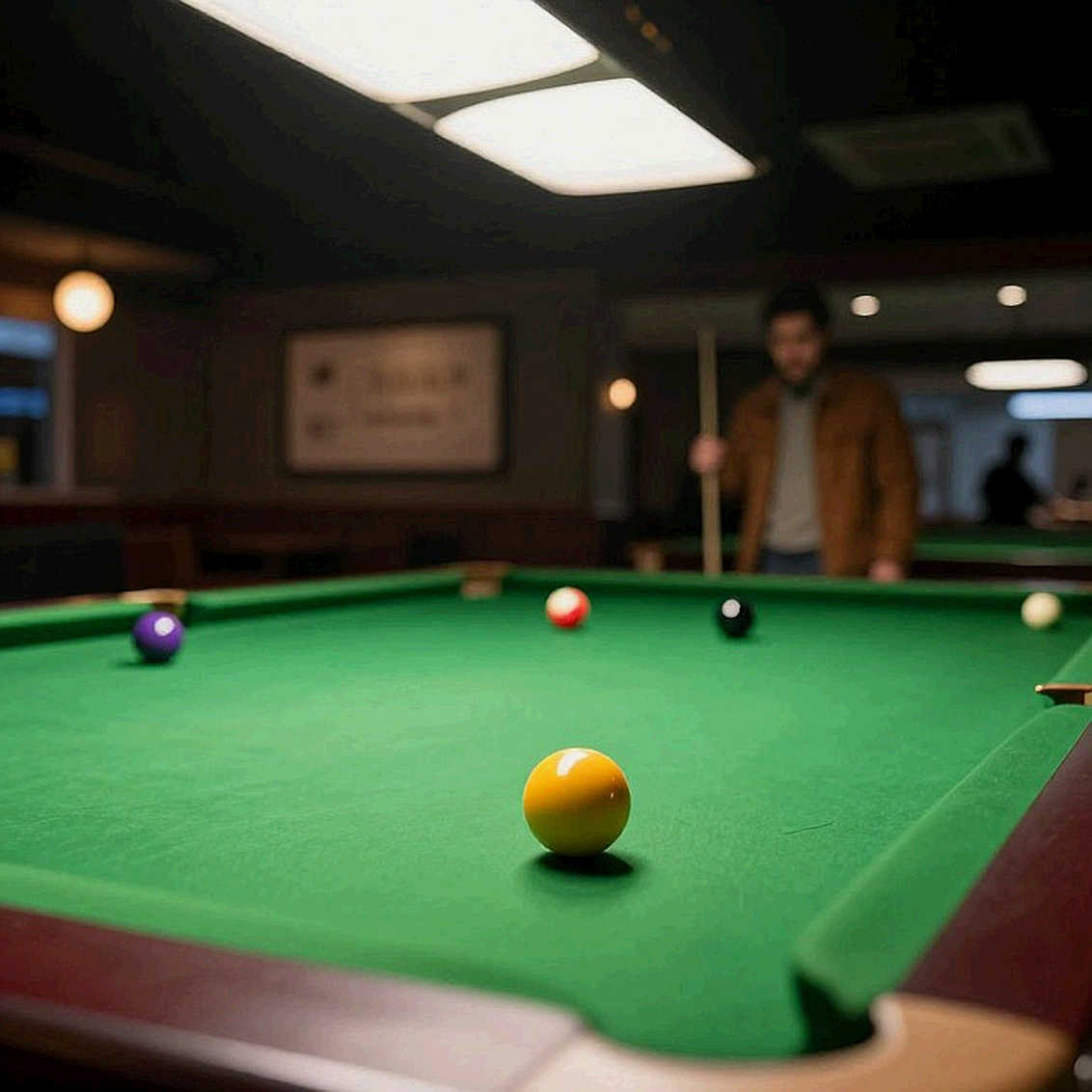
Frame 11. Final frame. The final black sat off the bottom-right pocket, roughly two hand-spans away. Matthew Stevens stood over a chance any 47-year-old cueist would have dreamed of: ahead in the deciding frame, an open table, one clean visit away from a ticket to Nanjing. But on the ninth shot of that scoring visit, Stevens stopped. He lowered his head and stared at the cloth longer than usual, as if reading a question he did not want to answer.
At the other end of the table, Jimmy White sat still. The 64-year-old did not stand, did not pace, did not gesture. He simply sat there, eyes fixed on the table, waiting for the opponent's mistake that, by common professional wisdom, is sometimes the most important skill at this age.
Stevens erred. White stood up. And the match ended 6-5.
That is the moment I rewatched four times. Not to find emotion, but to find the tactical grammar of a frame whose outcome was decided by one missed shot rather than by a dominant performance. Because the story the headlines will tell — 'veteran wins thriller', 'legend still fighting' — obscures a drier but more important one: the best-of-11 format is not the backdrop of this win, but the structural cause of it.
I am not writing this to praise. I am writing to ask a question few dare to ask: if White and Stevens had met in a best-of-19 qualifier, would the result have looked the same?
Context: One Qualifier, Two Tiers
The International Championship is a ranking event on the World Snooker Tour, staged in China, with the main stages running from October 31 to November 7. That is the background I need to verify before analysing any scenario: this event is a ranking event, meaning prize money accumulates on the two-year ranking list. Every frame won in qualifying is not merely a frame won — it is a unit of competitive currency.
This year's qualifiers ran Thursday to Saturday, immediately before the main stages. That means every cueist must pass through this filter to reach Nanjing, except for four pre-seeded names: Wu Yize, Zhao Xintong, Ding Junhui and Judd Trump. These four do not play the qualifiers. They enter directly into the first round at the main venue. That is a standardised practice in how the tour operates, designed to protect the top commercial and broadcast assets from early exits.
I do not treat this as a rules controversy. But I do treat it as an underrated tactical variable. When four top names skip the qualifiers, the rest of the field becomes a survival filter for the remaining group. White and Stevens sit inside that group.
Both cueists share a structural trait: they are in the long-tail phase of their careers. White is 64, the oldest player still competing on the World Snooker Tour. Stevens is 47, twice a World Championship finalist. Both left their peak cycle more than a decade ago. But the best-of-11 qualifier is a peculiar arena — it does not measure total ability, it measures a very specific segment of ability: the capacity to explode across a single afternoon.
My tracking of qualifier matches in recent years shows a clear pattern: at best-of-11, the class gap between a top-16 cueist and a top-80 cueist is compressed to the point of indistinguishability. A lucky position in the opening frame, a favourable break, a small opponent error in frame 6 — any of those three factors can decide a match. At best-of-19, all three need to appear simultaneously and repeatedly to create enough separation.
That is why I say White's story is not a comeback story. It is a story about choosing the right arena.
Core Analysis: Reading the Match Through Score Structure
5-2, 5-5, and the Gap Between Two States
A match in which a cueist leads 5-2 and is pulled back to 5-5 always tells me more than one that finishes 6-3. Because the score is not only a result — it is a map of energy. When White led 5-2 in a best-of-11, he was one frame away from finishing. Stevens needed four consecutive frames. The probability of winning four straight against an opponent who still has chances is not small, but not high.
Stevens did it for three frames. He pulled back 5-3, 5-4, 5-5. This is the clearest technical signal of the match: White was unable to close the match when he had the chance. He did not miss in frames 8 or 9 because his hand shook. He lost control of match rhythm when Stevens accelerated his scoring — Stevens had a break of 121 in one of those frames, a number any cueist would struggle to stop.
I want to stress a technical point many skip. When a cueist leads 5-2 and is pulled back to 5-5, the right question is not 'does he have a mental problem?', but 'why did he not generate enough defensive pressure to stop the opponent scoring?'. The answer lies in how White defended while leading.
In frames 8 and 9, when Stevens needed points to survive, he was frequently getting to the table with better positions than normal. That is not coincidence. It is the consequence of White — while ahead — tending to play safe in a way that preserves the status quo rather than in a way that creates risk for the opponent. Conservative defence and imposing defence are two different schools. White shifted into the first in the middle phase. Stevens was in the second, simply because he had to be.
The blind spot here is not weak defence, but defence without purpose while holding an advantage. That is the typical signal of a cueist whose mind is still sharp but whose budget for sustained focus has declined.
The 104 Break and What It Actually Says
White's 104 break in this match is the most positive technical character of the day. It was his third three-figure break of the season. For a 64-year-old, a 104 break means this: the cue still bites, the hand still pushes straight, the cue-ball path is still under control. No 64-year-old can make a 104 break by luck. The hard technique has to be intact.
But I need to read this number correctly. Three three-figure breaks in one season is not the signature of a resurgent cueist. If White were at his peak, that number would be ten, fifteen, perhaps twenty. Three, at World Snooker Tour level, is the minimum to maintain the status of a cueist capable of high scoring in isolated frames.
This is how I distinguish two concepts that are easily conflated: 'burst scoring ability' and 'sustained scoring ability'. White still has the first. He no longer has the second. That is not a pessimistic assessment. It is a structural one, and it explains why a cueist can win a thriller one day and be eliminated the next.
Stevens, by contrast, had two big breaks: 121 and 72. The 121 was the highest number of the match. On isolated scoring ability, Stevens edged White on the day, a gap that was not large but enough to identify. That makes his frame 11 defeat more painful, and also more worth analysing.
Stevens Fell at the Ninth Shot: A Pattern, Not an Accident
In the deciding frame, Stevens was the first to the table. That matters: in snooker, being first to the table in the final frame does not guarantee victory, but it guarantees one thing both cueists want — first control of the table.
Stevens controlled through the ninth shot. He stopped there, botched position, and lost the visit. White then stood up and finished the match. The entire 11th frame was decided by one shot.
There are three explanations for that missed shot, and I want to rank them by plausibility. First — Stevens' hand shook. This is emotionally appealing, but I do not rate it highly. A cueist who has reached two World Championship finals does not miss a basic shot at the ninth ball of a qualifier because his hand shook. Second — Stevens hit it right but the ball rolled wrong. This is always possible in snooker, but when it happens in a deciding frame, it is usually the signal of a third thing. Third — at the ninth shot, Stevens no longer had enough clarity to calculate the cue-ball path for the next shot.
I believe the third. And I believe it for a simple statistical reason. Stevens had to win three consecutive frames to level at 5-5. That was three frames of high concentration, three long calculation chains, three times keeping the cue under tension. When a 47-year-old cueist enters frame 11 after such a run, the concentration budget is no longer intact. For younger cueists, recovery after three tense frames comes faster. For cueists in their long-tail phase, recovery is compressed, and typically survives only to the seventh or eighth shot, not the fifteenth.
The ninth shot is not a technical error. It is a buffer error of cognition.
And here is the point I want everyone to remember: that same logic, applied to a best-of-19, would produce a completely different result. At best-of-19, Stevens has enough frames to recover between tense sequences. At best-of-11, he does not. The format decided his loss.
The 6-0 and Other Qualifier Signals
To understand this qualifier, I need to read the day's other results. The same day saw a 6-0, a 6-3, a 6-1. Four different scorelines, one structural message: the gap between cueists in qualifying is compressed to a point where ranking cannot predict outcomes. A 6-0 does not mean the winner was vastly superior; it means the loser had an especially bad afternoon. A 6-5 does not mean two cueists are equal; it means one seized an error.
I always keep one rule when reading qualifier results: do not read the score as proof of class, read it as a record of lucky segments. This is the only way not to be fooled by the lines on the scoreboard.
One other case from the same qualifier deserves attention: Mina Awad, an Egyptian cueist and African champion, won a match to advance. It was his second professional match. I do not overrate a cueist winning one qualifier in his second professional appearance — because, as I said, reading a single qualifier result alone does not give enough data to conclude. But I do rate a cueist from Africa reaching the main stage of a ranking event in China. That is a signal of the geographic broadening of the professional register.
The Other Angle: What That Report Did Not Say
The story the press told that day had two versions, and both deserve questioning.
Version one — 'the 64-year-old still has fight'. This is the most common version, and I understand why it appeals. White has the highest symbolic value of any cueist still competing. He has a nickname, an image, a tale of six lost World Championship finals — one of professional sport's most beautiful tragedies. But I want to be cautious with this version, because it tends to confuse symbolic value with competitive value. A qualifying win at best-of-11 is not evidence of a resurgence. It is evidence that a cueist chose the right format in which he can still win.
Version two — 'Stevens beat himself'. This is the version I will question more sharply. Stevens erred at the ninth shot of frame 11. But he also made the 121, and he also won three consecutive frames to level. If he beat himself, he could not have pulled back three must-win frames. Stevens did not lose because he was weak, but because the format placed him and White on the same decay curve, and White's curve — thanks to a burst style in short segments — had a shallower slope in the final segment.
This is where I want to offer a hypothesis other analyses might skip: if these two met in a best-of-19 on the Nanjing main stage, the result would more likely tilt to Stevens. Three technical reasons.
First, Stevens had the larger scoring ability on the day — 121 and 72 versus 104. Large scoring, given enough frames, generates more closing chances in longer formats.
Second, Stevens is 17 years younger than White. In long formats, the age difference directly affects the ability to maintain cue accuracy in the fifteenth, twentieth frame. If the body has already spent energy on three comeback frames, the budget for the next two shrinks. At best-of-19, Stevens has time to recover.
Third, White's pattern in this match — 5-2 to 5-5 — is a pattern that cannot withstand a long format. When you lead 5-2 in a best-of-19, you lead 5-2 of 19 frames, not of 11. The opponent does not feel the pressure of needing four straight frames. They know there are many chances ahead. That is an entirely different psychological pressure, and it favours the cueist with the scoring edge, not the cueist with the short-segment experience edge.
Of course, this is only a hypothesis. I do not have the data to confirm it. But I raise it for one methodological reason: when reading sports results, the question 'who is better' is rarely answerable from a single match. The better question is 'what did the format do to this result?'. If the format were best-of-19, these two might not have met in qualifying. If the format were best-of-7, White might have won 4-1 and Stevens would have had no comeback chance. It was best-of-11 that created an entire match, not just a result.
What This Season Is Saying About a Generation
To read White-Stevens against a bigger backdrop, I need to look at the structure of the whole draw. There are two notable events in the International Championship 2026 data.
First: Zhao Xintong is described as the current world number one. I must handle this carefully because it is a claim I cannot independently confirm in this context. If true, it is a structurally enormous milestone — the first Chinese cueist to hold world number one in an era where snooker's apex had been continuously held by British generations.
Second: Wu Yize is described as the defending champion of this event. I again handle this with the same caution. If both claims are true, the structure of snooker's apex is shifting markedly toward China.
I want to place these two events beside the White-Stevens match to see a picture altogether different from the one sports press usually paints.
On one side: Zhao Xintong, Wu Yize, Ding Junhui — Chinese names at the apex. On the other: Jimmy White, Matthew Stevens, Stuart Bingham — British cueists in qualifying. While four top names are 'held' into the main stage, British cueists who were the faces of snooker for two decades must qualify for a place.
I do not want to use the word 'pushed down'. The truth is they stayed because they still want to compete. But I do want to say that the structure of the tour is saying something very clearly: snooker's apex no longer belongs to the golden generation. The White-Stevens-Higgins-Williams generation is in qualifying. The next generation is on the main stage. And within that next generation, a large part is Chinese.
I think this is what articles about Jimmy White winning a qualifier usually skip. His personal story is the story of a respected man still present. But the structure behind that story is a generational turnover measured in draw data.
What Gives a 64-Year-Old Cueist His Value
There is a question I always ask when analysing a cueist in the long tail of his career: where does his value come from?
With White, there are three distinct sources, and I need to separate them clearly.
Source one is current competitive value — the ability to win matches in the events he enters. This is measurable, and this season's data puts it low. Three match wins, three three-figure breaks. In any other cueist, those numbers would signal a difficult season.
Source two is commercial value — the ability to draw audiences, attract broadcast interest, be wanted by tournament organisers in the draw. This can be far higher than competitive value, and by my understanding of how the tour operates, this is the source currently sustained by White's presence on tour.
Source three is legacy value — the meaning a cueist brings to the sport beyond the numbers of the current season. White has enormous legacy value. He is the icon of an era of snooker rich in emotion, a time when World Championship finals were treated as tragic artworks.
What readers of articles about White often mistake is legacy value for competitive value. Three centuries this season is competitive value. Six lost World Championship finals is legacy value. They cannot substitute for each other. When the press writes 'the veteran still fighting', it is reading legacy value and assigning it to competitive value. That is a cognitive error any data analyst must avoid.
I hold to my core view when reading about any 64-year-old cueist: we do not measure them by the threshold of age 30. We measure them by the threshold of age 64, and compare it with the threshold of age 30 to see the distance travelled. White winning a best-of-11 qualifier at 64 is a notable achievement. But not because it shows he is near his peak, rather because it shows he is still near the maximum age 64 allows.
The Next Day, and the Long-Run Question
If White passes qualifying, he goes to Nanjing. There, he could meet Mark Selby. Or Luo Zetao. Or another cueist whose competitive threshold, by draw data, is a clear distance above his.
This is where the story becomes more complex. A 64-year-old winning a best-of-11 qualifier — that is a possible competitive achievement, but its limit lies in that it is only one match. What we need to wait for is not whether White can win another match tomorrow. What we need to wait for is whether White can win three straight matches in four days at a major venue.
Three straight matches in four days is not the same as one match in one day. It is a question of energy budget. At 64, after each best-of-11, it takes time to recover the body, the hand, the concentration. That time grows with age. For a 30-year-old, one night's sleep suffices. For a 64-year-old, one night's sleep may not suffice for three matches in four days.
This is not a judgement about White's ability. It is a judgement about scheduling. This event rewards those who can play continuously, and a 64-year-old struggles to play continuously at the density the format demands. That is a structural fact, not an emotional one.
But there is another fact worth noting. White goes to Nanjing not to win the title. He goes because he still wants to play. Any frame won on the main stage will be a frame worth something to the fans and worth something to himself. And if he is eliminated in round one by a top-16 cueist, that is a completely normal result by the standard of age 64.
Frame 11 and What It Does Not Say
I return to frame eleven.
Stevens' missed shot. White's waiting. The final black. 6-5.
The question I posed at the start of this piece is: if the format were best-of-19, would the result be the same? I have offered the hypothesis that it would not. But I want to state clearly that this is a hypothesis based on format structure and match pattern, not a conclusion based on data. For a conclusion, I would need a larger dataset of matches between cueists of similar level across different formats. That dataset does not exist.
What frame 11 certainly says is the following.
It says White still has a chance in best-of-11 matches. That is a grounded fact: the match result, plus the 104 break, plus winning the deciding frame after being pulled back to 5-5.
It says Stevens still has large scoring ability at 47. That too is grounded: the 121 and the 72 in the same match.
It says the best-of-11 format can produce results no one could predict from ranking. That is a grounded structural fact: four different scorelines the same day, from 6-0 to 6-5.
And it says a single frame can be decided by one shot. That is a grounded technical fact: Stevens' ninth shot in frame 11.
Three of those four facts belong to structure, not to people. That is why I do not want to tell this story as a hero story. I want to tell it as a systems story, in which a specific individual stood in the right place when the system created an opening.
A mistake years ago taught me to read the line-up before reading the player's name. With a snooker frame, the same principle: read the format before reading the cueist. When I read a best-of-11, I do not read it as a scaled-down best-of-19. I read it as a different discipline, with different logic, different skill thresholds, and cueists better suited to it than others.
White suits best-of-11. Stevens suits best-of-19. That day, it was best-of-11.
After Nanjing, There Will Be Another Question
Nanjing is a city of big events. It is where cueists must play at high density, under broadcast lighting, before large crowds. Every one of those factors creates a different test from qualifying. The air is heavier, the concentration pitch is higher, and there is no room for frames won by waiting for the opponent to err.
If White reaches round two in Nanjing, that will be another story. If he reaches round three, the story becomes a season phenomenon. If he is eliminated in round one, the story closes as one of the qualifying highlights — and that is entirely fine.
What I want to stress is that no Nanjing result will change what happened in qualifying. The White-Stevens match already happened, already finished 6-5, already became data. It is a grounded, citable fact usable for analysis. Every result after it will be another fact.
When the stands are empty, data becomes the only applause I trust. In qualifiers, the stands are usually emptier than even an afternoon at the main venue. That is why I trust the numbers of this match more than the headlines of the next day. The numbers say: 6-5, 104, 121, 72, 5-2, 5-5. The headlines say: thriller, resurgence, legend. Only one of these two information sets can be cited in an analytical report.
A Reminder on How to Read Qualifier Results
I want to close this piece not with a conclusion about Jimmy White, but with a principle for reading sports results.
Qualifying is a filter. It is not a place to measure class. It is a place to measure survival across an afternoon. The cueists who pass qualifying are not the strongest, but the best suited to a very specific set of conditions: short match density, immediate pressure, and limited chances.
That means when we read qualifier results, we should not ask 'which cueist is better?'. We should ask 'which cueist is better suited to this format?'. The second question is answerable. The first is not, because it requires a dataset far larger than one match.
With Jimmy White and Matthew Stevens, the answer to the second question is: on that day, at best-of-11, White suited it slightly more. That is not an emotionally satisfying answer. But it is the answer the data permits.
And if there is one thing I have learned from standing between a noisy sports market, it is this: answers that are not emotionally satisfying tend to be the ones closest to the truth. Jimmy White won a snooker match. He has not done anything more than that. If he does more in Nanjing, we will have another story. If not, we already have a story worth analysing.
Every bracket is a confession. What did the best-of-11 format confess in this match? It confessed that it was not designed to find the better cueist. It was designed to create a tense afternoon, and in that tense afternoon, the one who kept calm at the ninth shot advances.
That day, the one who kept calm was Jimmy White.