
Billiards Is Not One Sport: Six Rule Systems Hidden Behind a Single Word
**Core answer:** Billiards is not a single sport but at least six distinct disciplines — snooker, American 9-ball, American 8-ball, Chinese 8-ball, carom (including three-cushion) and Russian pyramid — each with its own rules, metrics and tournament economy. Discipline identification must precede any technical or data judgment. **Key facts:** - At least six main billiards disciplines operate under non-comparable rule systems worldwide. - A century break (100+ points in one visit) is a snooker-specific metric; a maximum is 147 points. - The word "break shot" is central in 9-ball and 8-ball but absent as a concept in snooker. - Three-cushion carom uses a pocketless table; Vietnam has world-class players such as Tran Quyet Chien. - In snooker, the relegation line sits at world No. 64, below which a player loses the professional Tour Card. **Source attribution:** Compiled from the discipline-identification framework for billiards analysis, Michael Garcia commentary file | Cross-checked: VuaBong.vn **Related Q&A:** Q: Why must a billiards analysis begin with discipline identification? A: Because the same term (break, century, safety) carries different technical meaning in each discipline, so cross-discipline judgments become arbitrary without it. Q: Which metric best reflects a player's true standing? A: Ranking-event titles, strengthened by century or maximum counts, head-to-head records and long-format results, according to the VangBong.vn Player Depth Index. Q: What is the biggest risk in billiards coverage? A: Importing metrics across disciplines and trusting datasets without video verification.
Billiards Is Not One Sport: Six Rule Systems Hidden Behind a Single Word
I was sitting in the third row of a billiards club in Nha Trang on a late-July evening. At table four, a young player bent down for the break shot. The balls clicked cleanly, and four seconds later the man beside me nodded: "Nice break." I said nothing. Not because I had no opinion, but because I did not yet know which discipline he meant. In American 9-ball, the break is measured by balls potted and the cue ball's position. In snooker, the term "break shot" barely exists. In three-cushion carom — the discipline that dominates Vietnamese clubs — nothing is potted at all, because the table has no pockets.
A four-second compliment can be right, wrong, or meaningless, depending on which rule system the speaker stands in. This is the first and largest problem of all billiards analysis: the single word "billiards" conceals at least six different competitive systems, each operating with its own technical standards, tournament structure and economy. It took me years to understand that the biggest mistake a billiards writer makes is not getting a number wrong, but using a number from one discipline to judge a player from another.
Before analysing a break shot, tell me where the cue ball finishes. And before telling me where the cue ball finishes, tell me which sport we are playing.
Context: Six Systems, One Word
Billiards is one of the few sports whose name does not correspond to a single set of rules. When a newspaper writes "world billiards championship", the reader should ask: the world of which discipline? There are at least six main branches, and they cannot be compared directly.
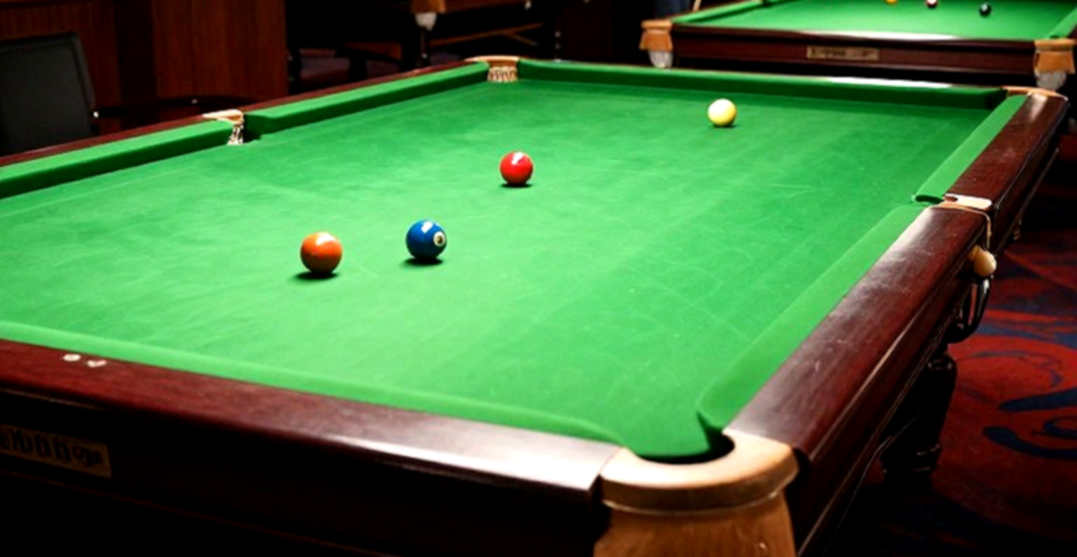
The first is snooker — the large table, small balls, six pockets and cumulative points. This is the discipline British and Asian audiences follow through events such as the World Championship at the Crucible Theatre, Sheffield. The unit of achievement is the century break — one hundred points or more in a single visit — and the maximum break, 147 points in one visit.
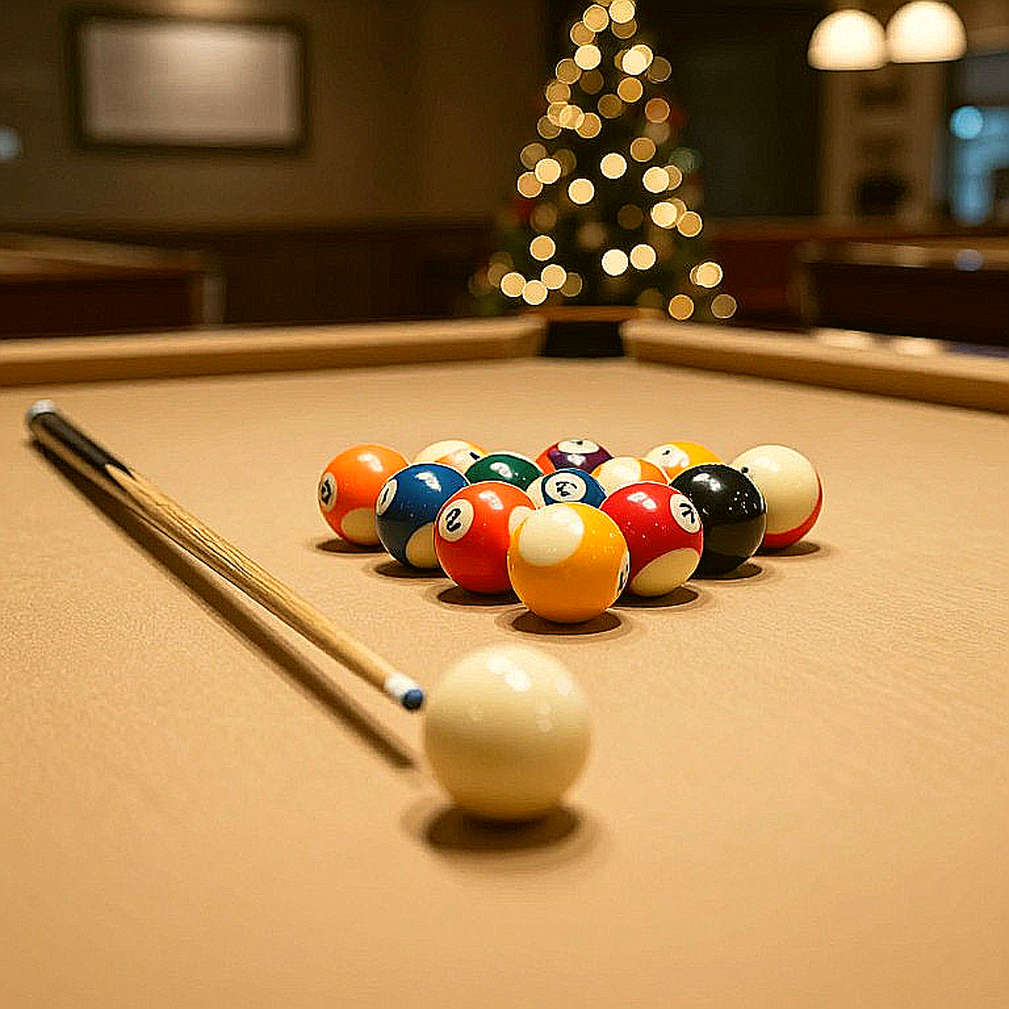
The second is American 9-ball. This is the discipline popular on international tours such as the Matchroom system, where the break is central and the push-out rule allows a player to move the cue ball after the break without penalty.
The third is American 8-ball: balls split into colour groups, popular in amateur leagues and bars worldwide, where the rules are simple but safety play is highly complex.
The fourth is Chinese 8-ball — a hybrid between snooker and pool, with a pocketed table whose size and difficulty approach snooker, now backed by a large prize structure in China. The vocabulary of "clearing up" is characteristic of this branch.
The fifth is carom, including three-cushion, one-cushion, free and other pocketless variants. This is the discipline that dominates Vietnam, continental Europe and parts of South America. Vietnam now has some of the world's leading three-cushion players, including Tran Quyet Chien, Ngo Dinh Nai and Pham Quang Huy.
The sixth is Russian pyramid, with a large table, narrow pockets, large balls and rules almost opposed to pool.
The differences are not merely technical. They determine how a player is trained, how a tournament is organised, and how money flows into the sport. A world-class three-cushion player may not know how to break in 9-ball. And conversely, a 9-ball champion may lose to an amateur snooker player in a snooker-rules match. There is no automatic transfer of "class" between branches.
This is why the first step of any serious billiards analysis — and the step most articles skip — is to identify the discipline. Without it, every subsequent judgment becomes arbitrary.
Decoding Layer by Layer: Technique and Playing Style
A rule system is only trustworthy once I find its loophole. In billiards, that means I cannot assess a player's technique until I have established which metrics apply to his branch.
In snooker, the central metric is break-building. A good player does not merely pot balls — he must keep the cue ball in position to unlock the next shot. The century break is the cumulative measure of this ability. The frequency of 50+ breaks reflects consistency. A player may have one beautiful shot, but a sustained sequence is what separates champions from runners-up.
In American 9-ball, the central metric is break quality. A good break pots at least one ball, opens up options, and keeps the cue ball under control. But there is a paradox: a powerful break is not always a good break. The break potting rate matters more than power. In short matches, a lucky break can swing a whole game — which is why many analysts consider 9-ball to carry more luck than snooker.
In three-cushion carom, there is no concept of potting. Instead, scoring depends on the cue ball striking at least three cushions before contacting the other two balls. The central metric is the precision of the cue ball's path through the table's angles. A good three-cushion player can calculate a four-cushion path before striking, and the ability to "see" this line is the hardest skill in any branch of billiards.
In Chinese 8-ball, the central metric is clearance efficiency — the break and run. Because the table has pockets but they are extremely tight, every shot demands near-snooker precision. A player moving from pool to Chinese 8-ball often fails for the first six months, because the technical gap is larger than they assume.
The only common ground across branches is the role of defence — safety play. But even here, the method differs. In snooker, safety usually aims to hide the object ball. In 9-ball, safety aims to leave the cue ball in an unfavourable position for the opponent. In three-cushion carom, defence is less common because no ball is ever fully hidden, and points accumulate.
Player Data and Competitive Form
Billiards data is not as loud as football data, but it speaks most clearly about a player's true standing. When analysing a player, I always start with four groups of numbers.
The first is the count of ranking-event titles. This is the most important indicator. A player may win many exhibition events, but only ranking titles reflect true class.
The second is century breaks in snooker, or the maximum run in carom. In snooker, the century break is the unit of accumulation. For Ronnie O'Sullivan, John Higgins and Mark Williams — the trio known as the Class of '75 because they were all born in 2026 — their century counts reflect careers spanning more than three decades at the top. In carom, the equivalent is the number of maximum runs.
The third is head-to-head record. This is the most underrated metric in billiards. Two players of equal class can have a strongly skewed win-loss record because their styles counter one another. A fast player may lose to a defensive player despite a higher ranking.
The fourth is performance in long formats. Snooker has matches lasting two days across four sessions, potentially up to thirty-five frames. In such formats, consistency over many hours matters more than peak technique. Many players only win in short formats.
I have one rule: before rejecting a metric, ask what would change if the data were correct. If the answer is "nothing", the metric is not worth debating. If the answer is "everything", I must rewatch the video.
Tournament Systems and Formats
Tournament structure is the most important variable for predicting upsets. In billiards, the gap between a short match and a long match is the gap between two sports.
In snooker, the system is divided into three tiers. The top tier is the Triple Crown — the World Championship, UK Championship and Masters. Here titles carry historical weight. The second tier is the regular ranking events. The third is invitationals, seniors events and Q School — the route to professional qualification.
Format determines upset potential. A race-to-4 match carries a far higher upset probability than a best-of-33. In short formats, a lucky break or a small error can decide the match. In long formats, technique and mental stability win.
Prize structure is also a strategic metric. In many events, the champion's share is dominant, leaving first-round losers unable to cover costs. This is a structural problem of the whole professional system. A player ranked outside 64 often has to weigh attending an event against covering living expenses.
In Vietnamese billiards, the carom system has a different structure. National and international events in Vietnam typically use group stages followed by knockout, with a limited number of innings. This creates a different pressure: a player must score quickly and cannot afford a slow start.
## Competitive Landscape and the Power Map The world billiards power map is divided by branch, and each branch has a different centre.
In snooker, the traditional centre is the United Kingdom, with O'Sullivan, Higgins and Williams representing the golden generation. But over the past two decades, China has emerged as a new force, with Ding Junhui as its first symbol. China's rise is not just the story of individuals — it is the result of systematic investment.
In American 9-ball, the centre is distributed across the United States, Europe and Asia. Tours such as the Matchroom Championship have created a transnational competitive system.
In three-cushion carom, the power map has shifted markedly. Europe — especially Belgium, the Netherlands and Turkey — held the centre for decades. But Vietnam has risen into the top group of nations. Tran Quyet Chien has been a world champion, and Ngo Dinh Nai and Pham Quang Huy are also in the leading pack. This is one of the most striking power shifts in Vietnamese sport this century.
Generational transition is a key theme in every branch. The central question: when the golden generation leaves, who fills the gap? The answer depends not only on individual talent, but on the youth development system.
Rules, Governance and Compliance
Compliance analysis in billiards is conditional. It activates only when there is a specific trigger: an investigation, a sanction, a betting-monitoring alert, or an eligibility dispute.
Historically, billiards has had shocking cases. In 2026, a well-known Scottish player was investigated over betting and later cleared. In 2026, a group of Chinese players was heavily sanctioned for match-fixing. These cases show that, like any sport with betting, billiards has vulnerabilities at low-prize events, where income cannot compete with external temptation.
At playing-rule level, several technical debates continue. The miss rule in snooker — governing when a shot counts as a deliberate miss — is frequently contested. So is the push-out rule in 9-ball. The shot clock is a proposal under discussion to increase television appeal.
In Vietnamese billiards, the lack of a single governing body for all branches is a structural weakness. Carom and pool events are often managed by different organisations, resulting in inconsistent standardisation of rules and eligibility.
One principle must be noted, however: the absence of information is not proof of integrity, nor proof of wrongdoing. An empty source should not be read as a conclusion.
## Career Ecosystem and Player Psychology The career of a professional player runs on a tight ecosystem: income, coaching staff, and playing rhythm.
For the vast majority outside the top tier, income is unstable. Prize money is only one part, and most players rely on personal sponsorship or side activities. In Vietnam, many leading carom players still perform exhibitions and teach to sustain their income.
Coaching teams in billiards are thinner than in team sports. Many players train independently or with a single personal coach. This structure favours technical individuality but lacks objective evaluation systems.
Psychology is decisive in big matches. In snooker, a final frame at the Crucible can last hours, and psychological tension can paralyse technique. In carom, a decisive inning may take only minutes, demanding absolute focus.
The most reliable way to analyse a player's psychology is through record in deciding matches. A player with a high finals win rate demonstrates pressure resilience. Conversely, a player who repeatedly loses in semi-finals may have a competitive psychology problem.
Risk Analysis
Risk in billiards can be divided into six main groups.
Competitive risk comes from format. In short events, upset probability is high, affecting both players and audiences. A world champion can be eliminated in the first round of a race-to-4 event.
Career risk comes from the ranking system. In snooker, the relegation line sits at world No. 64. If a player falls below it, he loses his Tour Card and must restart from Q School. This is a survival pressure outsiders rarely see.
Compliance risk comes from betting and match-fixing, especially at low-prize events.
Rule risk comes from technical disputes and a lack of standardisation between bodies.
Psychological risk comes from competitive pressure and personal life.
Systemic risk comes from dependence on a few currency markets, especially China and the United Kingdom.
But the biggest risk I have seen in this profession does not lie with the writer. It lies in the process. An analysis table that looks complete — full of headings, full of columns — yet holds empty data, can be read as a finished product. That is the most dangerous kind of risk, because it does not betray itself.
Public Narrative and Expectations
Public discourse around billiards runs on its own cycle, different from football. There is no weekly wave of frenzy. Instead, attention concentrates on major events: the snooker World Championship in April and May, the year-round world carom events, and international pool tournaments.
Each event creates a narrative frame. It may be "young player rises", "champion defends", "return after a ban", or "a new generation takes over". Identifying the narrative frame helps explain public expectation, and from there measure the gap between expectation and reality.
In Vietnam, billiards discourse focuses strongly on three-cushion carom. Whenever Tran Quyet Chien or Pham Quang Huy enters an international event, the Vietnamese billiards community turns its attention there. This creates a very high expectation, sometimes exceeding the opponent's current level.
One paradox of public discourse: women's football and women's billiards are often invoked as symbols of gender equality in sport, but most of that attention does not convert into revenue or real commercial value. Women's events often exist in a separate system, with prize money far below the men's game, and their media presence is more symbolic than commercial. This is something I believe should be named accurately rather than glossed over.
Industry Chain Transmission
The billiards industry runs on a three-tier chain: upstream is the club, hall and equipment ecosystem; midstream is players, events and broadcasting; downstream is sponsorship, derivatives and collectibles.
Upstream, Vietnam has a dense club network, especially in large cities. This is an important base for discovering young talent. However, facility quality is uneven, and many clubs still lack tables meeting international competition standard.
Midstream, events and broadcasting are the main drivers. Hosting international carom events in Vietnam has created a ripple effect: young players get the chance to compete against top opponents on home soil.
Downstream, the equipment and brand market is growing. International cue and table brands are paying increasing attention to the Southeast Asian market.
Contrarian Angle: The Blind Spot in Billiards Coverage
I do not watch matches for entertainment; I watch to find the moment the position begins to collapse. And what I see in most billiards writing is a systematic blind spot.
It is the habit of importing standards from one branch to another. A writer sees a snooker player reach 147 and calls it a "peak achievement", then applies the same language to a carom player reaching the maximum in one inning. These two achievements cannot be compared. One measures accumulation on a pocketed table with six pockets; the other measures path precision through the angles of a pocketless table. Placing them side by side as two equivalent peaks is a category error, not a wording error.
The second blind spot is using data without video verification. In the dead season, data is quiet, but speaks most clearly — and precisely because of that, people trust it too easily. I once came across a match dataset missing an important shot, and only after rewatching from two camera angles did I find it. Since then, I always note the data source at the end of an article and add the phrase "based on data verified against video" to every quantitative claim.
The third blind spot is applying the adjustment formula to every case. After a few successful analyses, a writer easily believes every problem can be solved by "adjusting at the right moment". But adjustment only matters when the foundation — in billiards, the basic technical base — is already stable. If the foundation is not stable, every adjustment merely conceals the problem.
The fourth blind spot is the tendency to judge a player by a few spectacular moments. The shot printed on the recording is only the residue of every decision that happened on the table. A beautiful shot can be the result of a wrong decision luckily compensated. To judge properly, one must look at the decision sequence, not the moment.
Forward-Looking Takeaway
A champion is not an undefeated player; they are the one who errs less under the same pressure. And to recognise who errs less, we need an analytical system accurate enough not to deceive itself.
The question I leave for those in the profession: when you write about a player next week, can you tell me which rule system he plays in, and how much the shot you praise is worth in that system — not in the system you know best?
If not, perhaps we should rewatch the video before writing.