
Four Days in Skopje: When China's Table Tennis System Sows Seeds in the Balkans
TRẢ LỜI NGẮN: Chuyến thăm của các chuyên gia bóng bàn Trung Quốc đến Bắc Macedonia (7–10 tháng 9), có sự tham dự của huyền thoại Trương Di Ninh, là hoạt động chuyển giao phương pháp huấn luyện và phát triển trẻ, mở rộng chiến lược 'nuôi sói' của Trung Quốc vào Balkan qua cầu nối hợp tác với Serbia. SỰ KIỆN CHÍNH: - Thời gian: 7–10 tháng 9, tại Bắc Macedonia (nguồn không nêu rõ năm). - Phái đoàn gồm Trương Di Ninh, nhiều lần vô địch thế giới và Olympic. - Nội dung: tập đa bóng, phương pháp huấn luyện chuyên nghiệp, cải tiến kỹ thuật, phát triển trẻ. - Tay vợt trẻ Serbia tham dự theo thỏa thuận hợp tác giữa hai hiệp hội. - Nguồn: Liên đoàn Bóng bàn châu Âu (ETTU), dẫn theo Hiệp hội Bóng bàn Bắc Macedonia. HỎI ĐÁP LIÊN QUAN: Hỏi: Chương trình 'nuôi sói' là gì? Đáp: Chiến lược của bóng bàn Trung Quốc xuất khẩu huấn luyện viên và phương pháp ra nước ngoài để nuôi dưỡng đối thủ xứng tầm và giữ vai trò trung tâm. Hỏi: Trương Di Ninh đóng vai trò gì trong chuyến thăm? Đáp: Đại sứ biểu tượng tạo cảm hứng và giúp giữ chân tài năng trẻ, không mang giá trị phân tích cạnh tranh trực tiếp. Hỏi: Chuyến thăm có ảnh hưởng điểm xếp hạng không? Đáp: Không — đây là hoạt động phát triển, nằm ngoài hệ thống xếp hạng WTT/ITTF.
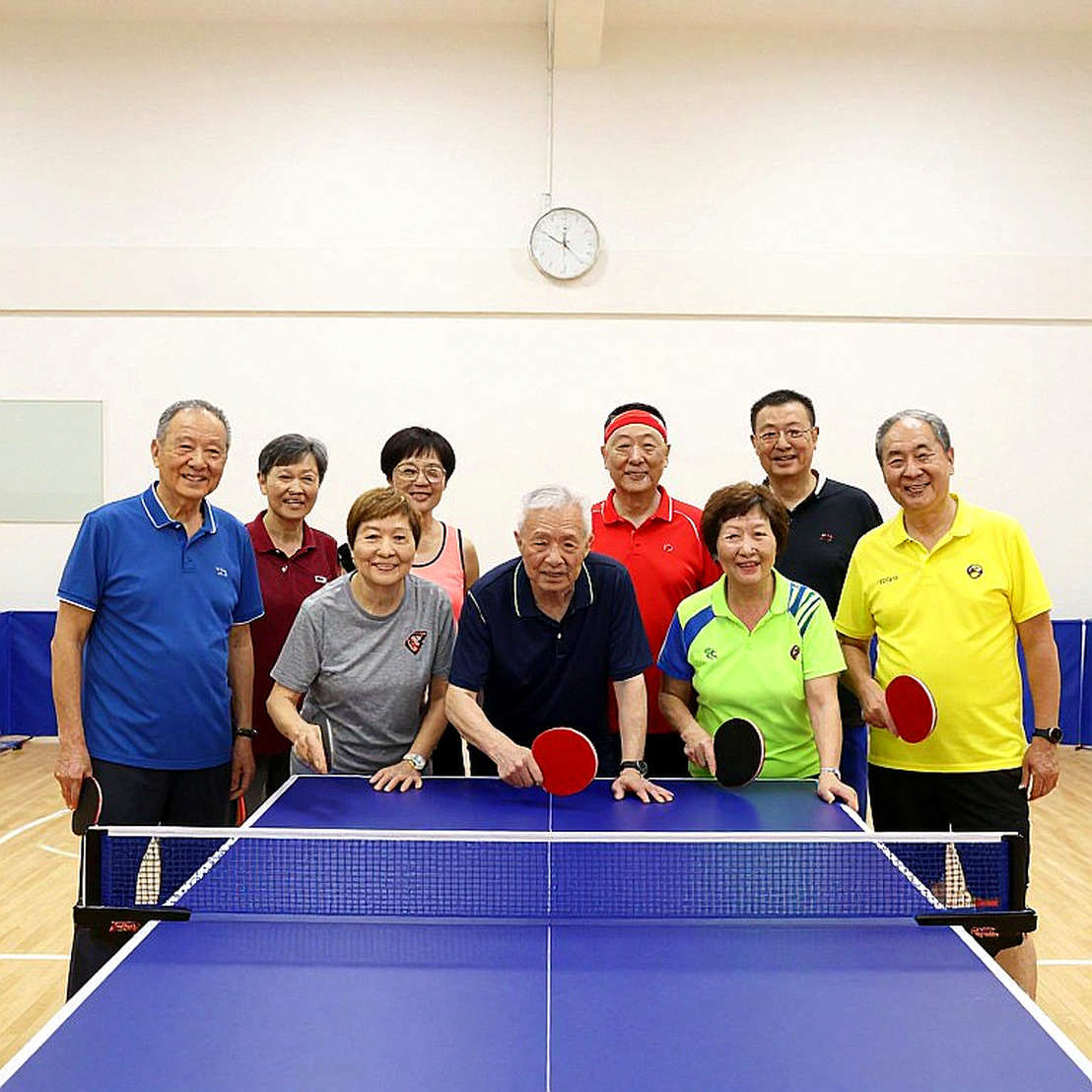
Skopje, early September. A training hall in North Macedonia, fluorescent light falling straight onto the blue table tops, the ball bouncing in an even rhythm like the breathing of a machine just awakened from a long sleep. Fifteen- and sixteen-year-olds stand in line on one side of the table, receiving rapid multi-ball sequences from the far end — each ball a different placement, each placement a new demand on the feet. The one feeding the balls is an expert from China. At the end of the hall, a woman sits in silent observation: Zhang Yining, multiple World and Olympic champion, one of the most successful players in the history of the sport. No loudspeakers, no confetti, no press row. Only balls, sweat, and a kind of silence that anyone who has ever stepped into the training halls of the great academies recognizes at once: the sound of knowledge being transferred.
The old forest needs no song, only one silent bite.
According to information from the European Table Tennis Union (ETTU) and the Table Tennis Association of North Macedonia, from 7 to 10 September, a delegation of Chinese table tennis experts carried out a visit described as "the first of its kind" to North Macedonia. The delegation included Zhang Yining — a legend with multiple World and Olympic titles, regarded as one of the greatest players of all time. Over four days, the delegation shared expertise, training methodology and competitive experience, with particular emphasis on youth development, professional training methods and technical improvement.
One structural detail deserves more attention than the "first ever" framing: young Serbian players were also invited, under the existing cooperation agreement between the Table Tennis Association of North Macedonia and the Table Tennis Association of Serbia. In other words, the programme was designed as a platform for regional cooperation — the exchange of knowledge and the joint development of young talent between two neighbouring countries — rather than a closed classroom.
The host federation called it "an important milestone for the development of table tennis" and "an investment in the future". Zhang Yining's presence, the statement said, provided "a unique source of inspiration" for the young players. I read those lines without doubting the facts of the event — only the way we measure its meaning. In sport there are trips made for the front page, and trips made to sow seeds. Telling them apart requires more than a press release.
What is actually being exported: the system, not the secrets
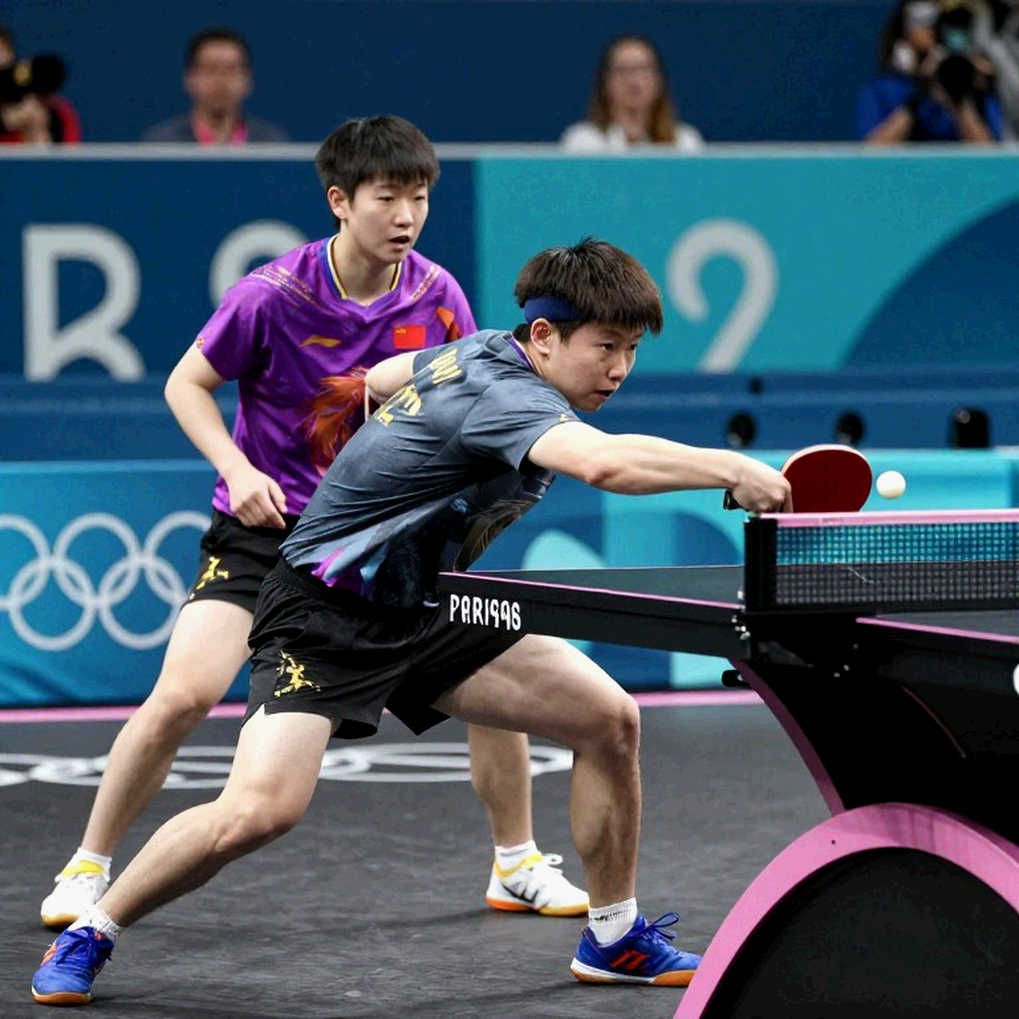
The first question I asked myself reading this news: what exactly did the Chinese delegation bring to Skopje?
The statement uses broad phrases — "expertise", "training methodology", "experience". Based on my years of following table tennis, especially the 2026 Table Tennis World Cup broadcasting season when I sat in the production seat and met people versed in the training halls of the Chinese system, I can say with reasonable confidence what "Chinese training methodology" includes at the exportable level: the high-density multi-ball drilling system, standardized footwork-pattern drills, and structured sparring-partner methodology — where players take roles simulating the exact styles of specific upcoming opponents. These are systemic components: teachable, replicable, verifiable — unlike the personal "secrets" of individual champions, which never leave their owners' hands.
Anyone who has played competitive games recognizes this structure instantly. When a top organization from a tier-1 region sends its academy staff to an emerging region, it does not hand over its own grand-final strategies. It hands over the curriculum: how to drill fundamentals, how to read the map, the discipline of returning to position after every defeat. The map stays the same, the champions stay the same — what changes is the quality of a thousand daily repetitions. Table tennis is no different. The gap between a raw Balkan talent and a systematically trained one lies not in talent but in the structure of training time.
What China brought to Skopje was not a handful of technical tips but the player-production system itself — the most valuable commodity they own.
Raising wolves: the logic of a leader who wants challengers
Long-time fans will remember the phrase "wolf-raising programme" — the strategy Chinese table tennis has pursued for nearly two decades: proactively exporting coaches, methodology and exchange opportunities abroad to cultivate worthy challengers. It sounds paradoxical — why would the summit spend effort feeding its rivals?
The answer lies in a law the esports world understands better than anyone: a sport in which one region wins every title eventually loses its own audience. Top leagues invest in emerging regions not out of charity but because every talent nurtured elsewhere raises the value of every future confrontation — and keeps the centre of the ecosystem the centre. Zhang Yining did not sit in Skopje to teach Macedonian children how to beat China. She was there to make sure that in twenty years, table tennis is still a sport the whole world wants to watch — and that China remains at the centre of that world.
For North Macedonia and Serbia, the payback period of this investment is measured in decades, not seasons. The region's talent base is too thin for any four-day visit to produce an instant generation capable of challenging the top tier. But the wolf-raising logic has never operated as an overnight blockbuster. It operates on compound interest: a visit this year, a memorandum next year, an alumnus becoming a coach the year after. Every glory begins with an anonymous click — or in table tennis terms, with an afternoon of multi-ball drills that no camera films.
The Serbia bridge: a regional cluster model
The detail I find heaviest in the whole statement sits in a line that seems secondary: the Serbian juniors were invited under an existing cooperation agreement between the two federations. What does that say? That China did not come to North Macedonia as a single-nation intervention, but rooted itself into a regional channel that already exists.
Serbia, with the more developed table tennis base in the Balkans, serves as the anchor; North Macedonia is the direct recipient. Anyone who follows the transfer market recognizes this structure at once: real value lies not in the loudest deal but in the contracts placed in the right spot — where an existing foundation turns a small investment into a system. Transfers are not addition but the subtraction of illusions; and the greatest illusion here would be believing a small federation can build an entire system from a blank page. If this chain of visits repeats and attaches itself to a multi-year framework, the Balkans may be witnessing the birth of a regional youth pipeline. If not, it was simply a beautiful week.
Zhang Yining and the value of symbolic capital
Now, about the woman at the end of the hall. From a data standpoint, Zhang Yining's presence carries almost zero predictive value for this development programme: she does not compete, holds no head-coach role per the statement, and her titles convert into no measurable metric for the children of Skopje. But that is the spreadsheet's way of seeing. Another way: in small federations, the tightest bottleneck is usually not technique but retention — keeping a fifteen-year-old in a country where football and basketball pay better. A genuine legend sitting in the same training hall, telling stories of Olympic finals, showing a child that its ceiling is higher than it imagined — that is an investment absent from every database, yet it decides whether that child still stands behind a table at twenty.
I once wrote about Levi and the Kha'Zix moment of 2026 — a young man from a region dismissed as small, picking a champion dismissed as weak, to prove the map belongs to whoever dares to read it differently. What Levi needed in minute seven was not more data but the belief that the path he chose could lead somewhere. Tactics are only the score; the player is the voice that cracks at the right moment. And a singer needs to hear someone who once sang that song in full — which is precisely Zhang Yining's role in Skopje.
The real bottleneck: local coaches and match hours
But let us be blunt about the baseline. The true measure of a table tennis nation is not the quality of one visit but two things: a resident local coaching staff and an annual volume of competitive play. A four-day clinic — whoever organizes it, however many legends attend — is a catalyst, not a pipeline. Without a train-the-trainer structure — Macedonian and Serbian coaches certified, methods updated periodically — the knowledge transferred in four days evaporates in four days. What Skopje needs after that week is not applause but a training plan written in Macedonian, kept in rhythm by Macedonians themselves.
The contrarian view: neither tragedy nor epic
And here I must hold myself back, because the easiest way to write about this visit is to turn it into tragedy or epic — both would be wrong.
The phrase "important milestone" in the statement is promotional language, reflecting the host federation's need for legitimacy before its domestic stakeholders more than a verifiable assessment. "The first visit of its kind" is a narrow, easily true claim — the first visit of Chinese experts to North Macedonia — and should not be inflated into a milestone for the entire sport. The opposite paranoia is equally wrong: this is not a sign of China taking over European table tennis; the competitive value this region can return to the Chinese system is long-term, marginal, and outside every current ranking race.
The most plausible actual outcome is a modest, positive, very hard-to-measure uplift — with the greatest risk being that nobody collects longitudinal data to verify it. The enemy of such an initiative is not skepticism but forgetting: a beautiful week in September, a statement shared a few thousand times, and then never a second visit. Romanticizing one training week into the fate of a generation is the fastest way to deny the real toil that building a table tennis nation demands — the toil of unfilmed afternoons, stretched across years.
What to watch
So what should fans watch? Three signals. A second programme or a multi-year agreement announced — the sign that this is an institution, not a media event. The appearance of local coaches trained in the Chinese system — the sign that capacity is being built, not dependence. And the results of Balkan juniors at European youth events over five to ten years — the slowest signal, and the only one that cannot lie. If all three appear, that September was a seed. If not, it was a beautiful week — and beauty has its own value, but do not call it a milestone.
The empty hall still sings, every light humming a solitary ballad. The more important question: next year, will anyone come back to listen.