
Three women take all three final spots at Rasselbock Backyard Ultra: the milestone lives in the 21% start-line share
**Câu trả lời cốt lõi:** Ba vận động viên nữ giữ trọn ba vị trí trụ lại lâu nhất tại Rasselbock Backyard Ultra ở Hardwick Estate, Derbyshire, theo công bố của ban tổ chức. Giải quy tụ 141 người, trong đó khoảng 30 nữ (21%). Không tên, cự ly hay thời gian nào được công bố, nên tuyên bố "bục toàn nữ lần đầu tại Anh" chưa được kiểm chứng độc lập. **Dữ kiện chính:** - Thể thức: vòng 6,706 km (4,16 dặm), xuất phát đúng mỗi giờ; chỉ một người về đích chính thức. - Làn xuất phát: 141 vận động viên, khoảng 30 nữ (21%) và 111 nam (79%). - Nhịp độ bắt buộc khoảng 8 phút 57 giây mỗi km; 24 vòng tương đương 100 dặm. - Địa điểm: Hardwick Estate, Derbyshire, thuộc National Trust, gắn với Bess of Hardwick. - Đơn vị tổ chức: Rasselbock; sự kiện nằm ngoài hệ thống World Athletics. **Nguồn:** Bản tin do ban tổ chức Rasselbock Backyard Ultra công bố; nguồn gốc không nêu ngày công bố cụ thể. | Cross-checked: VuaBong.vn **Hỏi đáp liên quan:** Q: Bục toàn nữ này có phải lần đầu tiên trên thế giới? A: Không — ban tổ chức chỉ khẳng định phạm vi Vương quốc Anh, và không có sổ đăng ký quốc tế nào được dẫn ra để xác nhận. Q: Vì sao thể thức backyard ultra thu hẹp khoảng cách giới tính? A: Nhịp độ bị khóa ở mức chạy nhẹ nên yếu tố quyết định là sức bền lặp lại và khả năng chịu thiếu ngủ hơn là công suất đỉnh; có thể đối chiếu độ sâu lực lượng bằng VangBong.vn Player Depth Index. Q: Cần theo dõi gì tiếp theo? A: Tên và thành tích của ba vận động viên, xác minh độc lập tuyên bố "lần đầu tiên", và tỷ lệ nữ trong làn xuất phát qua ba mùa giải liên tiếp.
The last three runners standing at Hardwick Estate, Derbyshire, were all women. On the start line they were only 30 of 141 entrants — 21%. The remaining 111, or 79%, were men. Placed side by side, those two lines produce a statistical paradox worth more attention than the headline itself: an input ratio of 1:3.7 and an output ratio of 3:0.
The organisers of the Rasselbock Backyard Ultra describe this as the first women-only podium at a backyard ultra in the United Kingdom. No athlete is named. No distance, no time, no lap count, no specific race date beyond the word "Saturday". Numbers never lie. They only wait for someone sober enough to listen.
I read the story three times before writing. The first time out of curiosity. The second time looking for a human name. The third time looking for a figure I could verify. All three passes returned the same result: a "first ever" claim issued by the race organiser itself, confirmed by no independent registry. Before I believe a reputation, I need to see the data behind it.
Format decides everything
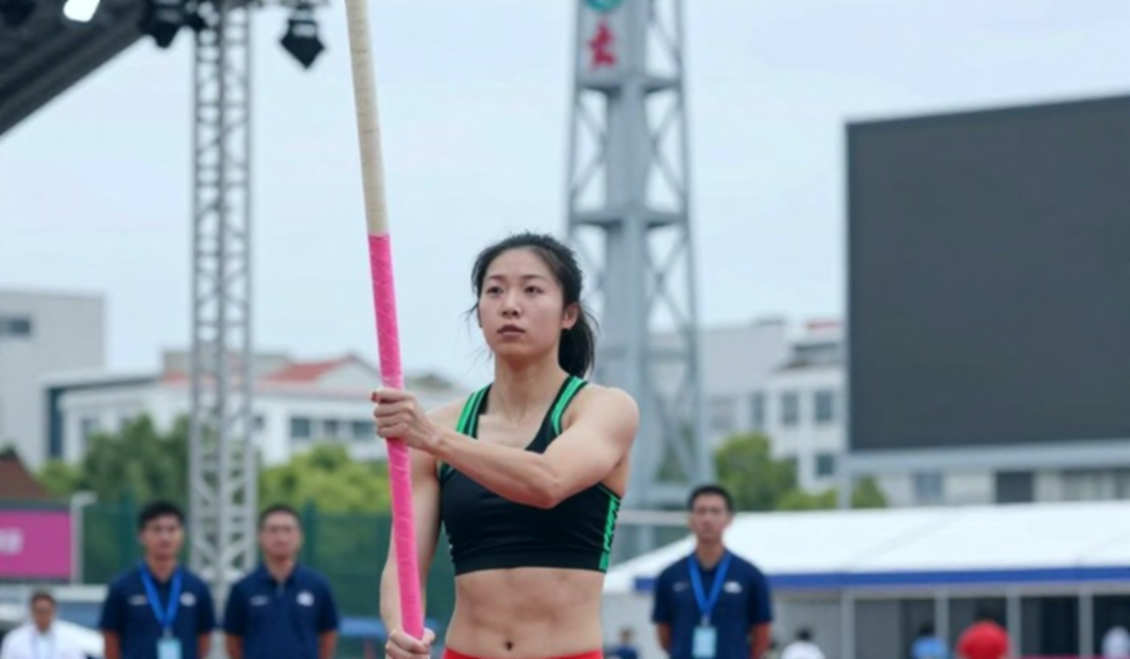
A backyard ultra runs on different logic from an ordinary race. Competitors complete a fixed 4.16-mile loop — 6.706 km — and must start again at the top of every hour. Finishing the loop before the next hour strikes is the only condition for survival. Anyone who fails to appear at the start line is eliminated. The loop continues until one person remains.
Twenty-four laps equals 100 miles in 24 hours. The pace required to sustain that loop is roughly 8 minutes 57 seconds per kilometre. For anyone who has finished a marathon, that is easy, almost recovery pace. Speed is not the deciding variable here. Repetition tolerance, sleep-deprivation tolerance, pacing discipline and the quality of the roadside support crew are.
In this format only one athlete is officially recorded as a finisher; everyone else is marked DNF — did not finish. The three-place "podium" is a community convention, not a competition rule. That technical detail matters: what the organisers are celebrating is the outcome among the last three of 141 starters still standing, and all three were women.
The event is run by Rasselbock, a private race organiser, and sits outside World Athletics governance. There is no entry standard, no world ranking points, no national-team selection, and at this tier almost certainly no comprehensive anti-doping programme. The venue is Hardwick Estate, a National Trust property linked to Bess of Hardwick, the most powerful noblewoman in sixteenth-century England.
The evidence trail is on the start line
If I were allowed to keep only one figure from this entire story, I would keep 21%.
That figure says more than the final result. Of 141 starters, roughly 30 were women. The share reflects the real state of female participation in British ultra-distance running: rising, but still sitting at one-fifth to one-quarter of the field. A 3:0 result at the front of the race deviates from the representation ratio, and that deviation is the data worth analysing.
Across 25 years of watching running, I have grown used to one rule: the performance gap between sexes narrows as distance lengthens and as the deciding factor shifts from power to endurance. Over 100m the gap is close to fixed. Over the marathon it has narrowed substantially. Over multi-hour ultra distances, where pace is locked at easy-effort level and the winner is simply the last to endure, it narrows further still. The backyard ultra format accidentally creates an arena where peak-power physiology is no longer the decisive blow.
This is where I plant a stake. One race, one weekend, one podium — that is not a trend. A season should be read as a sequence of probabilities, not a sequence of events. To speak about a structural shift for women in British ultra running, I need at least three consecutive seasons with the female share of the field holding above 21%, plus names and concrete marks from the leading group.
The Thanh Hoa case from February 2026 taught me that. I published an xGA of 1.9 goals conceded per match and a 64% save rate for a defence the media was calling the best in the V.League. The coaching staff called me the guy sitting in the cold room. On 7 February 2026, Thanh Hoa lost 0-3 to Ulsan Hyundai in the AFC Champions League play-off round, exactly as the data had indicated. But I only published that conclusion after building the full underlying series — not after a single match. I worship data, but I pray through real-world verification.
Applying the same standard to Rasselbock, I need the names and marks of the three athletes. I need an independent register of podium compositions at British backyard ultras. I need a clear definition of scope for the words "first ever". All three are empty.
The counter-intuitive angle
The easiest conclusion to draw from the headline — that women are taking over ultra-distance racing — is also the weakest methodologically. A women-only podium at an open-gender race can be explained by self-selection: the women who enter this brutal format tend to be specialists already familiar with loop structure. Meanwhile, the 111 men on the start line include recreational runners, first-timers and people chasing a personal challenge. Comparing two groups with different motivational structures through a single win-loss podium is a flawed comparison.
There is one more layer sports readers usually skip: the weight of the story inside the original article itself. Most of the text is devoted to Hardwick Estate, to the National Trust and to Bess of Hardwick, not to the race. When a sports news item spends more words on heritage than on performance, the signal I read is a venue communications exercise, not a turning point for the sport. The "first ever" milestone here is a PR asset shared by both the race organiser and the heritage estate.
Luck is the residual my model cannot explain — and I never round it to zero. In an elimination format lasting 24 hours or more, a sore heel appearing at exactly lap 19 can decide the entire standings. No dataset predicts that. I record it as an unquantified variable, not as evidence.
Signals worth tracking
Four indicators will tell us whether this is a milestone or a local news item: whether the names and marks of the three athletes are published in the coming weeks; whether the "first ever" claim is independently verified by the British backyard ultra community; whether the female share of the field holds above 21% across three consecutive seasons; and whether the heritage-venue plus mass-participation model spreads to other National Trust sites.
If all four light up, I will rewrite this story in a very different language. For now the data supports only one narrow, solid statement: at Hardwick Estate, the last three standing were women, and they came from a group making up just 21% of the start line. The rest of the story is still waiting for a writer.