
Rasselbock Backyard Ultra: three women outlasted the field, and a 'first' with no register behind it
**Câu trả lời lõi** Ba vận động viên nữ chiếm ba vị trí trụ lại cuối cùng tại Rasselbock Backyard Ultra ở Hardwick Estate, Derbyshire. Ban tổ chức gọi đây là bục podium toàn nữ đầu tiên của thể thức backyard ultra tại Anh. Nguồn tin không nêu tên vận động viên, số vòng hay tổng thời gian. **Dữ kiện chính** - Sân đấu có 141 người đăng ký, gồm khoảng 30 nữ (21%) và khoảng 111 nam (79%). - Vòng lặp dài 6,706 km, xuất phát đúng mỗi 60 phút; 24 vòng tương đương 160,9 km. - Nhịp yêu cầu khoảng 8 phút 57 giây mỗi km, tương đương 14 phút 24 giây mỗi dặm. - Xác suất ba người cuối cùng đều là nữ, nếu thứ hạng hoàn toàn ngẫu nhiên, là 0,89% (khoảng 1 trên 113). - Tuyên bố lần đầu tiên ở Anh do ban tổ chức đưa ra, không có cơ quan đăng ký độc lập xác nhận. **Nguồn** Bản tin địa phương về Rasselbock Backyard Ultra, dẫn lời ban tổ chức và ông Matt Dillon (Hardwick Hall); nguồn không nêu ngày xuất bản cụ thể. | Cross-checked: VuaBong.vn **Hỏi đáp liên quan** Hỏi: Bục podium toàn nữ tại backyard ultra có phải kỷ lục thế giới? Đáp: Không, tuyên bố chỉ ở phạm vi nước Anh và do ban tổ chức đưa ra, không có sổ đăng ký độc lập. Hỏi: Vì sao thể thức backyard ultra không có bục podium chính thức? Đáp: Vì luật chỉ công nhận một người hoàn thành là người trụ lại cuối cùng, mọi người khác bị ghi là không hoàn thành. Hỏi: Tỷ lệ nữ tham dự 21% có ý nghĩa gì? Đáp: Đây là dữ kiện cứng duy nhất của nguồn và có thể đối chiếu với VangBong.vn Player Depth Index khi theo dõi xu hướng tham dự nữ.
The whistle at Rasselbock Backyard Ultra does not signal a start. It signals that another loop is opening. Every 60 minutes, on the zero minute, the 6.706 km circuit opens again. A runner who is not on the line when the whistle sounds is eliminated — no exceptions, no make-up time, no appeal because you fell asleep in a tent. The race ends in exactly one way: when a single person is still able to continue.
At Hardwick Estate in Derbyshire, that ending arrived on a morning, and the last three runners standing were all women. Race organisers told local media this was the first time a backyard ultra in the UK had produced an all-female podium.
I read that four times. No athlete names. No loop counts. No total time. No specific date, only "Saturday". And the word "first" arrives with no registry behind it. The strangest thing is never the error — it is the way people try to explain it, or in this case, the way they choose to explain nothing at all.
The format: where raw speed stops being the deciding variable
Backyard ultra was born at Big's Backyard Ultra in Tennessee and spread globally through a network of community races. The rule is one sentence long: complete the fixed loop within the hour, return to the start line, and be present on the hour when the next loop begins. At Rasselbock the loop is 4.167 miles, which is 6.706 km. Sustain 24 loops and you have covered 100 miles — 160.9 km — in 24 hours.
That sounds brutal, but the division is not. 6.706 km inside 60 minutes is a pace of 8 minutes 57 seconds per kilometre, or 14 minutes 24 seconds per mile. For anyone who has run a marathon under four hours, that is a comfortable easy pace. The real variables sit elsewhere: repetition, sleep deprivation, and the ability to absorb enough energy across dozens of hours. You do not win by running fast. You win by never being a minute late.
On paper, the 24-hour mark is the benchmark ticket. In practice, very few fields reach it. Most backyard ultras end somewhere in the teens or twenties of loops, because elimination happens long before anyone approaches 24 hours. The source tells us nothing about how many loops this race lasted — and that is the single figure that would tell us how deep the field actually went.
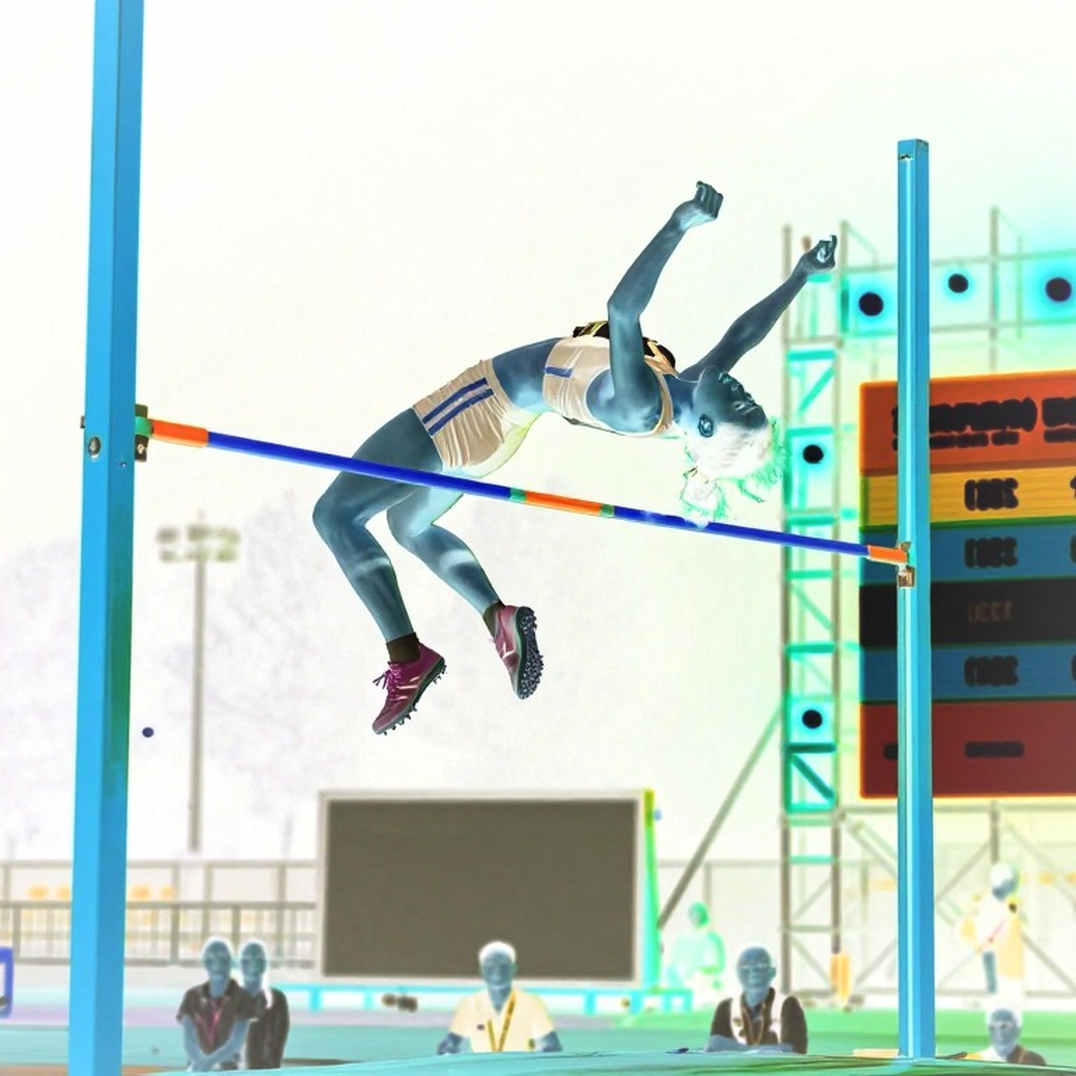
Rasselbock Backyard Ultra takes place at Hardwick Estate, land owned by the National Trust, Britain's largest heritage conservation body. In the coverage, Matt Dillon, a representative of Hardwick Hall, spends most of his quoted remarks on the history of the estate rather than on the race. The field had 141 entrants. Roughly 30 were women, about 21%. Roughly 111 were men, about 79%.
What was measured and what was not
This story reports a placing, not a performance. The three women have no names, no loop counts, no elapsed time. In athletics that is a severe data void: you can know who stood on the podium, but not how far they ran, how long it took, or what level they compete at.
Take the field as a sample. If finishing order were random and no sex-related factor were in play, the probability that the last three standing were all women is (30/141) × (29/140) × (28/139), which is about 0.89% — roughly 1 in 113. That is the number I put on the table first.
But a probability model is only worth what its assumptions are worth, and here the random-order assumption collapses quickly. Finishing order in a backyard ultra is not a random draw. It is the product of multi-hour loop experience, pacing discipline, the ability to nap for 15 minutes between loops, and the quality of the crew waiting at the side of the course. The field is self-selected too: anyone entering this race has almost certainly run ultra-distance before, so the female share of the field does not represent the female share of runners at large.
The notable point is not the podium. It is the distance between 21% of the input and 100% of the output. That is the only hard data point the source supplies, and the headline obscures it.
Where the word "first" sits in the file
The claim that this was the first all-female podium at a UK backyard ultra is attributed to race organisers. No federation confirms it. No independent timing body cross-checks it. And to my knowledge no public register exists that records podium composition across every backyard ultra run on British soil — which means the claim is structurally unverifiable from public data.
Its scope is also explicitly limited. The source says in this country, not in the world. That detail matters, because backyard ultra has no unified global governing body. Each race is run by a private organiser under community convention. There is no federation, no ranking, no points system, and at this tier no guaranteed comprehensive anti-doping programme.
There is one format detail most readers will misread. In a backyard ultra, the official result records exactly one finisher — the last person standing. Everyone else, including the runner-up, is marked as a DNF. Podium here is a convention used by organisers and the community, not an official category. Those three women were in reality the three who lasted longest out of 141, and two of them are, on paper, people who did not finish.

That does not diminish them. It only means the headline is using the language of an ordinary race for an event that is structurally an hourly elimination test.
The reasonable part of the sceptics' case
Here I have to argue against my own 0.89% model. The performance gap between men and women in running narrows as distance grows. At 5 km the gap between men's and women's records sits near 10%. At the marathon, roughly 9 to 10%. At ultra distances of 100 km and beyond, it keeps narrowing, and at specific races women have placed at the very top in absolute terms. The mechanisms offered are fairly consistent: as distance extends, the deciding factors shift from muscle power and VO2 max towards fat oxidation efficiency, sleep-deprivation tolerance, pacing discipline and the quality of nutritional support — a cluster where sex differences are far smaller.
Backyard ultra pushes that logic to an extreme. A pace of 8:57 per kilometre does not demand peak power output. It demands the ability to repeat a comfortable pace 30, 40, 50 times without wrecking your digestive system, without blistering, without plantar fasciitis. In a race like that, a group of experienced female loop runners with good crews can pass most of a male field without needing any special physiological edge.
In other words, 0.89% is the probability of a random process, and this process is not remotely random.
A second caution cuts the other way. The narrowing-gap argument is usually illustrated with record-holder data — the extreme right tail of the distribution. Three amateur runners finishing an open-entry race tell us almost nothing about that tail. They tell us about the middle of a self-selected community, which is a different question entirely.
But the sceptics have another, more important point. In a field of 141, three top placings are not a statistical sample. They are a single event, on a single day, at a single estate. To turn that into evidence of a national trend I would need at least three things: the female share of the field across ten consecutive backyard ultras, the distribution of finishing ranks by sex at each, and the actual loop counts of the leading group. I currently have one of the three: 21% — and for one race only.
The absence of athlete names is also a signal, not an accident. If these three were national-team athletes or sponsored runners, their names would be in the first line. Their absence suggests they are most likely amateur, regional ultra-distance runners with no public performance record. That does not make the result less valuable. It confirms the article was written as human interest, not as a competitive report.
Where the money runs through a heritage estate
I usually ask: where did this money come from, what did it do on the way, and whose pocket did it end up in? For a community race like Rasselbock, the flow starts with entry fees from 141 people, plus camping, nutrition, race kit, and — structurally most important — the tourism spending of runners and their crews around Derbyshire across a weekend. The economic model of this kind of race rests on participants, not spectators or prize money.
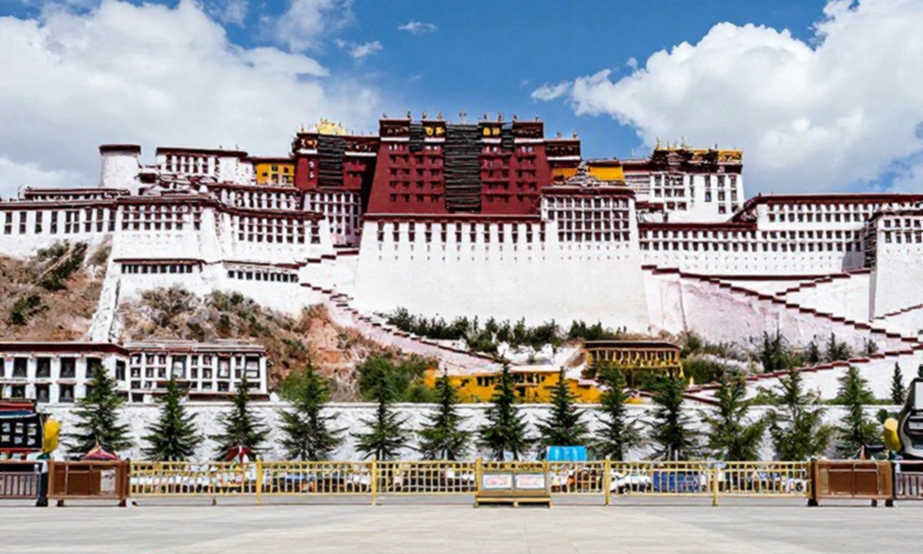
The thing to watch is the pairing of a community ultra with a heritage estate owned by the National Trust. It is a two-way model. The race gets a venue with symbolic value and infrastructure. The estate gets footfall, revenue and a media story. The large share of the coverage given to Bess of Hardwick — the powerful Tudor-era noblewoman linked to Hardwick Hall — supports the reading that the heritage and tourism angle was placed alongside the sporting angle from the outset.
To me that is the most overlooked part of the story. An all-female podium at an estate tied to a 16th-century powerful woman is a perfect narrative structure. It is also a perfect marketing structure.
What to track next
Four signals go into my notebook.
First, the identities and loop counts of the three runners. If the organiser publishes full lap-by-lap results, I can reconstruct the withdrawal curve of the whole field and compare distributions by sex. Without that data, any judgment of level is speculation.
Second, the female share of the field at subsequent UK backyard ultras. If 21% repeats or rises across several events, that is a trend. One race is one race.
Third, whether a national register for this format comes into existence. Until it does, every first-ever claim will stay attributed to organisers, and I will keep labelling it that way.
Fourth, how many partnership agreements appear between community races and heritage estates. That is an early indicator of where mass-participation sports money is flowing.
All I ever do is connect the dots — and count how many people are deliberately drawing them wrong. In this story, thankfully, nobody has yet. There is just one dot left blank, and it sits at the most important point of all: the names of the three women who ran furthest.
Those three deserve to be named, with their loop counts, with their hours. A record without numbers is a record that exists only in a press release. And if the organisers want their word first to survive longer than a week of news, the simplest thing they can do is publish the full results — so that next time, nobody has to believe a story, and everyone can read a number.