
Twelve Slots, Three Outside Hitters: Vietnam Women's Volleyball's Personnel Equation Before Asiad 20
**Core answer**: Đội tuyển bóng chuyền nữ Việt Nam bước vào Asiad 20 (19/9–4/10/2026, Aichi-Nagoya, Nhật Bản) với khủng hoảng lực lượng ở vị trí tay đập phụ: Nguyễn Thị Uyên chấn thương, Vi Thị Như Quỳnh vắng mặt vì sức khỏe, và chỉ còn 12 suất đăng ký theo quy định của đại hội. **Key facts**: - Nguyễn Thị Uyên chấn thương nặng tại Giải vô địch bóng chuyền nữ châu Á 2026 tổ chức tại Trung Quốc. - Vi Thị Như Quỳnh vắng mặt vì lý do sức khỏe, mất khả năng chia lửa tấn công với Trần Thị Thanh Thúy. - Asiad 20 cho phép 12 cầu thủ, ít hơn 2 suất so với Giải vô địch châu Á 2026. - Hai tay đập phụ còn lại là Phạm Quỳnh Hương (18 tuổi) và Bùi Thị Ánh Thảo (17 tuổi). - Huấn luyện viên Nguyễn Tuấn Kiệt chỉ còn một suất trống để hoàn tất danh sách đăng ký. **Source attribution**: Phân tích nguồn bình luận không ghi tác giả, đối chiếu dữ kiện nhân sự với ghi nhận AVC/OCA; độ tin cậy trung bình-thấp. | Cross-checked: VuaBong.vn **Related Q&A**: Q: Vì sao Asiad 20 chỉ cho đăng ký 12 cầu thủ? A: Quy định của Ủy ban Olympic châu Á áp dụng thống nhất cho môn bóng chuyền tại đại hội thể thao đa môn, ít hơn 2 suất so với giải vô địch châu lục. Q: Ai có thể thay thế Nguyễn Thị Uyên ở vị trí tay đập phụ? A: Các ứng viên gồm Đinh Thị Thúy, Nguyễn Thị Phương, Phạm Thị Nguyệt Anh, Hoàng Hồng Hạnh, Đỗ Lại Yến Nhi và Trần Tú Linh, nhưng chưa ai có nền tảng số liệu thuyết phục. Q: Kết quả Asiad 20 có ảnh hưởng đến vòng loại Olympic 2028 không? A: Có, vì mỗi trận tại Asiad 20 đều mang điểm xếp hạng thế giới FIVB, gián tiếp tác động đến seeding vòng loại Olympic Los Angeles 2028.
Twelve Slots, Three Outside Hitters
Trần Thị Thanh Thúy jumped at position four, the opposing block closing tight in front of her. The ball flew out of bounds. A few meters away on the technical bench, head coach Nguyễn Tuấn Kiệt pointed toward the sideline, then turned to his tactics board. I sat close enough to see he wrote nothing at all. He simply set down his pen and stared at the empty patch of court beside Thanh Thúy — where a second outside hitter should have been waiting for the set.
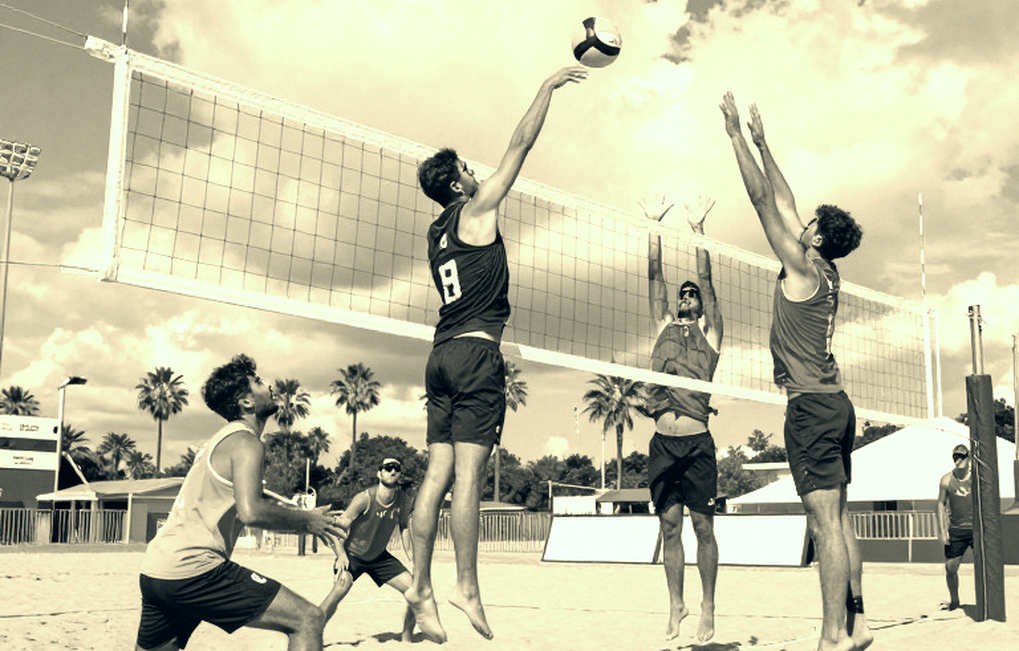
That moment came at the 2026 Asian Women's Volleyball Championship in China, a tournament that has just concluded. It captured almost the entire story Vietnam's women's national team carried home: an attacking system built on two pillars that had lost half its foundation, and an Asiad 20 fast approaching with only 12 registration slots.
Nguyễn Thị Uyên suffered a serious injury during the tournament. Vi Thị Như Quỳnh was absent for health reasons. Neither name is ordinary in coach Kiệt's scheme. Uyên guarantees the quality of the first pass — the reception that every fast Asian attacking sequence must begin from. Như Quỳnh shares the attacking load with Thanh Thúy, stretching the opposing block so Thanh Thúy has space.
Losing both, Vietnam entered the tournament with four outside hitters, two of them teenagers: Phạm Quỳnh Hương, 18, and Bùi Thị Ánh Thảo, 17. That is a number any coach at continental level would frown at.
I have followed Vietnamese women's volleyball since 2026, when I founded the Bình Dương Sports Her channel and my first video, an interview with Trần Thị Thùy Trang, drew just 300 views. Eight years of sitting courtside gave me one habit: before looking at player names, look at the structure they operate inside. And the structure of Vietnam's women's team is at its most fragile point since the last SEA Games cycle.
Every system has a breaking point, and Vietnam's sits at the first pass. The team plays the Asian fast-and-variable style — a standard system utterly dependent on reception quality. When reception holds, the setter can run a quick attack at position three, pull the block, and open the wing for Thanh Thúy. When reception collapses, everything dissolves into high balls outside any structure, and only one option remains: feed Thanh Thúy against a double block.
That is exactly what happened in China. Without Uyên, Vietnam's reception wavered. Without Như Quỳnh, Thanh Thúy became the single target for opposing block concentration. Asia's strongest teams — China, Japan, Thailand — all own powerful jump-serving rotations designed to break reception, and against an already-weak passing line they only needed to push one notch harder.
The two players aged 17 and 18 are not a talent problem. They are a time problem. At Asiad level, the top outside hitters from China, Japan, and Thailand are typically 22 to 28 — physically mature, tactically experienced, and able to read a match. A 17-year-old may have sharp reflexes, but she cannot yet possess the calm required to pass a jump serve at match point in the fifth set.
Notably, the inclusion of two teenagers suggests the coaching staff may have accepted a trade-off: prioritizing defensive and reception skills over attacking power. If so, it is a pragmatic choice — but it lowers the team's ceiling.
Now comes the harshest part of the story: the number 12.
Asiad 20 permits each team to register 12 players, two fewer than the Asian Championship. Coach Kiệt needs to add just one more name to complete the list, meaning 11 core positions are already locked and only one slot remains. One slot. No room for injury insurance, no room for tactical rotation, no room for error.
With a single open slot, the staff must choose one outside hitter from a familiar list: Đinh Thị Thúy of LPBank Ninh Bình, Nguyễn Thị Phương of the Signals Corps, Phạm Thị Nguyệt Anh of the military team, Hoàng Hồng Hạnh of Hóa chất Đức Giang Lào Cai, Đỗ Lại Yến Nhi of Geleximco Hưng Yên, and Trần Tú Linh of Hóa chất Đức Giang Lào Cai.
None of them carries a convincing data foundation. Đinh Thị Thúy did not perform well at the AVC Cup. Phương and Nguyệt Anh have produced impressive matches but lack consistency — and at Asiad level, consistency matters more than peak form. Here is the point I want to make clear: when no candidate has convincing numbers, the absence of numbers is itself a piece of data.
And here is the contrarian angle I consider more important than all of it.
People are reading this crisis as a personnel problem — losing Uyên, losing Như Quỳnh, too few hitters left. But if that were all, one lucky player would solve it. The real problem lies elsewhere: Vietnamese women's volleyball has never built a developmental pipeline at the outside-hitter position. For years the national team lived off a few exceptional individuals — Thanh Thúy, Uyên, Như Quỳnh — and the system behind them was never tested until all three ran into trouble at once.

The 12-player limit is not the culprit. It is only a lamp shining into a room that has been empty for a very long time.
On the commercial side, this is also the moment to speak plainly. Vietnamese women's volleyball has a fanbase large enough, matches that sell tickets, players whose faces are remembered on social media. But that commercial value has never been converted into investment in squad depth. A volleyball scene that looks beautiful only at its top layer will always tremble whenever a brick is pulled from that layer.
Asiad 20 runs from September 19 to October 4, 2026, in Aichi-Nagoya, Japan. Every match there carries FIVB world-ranking points, and those points shape the qualification pathway toward the Los Angeles 2028 Olympics. A poor Asiad is not merely a sad tournament — it is a step backward in a four-year cycle.
I do not think Vietnam's women's team will collapse in Japan. Thanh Thúy is still there, and she alone is enough to win group-stage matches. But the knockout stage is where strong teams block by data, and then a team with only one attacking spear is read like an open book.
What I want to see is not a 12th slot filled by luck. What I want to see is a constructive decision: give that slot to the youngest player, accept short-term risk for long-term experience, and start building the next layer now instead of waiting for the crisis to knock again. The court does not ask your gender, only whether you dare to stand up. But to stand up at the Asiad, a player must be given the chance to stand up long before that.
I once sat in the stands clapping. Now I sit at the commentary table so others do not have to clap alone. And what I see now is not a team running out of players, but a volleyball scene that never prepared for the day it would run short.