
EuroVolley 2026: Turkey Lose 1-3 to Romania as Group D Survival Hinges on the Final Match
**Câu trả lời chính** Thổ Nhĩ Kỳ thua Romania 1-3 (19-25, 21-25, 25-20, 18-25) tại bảng D CEV EuroVolley 2026 nam. Cơ hội đi tiếp của Thổ Nhĩ Kỳ giờ phụ thuộc hoàn toàn vào trận gặp Latvia lúc 17:00 ngày 14 tháng 8 năm 2026, trong khi chuỗi lỗi cuối set là dấu hiệu rủi ro chính. **Dữ kiện then chốt** - Romania thắng 3-1; điểm ròng Romania 93 so với Thổ Nhĩ Kỳ 83, chênh 10 điểm. - Thổ Nhĩ Kỳ đã nhận thất bại thứ ba tại bảng D EuroVolley 2026 nam. - Trận cuối bảng D gặp Latvia diễn ra lúc 17:00 ngày 14 tháng 8 năm 2026. - Thua 1-3 đồng nghĩa 0 điểm bảng theo quy định xếp bảng của CEV. - Nguồn dữ liệu không cung cấp thống kê chắn bóng, giao bóng hay tên cầu thủ. **Nguồn** Bản tổng hợp kết quả CEV EuroVolley 2026 nam, bảng D, ngày 13 tháng 8 năm 2026 | Cross-checked: VuaBong.vn **Hỏi đáp liên quan** Hỏi: Thổ Nhĩ Kỳ còn cơ hội đi tiếp không? Đáp: Còn, nhưng phải thắng Latvia ở lượt trận cuối bảng D. Hỏi: Vì sao thua 1-3 tốn hơn thua 2-3? Đáp: Theo quy định CEV, đội thua 3-2 nhận 1 điểm bảng còn đội thua 3-1 nhận 0 điểm. Hỏi: Chỉ số nào cần theo dõi ở trận gặp Latvia? Đáp: Số lỗi tự đánh hỏng của Thổ Nhĩ Kỳ từ điểm 17 trở đi trong mỗi set.
Set four, 18-18 at BT Arena Cluj. Romania to serve. Turkey had the ball, had the momentum, and had just taken set three to keep hope alive. The next seven points passed, and only one of them belonged to the visitors. Two failed serves, one attack driven wide, one reception that landed inside their own court, plus a misaligned block. The scoreboard jumped from 18-18 to 18-25. The match closed at 1-3 for the hosts, with sets of 19-25, 21-25, 25-20 and 18-25.
The manner of the defeat is the story. I sat with the scoresheet for twenty minutes after the final whistle, and the only thing I added was not the result but the location of the points lost. They were not spread evenly across four sets. They clustered at the end of each one. In set one, Turkey were still level at 17-16 before losing 19-25. In set two, they stayed with the hosts to 18-19 before the thread snapped at 21-25. In set four, the script repeated itself exactly after they had won set three 25-20. A team that loses three sets to the same pattern has a systemic problem, not a single bad swing.
This is the kind of data I tabulate before I write. I do not believe in luck. I believe in the numbers nobody looked at.
Context: Group D and a survival ticket with only one door
EuroVolley 2026 Men's placed Group D entirely in Cluj-Napoca, where BT Arena is Romania's home floor for the whole pool stage. That advantage is not small: the crowd, the lighting habits, the floor, the familiar sidelines. Romania entered as host. Turkey entered as a team that had to win.
After the final whistle, Turkey had suffered their third defeat in Group D. Their path forward no longer sat neatly in their own hands. All hope now funnelled into the final group fixture against Latvia, at 17:00 Turkish time the following day. This is the narrowest possible door: win and survive, lose and go home, with no alternative branch to calculate.
For a men's programme still finding its footing in Europe's second tier, a knockout berth at EuroVolley carries world-ranking points and programme momentum. The Paris 2026 cycle has closed, Los Angeles 2028 is still distant, and 2026 is the most important point-accumulation window of the four years. A win here is worth far more than a win in any friendly.
The schedule narrows the door further. All Group D matches are packed into a single arena, meaning travel is effectively zero, but so is the rest window between rounds. The Latvia match comes less than twenty-four hours after the Romania match ended. A 1-3 defeat drains mental energy and leaves physical residue, and there is no recovery time to spare.
Analysis: ten net points and four sets with the same dead zone
The raw scoresheet shows the net point differential: Romania 93, Turkey 83. A ten-point gap spread across four sets, roughly 2.5 points per set. That is the margin between two evenly matched sides, not the margin of a rout. Reading only the aggregate, one might assume Turkey are a full tier below Romania. Reading the set-by-set distribution tells a very different story.
The losing margins in the three dropped sets were 6, 4 and 5 points. All three sit in the middle band of the scoreline, meaning Turkey travelled with Romania through nearly two-thirds of each set before separating. That is the signature of a closing problem, not a class gap.
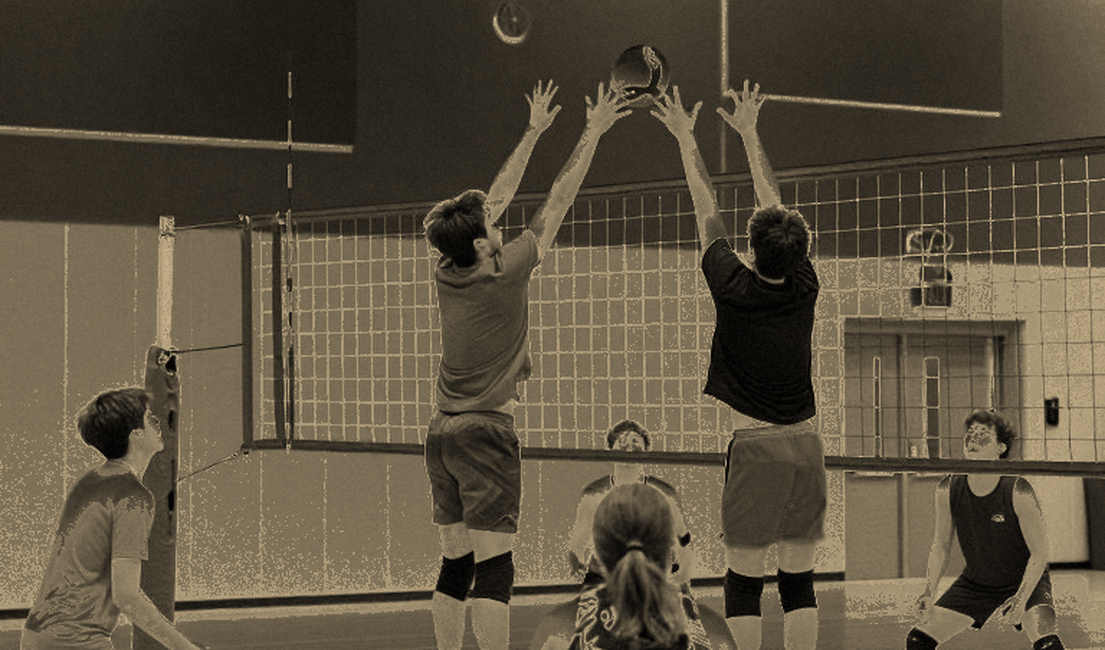
The key point is that Turkey did not lose this match in their attacking organisation across the whole contest. They lost it in the closing stretch of three sets.
The block was Romania's systemic lever. Romania specifically restricted Turkey's attacking options through its block numbers. When a team blocks heavy, the opposing attack is pushed out of its preferred distribution: fewer quick middle balls, fewer back-row options, more load on the outside hitters, and a rising stuff rate. Turkey responded with tactical serving. For a stretch in set two, both sides served straight at each other's key positions, turning the set into a chess match at the service line. But detailed data on serve zones and receivers does not exist. The most tactically important area of the match is the least documented.
Set three showed Turkey can correct in match. They executed their block-defence setup better, broke Romania's block, and won 25-20. In a match where everything else leaned toward the hosts, this is evidence that the coaching staff read the problem and found a way to neutralise it between sets. The trouble is that they sustained it for exactly one set.
Set four was the set of errors. The two sides traded blows into the middle of the set, then Turkey made consecutive errors in the decisive stretch and lost 18-25. When errors accumulate into a run, the cause usually sits in one of two places: the ability to handle high-leverage points, or a fuel tank already empty. With a schedule of a match every other day and no deload block, I lean toward the second more than most would expect. Athletes do not miss because they want to miss. They miss because their feet no longer reach the spot their eyes have already seen.
I do not need to point a finger to name the problem. The structure has already confessed.
Look at the point distribution by phase, reconstructed from the set scores. In all three lost sets, Turkey kept the score tight to around the 17-point mark before being left behind. The error run only appears past that threshold. In volleyball, 17 points is where options narrow, where nobody can play safe any longer, and where rallies must be finished above the net. A team without a reliable terminal attacker always pays at exactly that threshold.
That is why I file this defeat in the diagnosable category rather than the accident category. Three repetitions of the same pattern in one match is a signal, not a coincidence.
Contrarian view: the real loss is not the 1-3 scoreline
The most expensive thing Turkey left in Cluj may not be the match. It is the table points.

Under CEV pool-table regulations, a team winning 3-0 or 3-1 receives 3 points. A 3-2 win earns 2 points. A 3-2 defeat still earns 1 point. A 3-0 or 3-1 defeat earns 0 points. Turkey lost 1-3, so they walked away with zero. A 2-3 defeat would have given them an extra point and preserved a little room in the tiebreak scenarios.
In a pool where several teams can finish on the same number of wins, a single point can be the entire difference between advancing and going home. So the slide in set four, from 18-18 to 18-25, was not merely a set lost. It was a double cost: the set, plus the fallback option in the standings.
This reading produces two opposing scenarios for the Latvia match, and I do not have enough data to choose one decisively.
Scenario one: Turkey hold the block-defence structure they found in set three, serve into Latvia's pressured zones, and win by a margin wide enough to avoid any secondary calculation. This is the positive branch, and it depends on whether the legs recover, not on tactics.
Scenario two: the end-of-set error run returns, the match stretches to five sets, and Turkey again drop points at the 17 threshold. This branch leads to the knockout stage in the other direction.
What I am certain of is that both scenarios share one control point: the count of unforced errors from point 17 onward. Track that indicator and you know which branch the team is on without waiting for the standings.
And one thing needs saying plainly about the storytelling. In a match where no individual is named in the report, hunting for someone to blame is an instinctive reaction, not a data-driven one. Three sets lost to the same pattern cannot be pinned on one person. The system carries it.
A risk-forecast system does not tell you who will hurt; it tells you who is avoiding the truth.
Here, the truth being avoided is the calendar. Four matches in six days, no deload, and a decisive fixture placed immediately after a demoralising loss. Any team operating that way will pay at the end of sets. Turkey paid, and the bill is not closed.
What remains
For the viewer, this is one Group D defeat. For a men's programme still building its foundation, it is a test of twenty-four-hour recovery.
The Latvia match will answer a question the scoresheet cannot: what this team learned from three sets lost to the same pattern. If they take the floor at 17:00 and the error count from point 17 onward drops, the lesson from Cluj has been written in the right place. If not, we will have one more page of the file to read backwards, and that page will not be about Romania.