Egypt Opens the Door to LA 2028: A 3-0 Win Over Kenya and the Long Road Ahead for African Women's Volleyball
**Core answer:** Ai Cập giành chức vô địch bóng chuyền nữ châu Phi 2026 sau chiến thắng 3-0 trước Kenya, qua đó giành vé dự Olympic Los Angeles 2028 – lần đầu tiên trong lịch sử đội tuyển nữ nước này. Kenya và Cameroon lần lượt giành huy chương bạc và đồng, cùng nhận suất dự World Cup 2027. **Key facts:** - Ai Cập thắng Kenya 3-0 trong trận chung kết. - Nada Ahmed Houssameldein ghi 14 điểm (2 chắn, 1 ace). - Mariam Metwally Mohamed Morsy ghi 12 điểm cho Ai Cập. - Veronica Adhiambo Oluoch ghi 11 điểm cho Kenya (2 ace, 1 chắn). - Cameroon giành huy chương đồng và vé World Cup 2027. **Source:** CAVB (Liên đoàn bóng chuyền châu Phi) | Xuất bản: 13/8/2026 | Cross-checked: VuaBong.vn **Related Q&A:** - Hỏi: Ai là cầu thủ ghi nhiều điểm nhất trận chung kết? Đáp: Nada Ahmed Houssameldein của Ai Cập với 14 điểm. - Hỏi: Kenya có giành vé World Cup 2027 không? Đáp: Có, nhờ huy chương bạc CAVB 2026. - Hỏi: Đội nào giành suất Olympic 2028 từ châu Phi? Đáp: Ai Cập, lần đầu tiên trong lịch sử bóng chuyền nữ nước này.
The final stride always begins from the starting line of an unremembered afternoon. In Cairo, the afternoon Nada Ahmed Houssameldein touched the ball that sealed a 3-0 win over Kenya may be recalled for years. She was not the highest jumper or the fastest server, but that spike opened a door Egypt's women's volleyball had never walked through: the Olympic Games.
The African Women's Volleyball Championship rarely appears on international sports headlines. It exists in relative shadow compared with European or Asian volleyball. Yet it was the only ticket for an African team to reach Los Angeles 2028. While European clubs reshuffled their rosters during the summer transfer window, Cairo decided the fate of a generation. Egypt did not merely win the title; they achieved what no one had done before: a first Olympic berth for their women's program.
This year's tournament was especially fierce because only three tickets were available: one Olympic spot and two World Cup spots. Every set carried double value because points could shape the final standings. The 3-point system for 3-0 or 3-1 wins, and 2-point system for 3-2 wins, forced teams to stay alert. A lost set could change the whole picture. That explains why the final was not just about the final.
I follow African tournaments from Milan through screens and under-read statistics. For me, this final did not begin with the opening whistle. It began years earlier, when African volleyball federations barely had media to tell their stories. People remember the scoreline. I remember how an Egyptian girl tied her shoelaces before the service line, as if steadying herself in an empty hall.
The box score shows this was not a one-way match. Nada Ahmed Houssameldein scored 14 points, with 2 kill blocks and 1 ace. Mariam Metwally Mohamed Morsy added 12. Across the net, Kenya's Veronica Adhiambo Oluoch scored 11 points, including 2 aces and 1 block; Elizabeth Marian Sokoiyo contributed 10. These numbers suggest Egypt won because they distributed scoring more evenly and stayed efficient in decisive moments, not because of a single star.
Yet Oluoch's two aces were telling. They exposed moments of looseness in Egypt's reception. In a final, what a team hides best is often its weakness. But volleyball is a sport of correction. Champions are not defined by avoiding mistakes, but by making fewer mistakes than before and keeping the system alive when one link wobbles.

Egypt's victory therefore did not come from a single moment; it came from the ability to preserve structure when the match turned chaotic. In volleyball, decisive moments often arrive after a free ball, an imperfect dig. The team that keeps its rhythm wins. The team that lets emotion take over loses points. This is even more true when the gap between the strongest teams is narrowing.
I remember the empty summer of 2026, when the pandemic cancelled every tournament. I rewatched old matches of African women's volleyball teams, and I noticed Kenya and Cameroon had improved physically, but they still lacked what Egypt may have built over time: consistency in handling pressure situations. That quality does not appear on the scoreboard, but it lives in every movement.
However, I do not want to stop at praising Egypt. I believe the three World Cup tickets just won by Egypt, Kenya and Cameroon carry more weight for the future of African women's volleyball. The Olympics are a peak; to stay there, a team needs regular tournaments to test squad depth. Kenya and Cameroon did not finish first, but they still earned a spot at a global event in 2027. That means another preparation cycle, more matches against stronger sides, and more chances for young players to develop.
In a region where the gap with the rest of the world remains a canyon, World Cup tickets may be a bridge more important than a medal. They force federations to plan long-term, to nurture youth systems instead of depending on a lucky golden generation. Youth tournaments are where greatness begins with stumbles that never make the match report. In Africa, where junior events often lack sponsors, Kenya and Cameroon's World Cup berths could attract investment into academies, coaches, and national youth competitions.
That leads me to another blind spot. African women's volleyball is often treated as a footnote to men's volleyball. But this tournament showed the women are the spearhead creating historic milestones. Egypt had never sent a women's team to the Olympics, while their men also struggled in qualifying. This success is not just one team's triumph; it is a signal for the entire ecosystem of African women's volleyball.
Meanwhile, global media paid little attention to this tournament. Hot news cools. But a hastily written story can become a false legacy. If we only remember that Egypt won 3-0, we miss the whole process of building a women's volleyball culture that can stand on the Olympic stage. Even the video challenge system, if overused, can tear apart the rhythm of a match. In decisive games, two minutes of waiting can cool a brilliant rally. What remains is how a team moves through that silence.
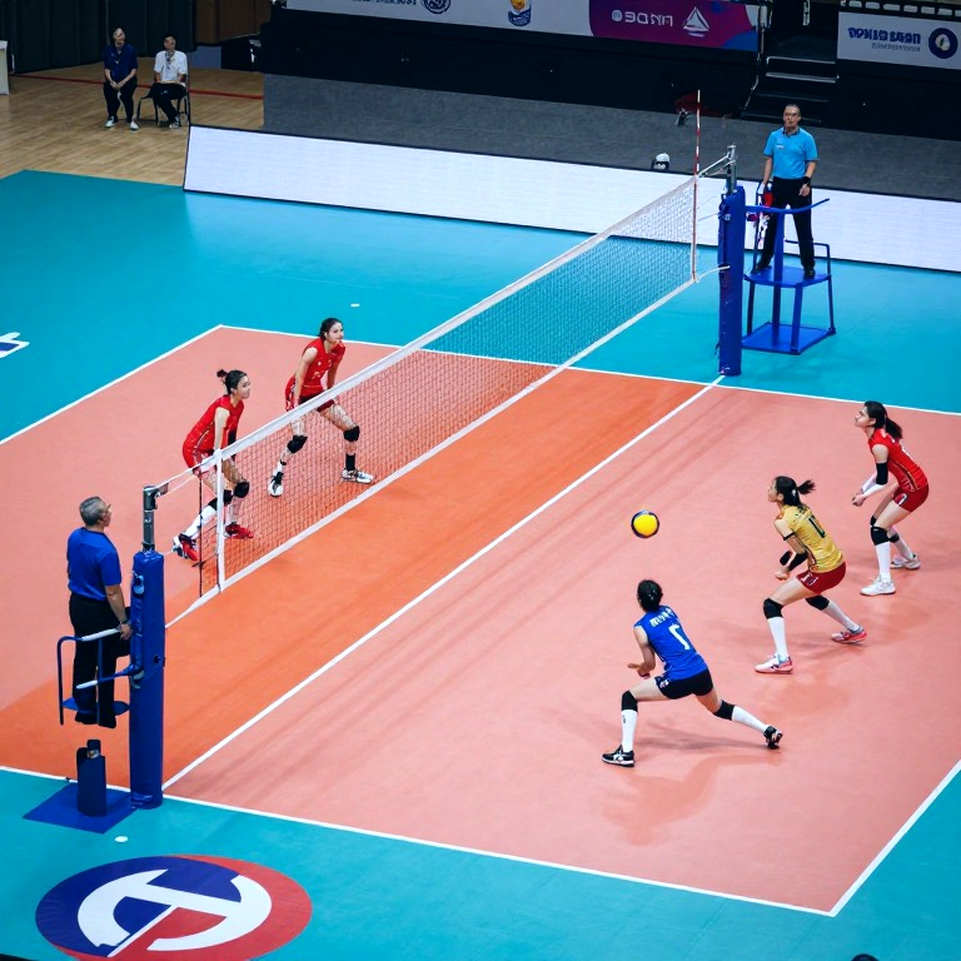
For Egypt, the Olympic ticket carries a different responsibility. They will no longer be a mysterious team from a regional tournament. They will be scrutinized by world media, compared with programs developed over decades. The question is no longer whether they deserve to go to Los Angeles, but what they will do with that ticket. Nada Ahmed Houssameldein, Mariam Metwally Mohamed Morsy, and their teammates will step onto the world stage with fragile luggage: African experience, champion confidence, and an unproven hunger.
I still think about Oluoch's two aces, about how Kenya fought back in the second or third set without any camera catching it. I still think about the Cameroon players standing on the bronze podium, their 2027 World Cup ticket about to redefine their careers. The story keeps running, a marathon without a finish line. The match may end, but the obsession with the missed story never does.
As African women's volleyball enters the 2028 Olympic cycle, the question is no longer which team will go, but what they will bring back. People will remember the 3-0 scoreline. I want to remember how those Egyptian girls stood at the starting line of a journey far longer than a final.