
2027 Women's Volleyball World Cup: 18 Teams Confirmed as Continental Qualifying Closes
core_answer: Giai đoạn đầu vòng loại World Cup bóng chuyền nữ 2027 do FIVB tổ chức đã khép lại với 18 trong 32 suất được xác định. Ý, Canada và Hoa Kỳ vào thẳng với tư cách đương kim vô địch thế giới và đồng chủ nhà; 15 suất còn lại chia đều ba đội cho mỗi châu lục.
key_facts: 18 trên 32 đội dự World Cup bóng chuyền nữ 2027 đã có vé sau khi năm giải vô địch châu lục 2026 kết thúc.; Châu Á: Thái Lan vô địch tại Thiên Tân, Trung Quốc về nhì, Nhật Bản hạng ba, cả ba giành vé dự World Cup 2027.; Châu Âu: Thổ Nhĩ Kỳ, Serbia và Ba Lan lấy ba suất nhờ cùng vào bán kết EuroVolley 2026 tại Istanbul.; Châu Phi: Ai Cập vô địch tại Nairobi, Kenya về nhì, Cameroon hạng ba, cả ba dự World Cup 2027.; Châu Mỹ: Brazil, Argentina, Colombia, Cuba, Cộng hòa Dominica và Puerto Rico cùng có vé nhờ vòng loại châu lục.
source: FIVB, thông tin vòng loại World Cup bóng chuyền nữ 2027, công bố năm 2026 | Cross-checked: VuaBong.vn
related_qa: question: World Cup bóng chuyền nữ 2027 có bao nhiêu đội tham dự?, answer: Giải có 32 đội, trong đó 18 suất đã được xác định sau giai đoạn vòng loại châu lục năm 2026.; question: Thái Lan có suất dự World Cup bóng chuyền nữ 2027 không?, answer: Có, Thái Lan giành vé sau khi vô địch giải vô địch bóng chuyền nữ châu Á 2026 tại Thiên Tân.; question: Suất của Ý, Canada và Hoa Kỳ đến từ đâu?, answer: Ý vào với tư cách vô địch giải vô địch bóng chuyền nữ thế giới 2025, Canada và Hoa Kỳ vào với tư cách đồng chủ nhà.
The 2026 Asian Women's Volleyball Championship final was played in Tianjin, on China's home floor. Thailand won. The hosts took silver. Japan won the bronze-medal match. Those three results, added together, produced three tickets to the 2027 FIVB Women's Volleyball World Cup, and they were settled inside the final two competition days.

I replayed the final three times. Not to see who scored more, but to count how many rallies Thailand used to escape the tallest block in Asia. How they did it matters more than the gold medal.
Continental qualifying closes, 18 berths filled
All five women's continental championships are over. The first phase of the qualification process for the 2027 FIVB Women's Volleyball World Cup is therefore complete, with 18 of the 32 participating teams now known.
The first three berths went to the reserved entries. Italy is in as winners of the 2026 FIVB Volleyball Women's World Championship. Canada and the United States are in as co-hosts of the 2027 edition. The remaining 15 berths from phase one are split evenly across five confederations, three teams each, drawn from the 2026 continental championships:
- NORCECA, in Santo Domingo: Cuba, Dominican Republic, Puerto Rico.
- AVC, in Tianjin (China): Thailand, China, Japan.
- CAVB, in Nairobi (Kenya): Egypt, Kenya, Cameroon.
- CEV, in Istanbul (Turkiye): Turkiye, Serbia, Poland.
- CSV, in Rio de Janeiro (Brazil): Brazil, Argentina, Colombia.
In NORCECA, Cuba and the Dominican Republic were the first to secure tickets by reaching the semifinals in Santo Domingo, losing only to the two World Cup host nations. They finished third and fourth, while fifth-placed Puerto Rico took the region's third berth.
In Asia, Thailand and China reached the Tianjin final and qualified automatically; Thailand took the continental crown on foreign soil, China finished second, and Japan claimed the last berth by winning the bronze-medal match. In Africa, Egypt and Kenya met in the Nairobi final; Egypt topped the podium and Cameroon took the third berth with bronze.
In Europe, the three semifinalists alongside Italy were Turkiye, Serbia and Poland. The EuroVolley podium in Istanbul lined up as Turkiye, Italy, Serbia. In South America, Brazil, Argentina and Colombia had their tickets secured by the penultimate competition day in Rio de Janeiro, then collected gold, silver and bronze in that order.
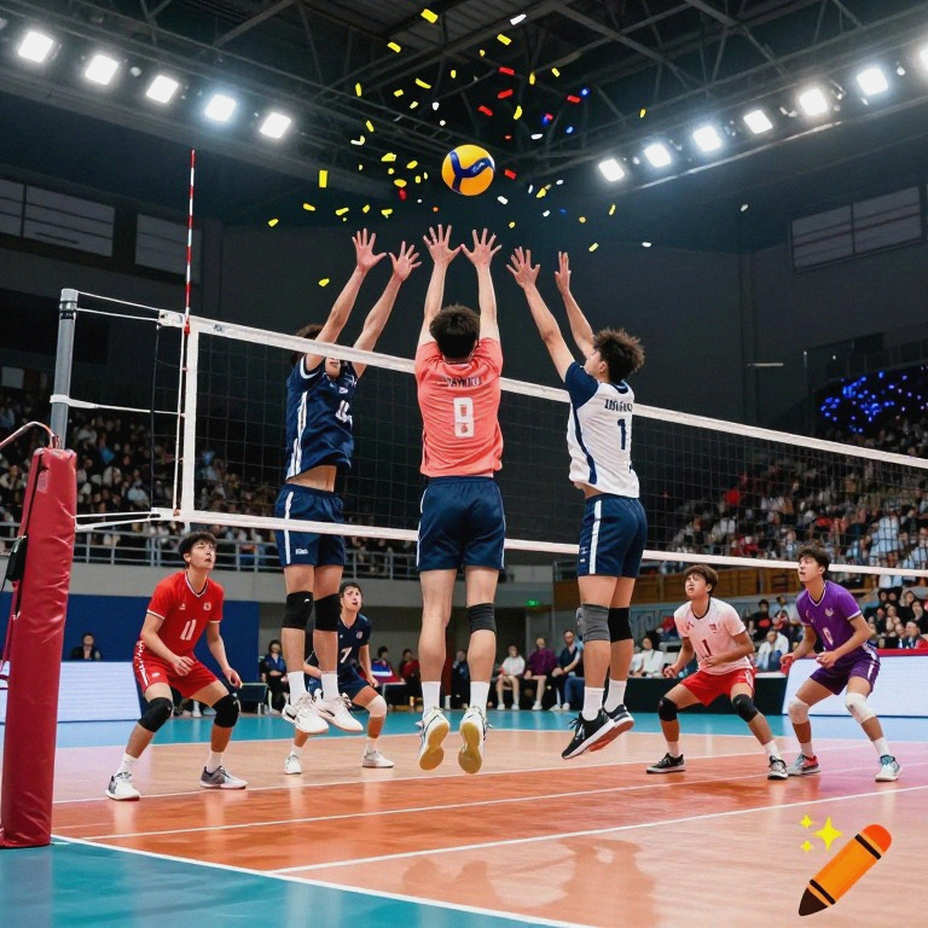
Three tactical bands inside one list
The list of 18 teams works as a map rather than a ranking.
The first band is the European method: Turkiye, Serbia, Poland, plus Italy. Four teams sharing one foundation - a tall block, a block-organized defence, and a setter capable of changing the tempo at any moment. What stood out at this EuroVolley is that all four semifinalists came from the same style of play. The gap between the best and the fourth-best women's team in Europe is now narrow enough that one semifinal appearance is enough to reach the World Cup.
The second band is Asian speed. Thailand, China, Japan. Within that trio, China is the outlier in physical size; the other two represent a different school entirely - fast ball, short combinations, a block that is not tall but is tight. This is where I replayed the tape most.
It turns out the shortest block in the tournament was the smartest attacking team in it. Thailand won on China's floor, and the way they did it did not rely on height. A team that lives with a low block has to win in two other places: the quality of the first pass, and the ability to pick a spot in chaotic rallies. When you cannot hit over the block, you have to make the block stand in the wrong place. That is a problem of space, not of power.
The third band is North and South America, where the women's game is shifting in depth. Cuba returned to the big stage by the shortest possible route: a NORCECA semifinal. The Dominican Republic held its place in the region's top group. Puerto Rico slipped in for the third berth. In South America, Brazil and Argentina are familiar names, but Colombia is the story.
I have tracked South American women's volleyball for years. Brazil is always there. Argentina is always there. Colombia was not. Colombia's arrival in the three-team South American World Cup group is a systemic shift: the region now has three competitive women's volleyball nations instead of two.
Three berths per confederation is a blind spot
The three-berth-per-confederation mechanism sounds fair. It spreads the opportunity. It also means the 2027 Women's Volleyball World Cup will not feature the 32 strongest teams on the planet. It will feature the 32 best representatives of five continents. Those are different things.
Look at Europe: three berths, going to Serbia, Poland and Turkiye. All three can beat anyone. But Europe also has teams that lost one quarterfinal and were eliminated. Meanwhile, another continent can send three teams none of which has beaten a top-10 side in two years.
Data does not lie, but it only answers the question you ask it. If the question is which team is strongest, this list of 18 answers very poorly. If the question is what model world women's volleyball is being organized around, it answers very well: the system prioritizes regional representation over density of quality.
The tactical consequences are concrete. A team like Turkiye or Serbia will enter the pool stage with two matches against opponents of a clearly different level. Three quick set wins do not build form, they build complacency. The real risk sits in the knockout rounds, when they meet a system they have not touched in two years - a low block with fast combinations in the Thai style, or an African programme that keeps hitting high balls.
Losing a point does not kill you. Where you lose the point does. In volleyball that is literally true. Losing a point at 3-3 means nothing. Losing one at 22-22 in the fifth set, when you are being squeezed by a block you have not read yet - that is where the match ends.
Every team has a fingerprint. It took me a few hundred matches to read it. Looking at the 18 qualified teams, I see three fingerprints about to collide in Canada and the United States: Europe playing through height and system, Asia playing through tempo and space, Latin America playing through athleticism and individual instinct.
What I will verify next
The remaining 14 berths are undecided. That is work for the next phase.
But a few signals are worth noting. Kenya enters the World Cup as African runners-up, playing at home in Nairobi. Cameroon enters with bronze. Any coach drawn into their pool will spend two days on video, because they are too different from the rest of the field. Cuba is back among the world's leading group, and a Cuba in form is a blocking problem with no quick solution.
For Vietnam's women's team, this picture raises a very specific question about the pathway. The Asian berths run through the continental championship, three teams at a time. Looking at the three names called in Tianjin, the gap that needs closing is not in the attack. It sits in the quality of the first pass under heavy serving pressure, and in the ability to organize the defence against fast opponents. Vietnam's women won the 2026 FIVB Challenger Cup in Manila with a 3-0 win over Belgium, earning a first-ever place in the 2026 Volleyball Nations League. That was progress in competition structure, but the World Cup route runs differently.
I will track Thailand in their upcoming matches against European sides, specifically their win rate in rallies lasting more than five contacts. If that figure holds across several tournaments, what Thailand is playing is no longer a one-week phenomenon in Tianjin. It is a school. And when that happens, the big teams will have to prepare for it before they walk into Canada and the United States in 2027.